
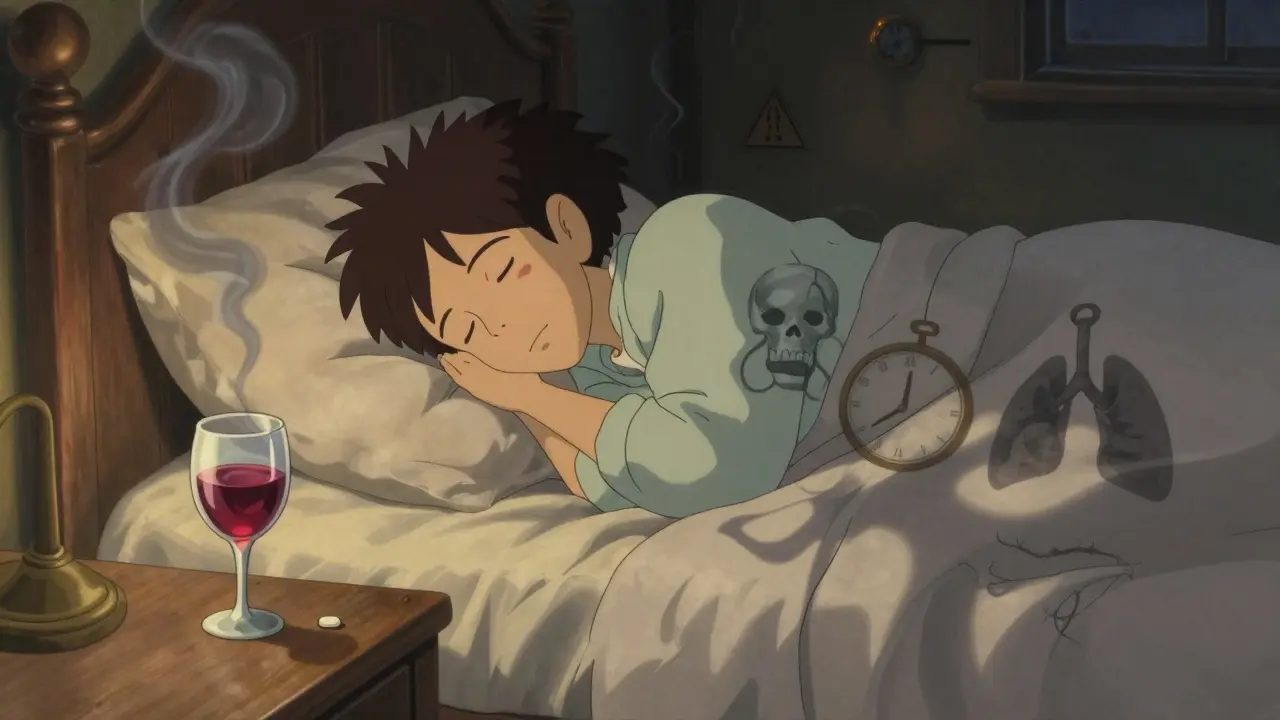
Every year, thousands of people end up in emergency rooms or worse because of drug combinations they didn’t realize were deadly. It’s not always illegal drugs - often, it’s a prescription painkiller taken with a glass of wine, or an anxiety pill mixed with a nightcap. These aren’t just risky - they’re deadly. If you or someone you care about is taking medications, especially opioids, benzodiazepines, or antidepressants, you need to know which combinations can shut down your breathing, stop your heart, or poison your liver.
Why Mixing Drugs Is More Dangerous Than You Think
Most people think if one pill is safe, two must be okay - or even better. But drugs don’t work like that. When substances interact, they don’t just add up; they multiply. A study in the Journal of Clinical Pharmacology found that combining alcohol with opioids increases the risk of respiratory depression by 4.5 times. That means your body stops breathing - not because you took too much of one thing, but because the two together turned a manageable dose into a fatal one. The body processes each drug differently. Some slow down your brain’s breathing signals. Others overload your liver. A few even create new toxic chemicals inside you. The result? A perfect storm of side effects that no single drug could cause alone.The Most Dangerous Combinations You Must Avoid
Opioids + Alcohol
Opioids like oxycodone (OxyContin), hydrocodone (Vicodin), and fentanyl are prescribed for pain. But when mixed with alcohol - even one drink - they become a silent killer. Alcohol doesn’t just make you drowsy. It teams up with opioids to crush your respiratory drive. The CDC reports that in over half of all opioid overdose deaths, alcohol was also present. People don’t die from taking too much painkiller. They die because their lungs stop working while they’re passed out. Symptoms? Extreme drowsiness, slurred speech, cold skin, slow breathing (less than 8 breaths per minute), and unconsciousness. If you’re on opioids, no alcohol is safe. Not even a sip. Not even on special occasions.Opioids + Benzodiazepines
This combo is the leading cause of fatal overdoses in the U.S. Benzodiazepines - Xanax, Valium, Ativan - are prescribed for anxiety, insomnia, or seizures. But when paired with opioids, they double the risk of respiratory failure. SAMHSA found that 30.1% of opioid overdose deaths in 2020 also involved benzodiazepines. That’s not a coincidence. It’s a pattern. Doctors used to prescribe these together. Now, the CDC and CMS warn against it. In fact, Medicare Part D plans now flag these prescriptions automatically. If your pharmacist tells you not to take them together, listen. This isn’t a suggestion - it’s a life-or-death rule.Alcohol + Cocaine
You might hear people say mixing cocaine and alcohol balances out the highs. That’s a myth. What really happens? Your liver turns them into cocaethylene - a toxin 25% more likely to kill you than cocaine alone. Cocaethylene stays in your system longer, stresses your heart harder, and damages your liver faster. People who use this combo report heart rates over 140 bpm, chest pain, seizures, and sudden blackouts. A 2021 study found that chronic users of this mix had a 65% chance of liver damage. Celebrities like River Phoenix and John Belushi died from this combination. It’s not glamorous. It’s a slow, violent death.Stimulants + Depressants (Speedball)
The “speedball” - cocaine and heroin - sounds like a party trick. It’s not. Heroin slows you down. Cocaine speeds you up. Your body can’t handle the tug-of-war. Your heart races, your blood pressure spikes, and your breathing becomes erratic. The NIDA reports that 50% of cocaine overdoses in 2021 involved heroin. Even experienced users don’t realize how little it takes to die. One study showed that a dose of heroin that’s safe on its own becomes lethal when paired with cocaine. There’s no safe amount. No warning sign. Just sudden cardiac arrest.Antidepressants + Alcohol
Many people think it’s fine to have a drink while on antidepressants. That’s dangerous too. Alcohol lowers your threshold for overdose. Venlafaxine (Effexor) combined with alcohol increases the risk of fatal overdose by 25%. Duloxetine (Cymbalta) with alcohol raises liver toxicity risk by 40%. These drugs affect serotonin, mood, and liver enzymes. Alcohol adds more stress to an already taxed system. The result? Severe dizziness, nausea, liver inflammation, and in extreme cases, coma. If you’re on antidepressants, skip the wine. Your brain doesn’t need the extra burden.Buprenorphine + Alcohol
Buprenorphine is used to treat opioid addiction. It’s safer than methadone - but not if you drink. Alcohol with buprenorphine can cause sudden drops in blood pressure, shallow breathing, and coma. The SA Health Department warns: “The more alcohol in your body, the less heroin you need to die.” The same applies here. Even moderate drinking can turn a stable treatment into a crisis.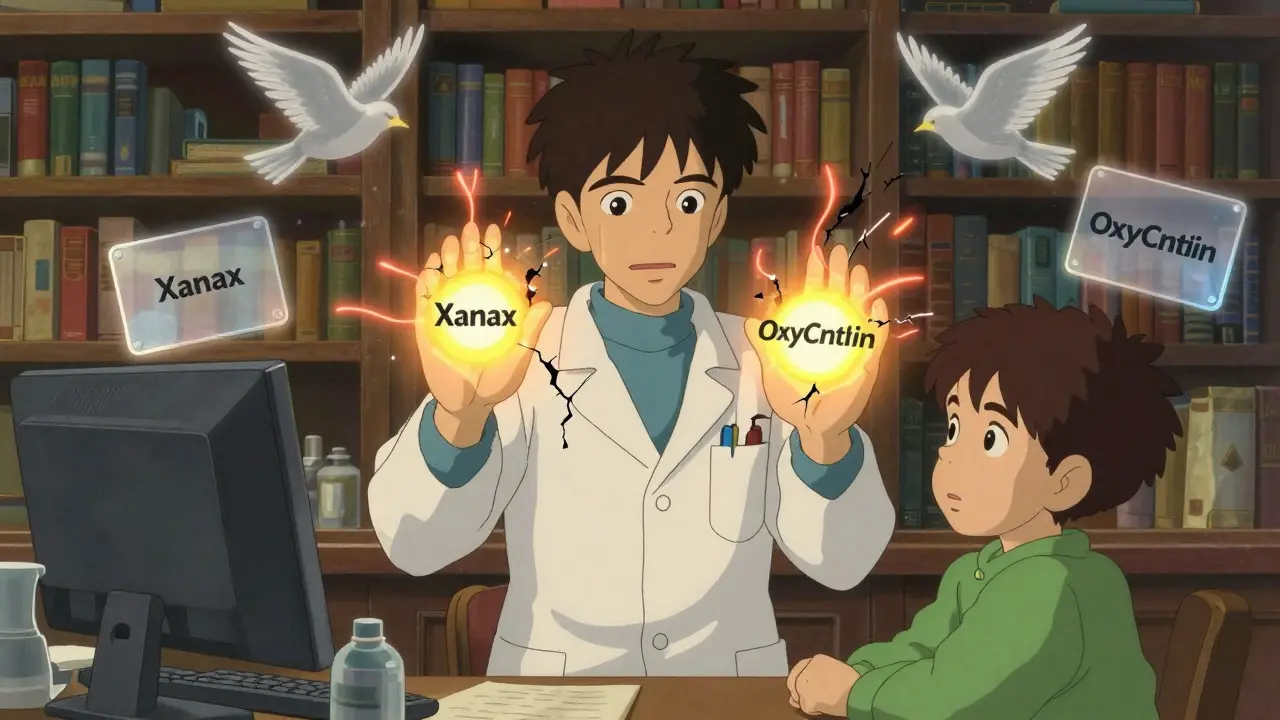
What Happens When You Mix Stimulants?
Cocaine and methamphetamine? Mixing stimulants doesn’t make you feel more alert - it makes your body overheat. Your heart pounds, your muscles tense, and your brain floods with dopamine until it burns out. Users report paranoia, violent behavior, and hallucinations. In 35% of cases, this leads to full-blown psychosis. In 60-70%, it triggers panic attacks so severe they mimic heart attacks. And then there’s serotonin syndrome - a rare but deadly reaction when too many drugs raise serotonin levels. Symptoms: high fever, seizures, rigid muscles, confusion. It can kill in hours. Drugs like SSRIs, SNRIs, and even some herbal supplements (St. John’s Wort) can trigger it when mixed with stimulants.What Should You Do?
If you’re taking any of these medications:- Read the label. If it says “avoid alcohol,” it means all alcohol - beer, wine, spirits, even mouthwash.
- Talk to your pharmacist. They know every interaction. Ask: “Is this safe with my other meds?”
- Keep a list. Write down every pill, supplement, and substance you use - including cannabis and over-the-counter painkillers like ibuprofen or acetaminophen.
- Carry naloxone. If you or someone you know uses opioids, get a naloxone kit. It reverses overdoses. Free kits are available through harm reduction programs nationwide.

What’s Changing - and Why It Matters
In 2020, the FDA required all opioid labels to include clear warnings about alcohol and benzodiazepines. In 2023, SAMHSA launched a nationwide campaign to educate people on dangerous combinations. Since then, calls to poison control centers about polysubstance use have risen by 27% - a sign people are finally asking questions. Pharmacies now use automated systems to flag risky prescriptions. AI tools in electronic health records will soon predict dangerous combinations before a prescription is even filled. These aren’t futuristic ideas - they’re here now. But technology can’t replace awareness. No app can tell you if your friend is mixing Xanax and whiskey. No algorithm can stop someone from taking one more pill after a few drinks.Final Warning
There’s no such thing as a “safe” combo when it comes to these drugs. Even if you’ve done it before and lived, you’re playing Russian roulette with your nervous system. One time too many is all it takes. If you’re unsure, don’t guess. Call your doctor. Talk to a pharmacist. Or reach out to a harm reduction group. Your life isn’t worth the risk.Can I have one drink if I’m on a low dose of oxycodone?
No. Even one standard drink can double your risk of respiratory failure when combined with oxycodone. The interaction isn’t linear - it’s exponential. What feels like a small amount can be enough to stop your breathing. There is no safe threshold.
Is it safe to mix benzodiazepines with sleep aids like melatonin?
Melatonin itself is low-risk, but many sleep aids contain other ingredients - like diphenhydramine or zolpidem - that are CNS depressants. Mixing any depressant with benzodiazepines increases sedation and breathing risk. Always check the full ingredient list. If in doubt, avoid combining them.
I’m on buprenorphine for opioid addiction. Can I drink socially?
No. Alcohol with buprenorphine can cause dangerous drops in blood pressure, slowed breathing, and loss of consciousness. Many treatment programs require complete abstinence from alcohol during recovery. Even occasional drinking can undo progress and put you at risk of overdose.
What should I do if someone overdoses from a drug combo?
Call 999 immediately. If naloxone is available and the person used opioids, administer it. Even if they also took alcohol or benzodiazepines, naloxone can still reverse opioid-related respiratory arrest. Keep them on their side, keep them warm, and stay with them until help arrives. Do not leave them alone.
Are herbal supplements safe to mix with prescription drugs?
Many are not. St. John’s Wort can cause serotonin syndrome when mixed with antidepressants. Kava and valerian root act like benzodiazepines and can dangerously amplify sedation. Garlic and ginkgo can increase bleeding risk with blood thinners. Always disclose every supplement you take - even if you think it’s “natural.”
Okay but like… have y’all seen the FDA’s new labeling rules? I mean, seriously. They finally added the ‘DON’T MIX WITH ALCOHOL’ warning in 12-point bold font. Took them long enough. I work in a pharmacy and people still ask if ‘just one glass of wine’ is okay with their oxycodone. NO. ONE. GLASS. It’s not about dosage-it’s about the damn synergy. Your liver doesn’t care how ‘responsible’ you think you are.
Also, why is no one talking about how many ER visits are from people mixing benzos with melatonin? It’s not melatonin-it’s the diphenhydramine in the ‘natural sleep aid’ they bought at Target. That stuff is basically a chemical taser for your brainstem.
Ugh. Another ‘medical authority’ post. Honestly, I’m tired of being lectured like I’m a child who doesn’t know how to read a label. I’ve been on SSRIs for 12 years. I drink wine. I’m fine. My liver is fine. My anxiety is better. My therapist says I’m ‘functioning well.’ Why do we need to be terrified into abstinence by people who’ve never even had a glass of wine while on medication? It’s not science-it’s fearmongering.
Also, the ‘speedball’ thing? Please. That’s a 90s urban legend. Most people who do that are already dead. We’re talking about people on *prescribed* meds here. Not drug addicts in alleyways.
You’re all missing the point. The real issue isn’t the drug combinations-it’s the systemic failure of prescribing practices. Doctors still prescribe opioids and benzodiazepines together. Why? Because they’re lazy. Because they don’t want to deal with patient complaints. Because insurance won’t cover non-addictive alternatives. The CDC stats are real, but they’re symptoms of a broken system, not the cause.
And let’s talk about naloxone. You say ‘get a kit.’ But where? In rural Kentucky? In a town with no harm reduction centers? It’s not a personal responsibility issue-it’s a public health infrastructure failure. Stop blaming individuals. Fix the institutions.
Also, ‘no alcohol with buprenorphine’? That’s not evidence-based. It’s policy. A 2022 JAMA study showed no significant increase in overdose risk with moderate alcohol use in stable buprenorphine patients. But the CDC? Still says ‘zero.’ Because admitting nuance is scary. And we’re all just parroting fear.
I just wanted to say thank you for writing this. I’ve been on antidepressants for years and I never realized how dangerous even one drink could be. I thought it was just ‘feeling sleepy.’ Now I know it was my liver screaming.
I’ve started keeping a written list of everything I take-prescription, supplements, even that herbal tea I drink at night. My pharmacist gave me a free printable chart. It’s so simple, but it’s changed everything. I feel more in control.
If you’re reading this and you’re unsure? Just ask. No shame. We all need help sometimes. You’re not alone.
Let’s be real. The entire ‘avoid alcohol with meds’ narrative is oversimplified. Yes, some combinations are dangerous. But let’s not pretend every person who drinks while on medication is a ticking time bomb. I know someone on buprenorphine who drinks one beer a week. She’s been stable for five years. No ER visits. No overdose. No coma. Just… life.
Meanwhile, the government spends millions on fear campaigns while ignoring the root causes: poverty, trauma, lack of mental healthcare access. You think someone who’s been through hell is going to stop drinking because a poster says ‘no alcohol’? No. They’ll keep drinking because it’s the only thing that helps them feel human.
There’s a difference between ‘dangerous’ and ‘universal.’ Not everyone is at risk. Not everyone is the same. We need personalized medicine, not blanket warnings.
And for the love of God, stop calling people ‘addicts’ or ‘users.’ They’re humans. With histories. With pain. With dignity.
Did you know the FDA and CDC are in bed with Big Pharma? They’re not warning you to protect you-they’re protecting profits. If people stopped mixing drugs, pharmaceutical companies would lose billions. Think about it: if you stopped drinking with your antidepressants, you might not need as many pills. But they want you dependent. They want you scared. They want you buying more.
And why is naloxone free? Because they’re setting you up for a cycle. You get saved, you go back to using, you get saved again. Rinse. Repeat. Profit.
Also, St. John’s Wort? That’s a natural serotonin booster. It’s been used for centuries. But now it’s ‘dangerous’ because the FDA says so. Coincidence? I think not.
Thank you so much for sharing this!! 💖 I’ve been helping my brother through recovery and this info is GOLD. I’m sharing it with his support group. You’re doing amazing work. Keep going!! You’re making a difference!! 🙌❤️
Americans are weak. If you can’t handle one drink with your meds, maybe you shouldn’t be on them. Europe doesn’t have this hysteria. We don’t treat adults like children. This post is pure nanny-state nonsense.
And yet, Christopher, you completely ignored the data. The 4.5x increase in respiratory depression isn’t ‘nanny-state’-it’s pharmacokinetics. You’re not ‘strong’ if you’re dead. You’re just dead.
Also, Europe doesn’t have this hysteria? Tell that to the UK’s NICE guidelines. Or Germany’s BfArM. They have stricter warnings than we do. Your ‘European superiority’ is a fantasy built on ignorance.
Let’s stop pretending toughness replaces science. It doesn’t. It just kills people.