
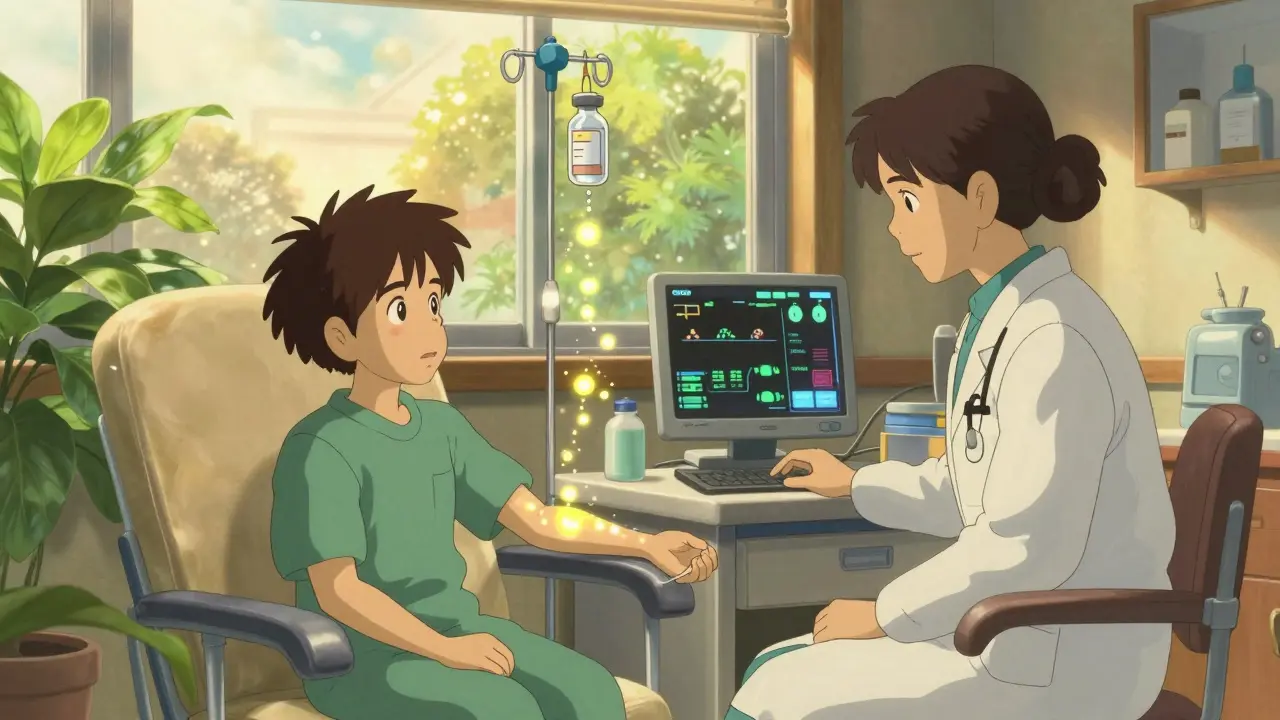
When you have a confirmed drug allergy, the instinct is simple: avoid that medication at all costs. But what if that drug is the only thing keeping you alive? What if it’s the only chemotherapy that works for your cancer, the only antibiotic that clears your lung infection, or the only biologic that controls your autoimmune disease? For many people, there’s no alternative. That’s where drug desensitization comes in - a medically supervised process that lets your body temporarily tolerate a drug you’re allergic to, so you can get the treatment you need.
What Is Drug Desensitization?
Drug desensitization isn’t about curing your allergy. It’s about buying time. The process involves giving you tiny, gradually increasing doses of the drug you’re allergic to, under strict medical supervision. Each dose is given at set intervals - usually every 20 to 30 minutes for IV drugs, or hourly for oral ones. By slowly ramping up the amount, your immune system gets tricked into not reacting. It’s not magic. It’s science. And it’s been used successfully for decades at major hospitals like Brigham and Women’s in Boston, where Dr. Mariana C. Castells leads one of the world’s most experienced desensitization programs.The goal? To get you to the full therapeutic dose without triggering anaphylaxis, hives, or breathing trouble. Once you reach that dose, you can continue taking it as prescribed. But here’s the catch: the tolerance doesn’t last. If you stop the drug for more than 48 hours, your allergy can come back. That means you have to keep taking it regularly, or you’ll need to go through the whole process again.
When Is Desensitization Used?
This isn’t for every allergic reaction. Doctors only consider it when there’s no other option. That usually means:- You need a specific antibiotic - like penicillin or vancomycin - and no other drug will work for your infection.
- You have cancer and the only effective chemotherapy is one you’re allergic to.
- You rely on a biologic drug - like rituximab, infliximab, or cetuximab - for rheumatoid arthritis, Crohn’s, or another autoimmune condition.
- You’re allergic to aspirin or NSAIDs and need them for heart disease or chronic pain.
- You’re a cystic fibrosis patient who keeps getting lung infections and needs a specific IV antibiotic.
According to the American Academy of Allergy, Asthma & Immunology (AAAAI) 2022 guidelines, desensitization is now considered standard care for these situations. Studies show success rates above 90% when done by trained teams using established protocols.
How the Procedure Works
There’s no one-size-fits-all approach. The steps depend on the drug, the route (IV or oral), and how severe your past reaction was. But most protocols follow a similar pattern.For IV drugs like antibiotics or chemotherapy:
- You start with a dose that’s 1/10,000th of the full therapeutic amount.
- Every 20 to 30 minutes, the dose doubles.
- Most protocols use 12 to 16 steps, with concentrations like 1:100, 1:10, and finally the full-strength solution.
- The entire process usually takes 5 to 6 hours.
For oral drugs like aspirin or NSAIDs:
- Doses are given every hour.
- It can take days to complete, especially if you’ve had severe reactions like asthma attacks or hives.
- Some protocols start with 1 mg and work up to 325 mg over several days.
At every step, you’re closely monitored. Your blood pressure, heart rate, oxygen levels, and breathing are checked. Nurses watch for rashes, swelling, or wheezing. If you react, the team stops, drops back to the last safe dose, and waits longer before trying again. Sometimes they reduce the dose increments. Every decision is made in real time, based on your body’s response.

Who Shouldn’t Try It?
Desensitization isn’t safe for everyone. Certain reactions are too dangerous to risk.Experts at Brigham and Women’s Hospital and the AAAAI warn against it if you’ve ever had:
- Stevens-Johnson syndrome
- Toxic epidermal necrolysis
- Erythema multiforme with blistering skin
- Drug-induced hepatitis or kidney inflammation (nephritis)
- Serum sickness (fever, joint pain, rash after a drug)
These aren’t just allergies - they’re systemic tissue injuries. Trying to desensitize in these cases could kill you. Also, if you’ve ever had a reaction that required intensive care or caused your airway to close, the risk is higher. Only specialized teams with experience should attempt this.
Where It’s Done and Who Does It
You can’t walk into a local clinic and ask for desensitization. It requires:- A hospital setting - usually an outpatient infusion center or inpatient unit.
- Aboard-trained allergist or immunologist who’s done dozens of these procedures.
- Nurses trained in emergency response and drug protocols.
- Immediate access to epinephrine, antihistamines, steroids, and intubation equipment.
Each patient gets a personalized written protocol before the day even starts. That protocol includes exact doses, timing, monitoring checks, and backup plans if things go wrong. At Brigham and Women’s, they’ve done over 2,000 desensitizations - mostly for cancer patients needing chemo or biologics. They’ve also successfully desensitized people allergic to local anesthetics, which used to be considered impossible.
What Happens After?
Once you finish the protocol and reach the full dose, you’re not out of the woods. You still need to keep taking the drug regularly. If you miss a dose for more than two days, your body can forget the tolerance. That means if you stop the drug for a weekend, you’ll need to restart the whole process.For cancer patients, this is often a long-term solution. Many complete their full chemo cycle because of desensitization. For people with autoimmune diseases, it means they can stay on life-changing biologics instead of switching to less effective drugs with more side effects.
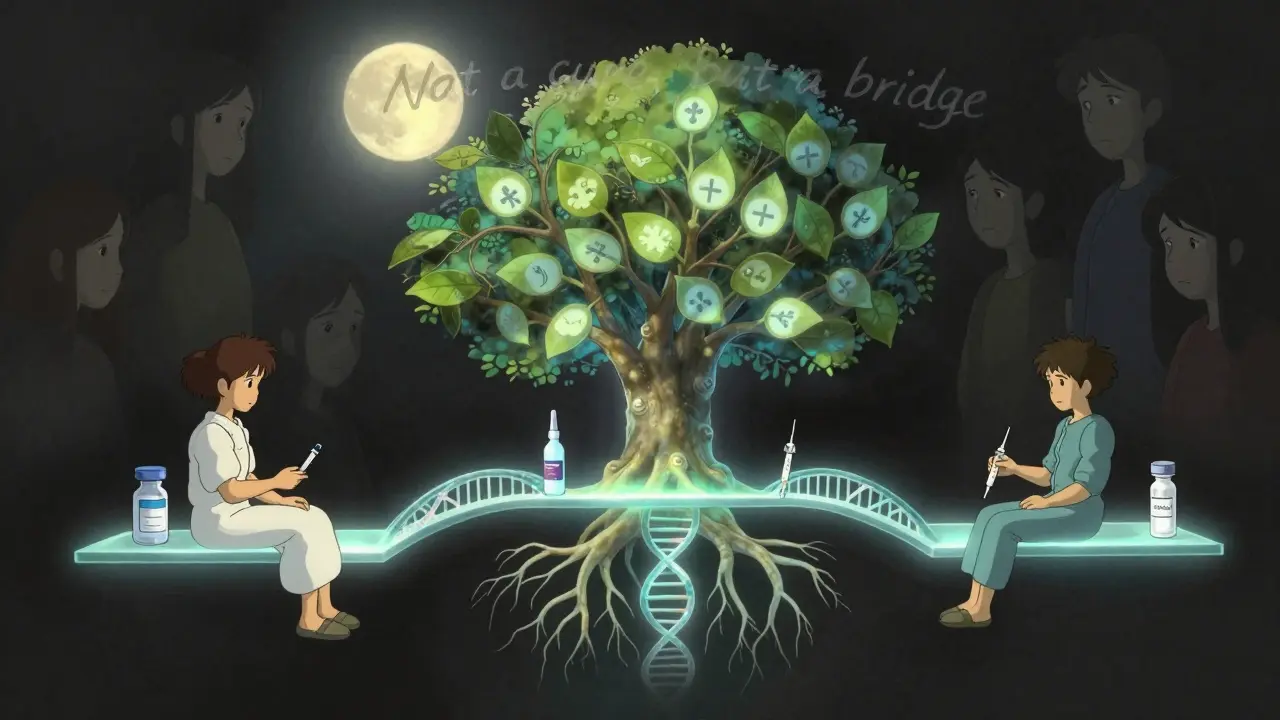
But the tolerance is temporary. That’s why it’s not a cure. It’s a bridge. A carefully managed bridge that lets you live while your body learns to ignore the drug - for now.
Recent Advances and Expanding Use
The field is growing fast. Ten years ago, desensitization was mostly for penicillin and aspirin. Now, it’s used for:- Monoclonal antibodies (rituximab, tocilizumab, omalizumab)
- Immune checkpoint inhibitors (like pembrolizumab for melanoma)
- Tyrosine kinase inhibitors (used in leukemia and lung cancer)
- Iron infusions (for patients with severe anemia)
As personalized medicine grows, more drugs are being developed that are highly effective - but also more likely to trigger allergies. That’s why centers like Brigham and Women’s are expanding their programs. The AAAAI’s 2022 update specifically calls for more research into these newer agents, and more training for doctors outside major cities.
What to Do If You Think You Need It
If you’ve had a confirmed allergic reaction to a drug you need:- Don’t assume you have to give up treatment.
- Ask your oncologist, rheumatologist, or infectious disease doctor if desensitization is an option.
- Request a referral to an allergy or immunology clinic with a desensitization program.
- Be ready to provide details about your reaction: when it happened, what symptoms you had, how it was treated.
Many patients don’t know this exists. They’ve been told, “Never take that drug again,” and they accept it. But with the right team, that’s not the end of the story.
Can you desensitize to any drug?
No. Desensitization is only used for drugs that are essential and have no safe alternatives. It’s not used for drugs you can easily swap out. It’s also not safe for people who’ve had severe skin reactions like Stevens-Johnson syndrome, toxic epidermal necrolysis, or drug-induced liver or kidney damage. The procedure is reserved for IgE-mediated allergies and some non-IgE reactions - mainly to antibiotics, chemotherapy, biologics, aspirin, and NSAIDs.
How long does a desensitization take?
For IV drugs like antibiotics or chemotherapy, it usually takes 5 to 6 hours. For oral drugs like aspirin, it can take days - sometimes up to a week - because doses are given more slowly and spaced further apart. The timeline depends on the drug, your reaction history, and how your body responds during the process.
Is desensitization permanent?
No. The tolerance is temporary. If you stop taking the drug for more than 48 hours, your allergy can return. That means you need to keep taking the medication regularly to maintain tolerance. If you miss doses or stop treatment, you’ll need to go through the entire desensitization process again to restart.
What if I have a reaction during the procedure?
If you develop symptoms like hives, wheezing, or low blood pressure, the team will stop increasing the dose. They may drop back to the last dose you tolerated, extend the time between doses, or use smaller increases. Medications like antihistamines, steroids, or epinephrine are given immediately if needed. Most reactions are mild and manageable. Severe reactions are rare when done by experienced teams.
Can I do this at my local clinic?
No. Desensitization requires a hospital or specialized allergy center with trained staff, emergency equipment, and experience. It’s not something a general practitioner can do. You’ll need a referral to a center that performs these procedures regularly - usually found at major academic hospitals. In the UK and US, these are often linked to allergy or immunology departments.
Bro, I had to go through this for my chemo last year. They started me at like 1/10,000th of a dose-like, literally a drop you could barely see-and worked up over 6 hours. I was sweating bullets, but the nurses were chill as hell. Told me to breathe like I was meditating. I made it. Now I’m on my 8th round. No more ‘avoid at all costs’ BS. This shit saves lives. 🙌
It is imperative to underscore that drug desensitization, while clinically efficacious, is not without its inherent risks-particularly when performed outside of accredited tertiary care centers. The literature, including the AAAAI 2022 guidelines, explicitly delineates contraindications such as Stevens-Johnson syndrome and toxic epidermal necrolysis, which are absolute barriers to procedure initiation. To suggest otherwise is not merely negligent-it is potentially lethal.
I’ve seen this done twice in my hospital’s infusion center. One patient was on a biologic for RA, allergic to the first one they tried. She cried when she got to the full dose-said she hadn’t been able to hold her granddaughter without pain in years. It’s not magic. But it’s close. And honestly? The way the team held space for people during the process… that’s the real medicine.
It’s fascinating how the body can be tricked into tolerance like this. It reminds me of how exposure therapy works for phobias-gradual, controlled, with safety nets. The immune system isn’t ‘learning’ per se… more like being gently convinced it’s safe. I wonder if this could inform future approaches to autoimmune disorders. Maybe not a cure, but a bridge… yes, that’s the right word.
So… you’re telling me I have to take this drug every single day… or else I get to do the whole 6-hour nightmare again? Like… I can’t just take a weekend off? What if I’m on vacation? What if I forget? This is basically a life sentence with a side of IV drip. 😅
While the concept is theoretically sound, one must question the institutionalization of such procedures. Is this truly a medical advancement-or a corporate workaround to keep patients on expensive biologics with no generic alternatives? The AAAAI guidelines may be authoritative, but they are not infallible. The profit motive in pharmaceuticals cannot be ignored.
Just had my cousin go through this for her lung infection. Vancomycin allergy. Took 5 hours. She was scared but the team was so calm. They even let her mom hold her hand during the first dose. Now she’s doing great. Also-YES to the emoji. 🤗💉❤️
From a pharmacokinetic standpoint, the IgE-mediated desensitization protocol leverages FcεRI receptor internalization and mast cell anergy via sustained low-dose antigen exposure. The temporal window of tolerance-48 hours-is consistent with the half-life of IgE-bound basophils and the turnover rate of membrane-bound IgE on effector cells. This is a brilliant example of translational immunology in clinical practice.