
Every year in the U.S., over 1.3 million medication errors happen in hospitals and pharmacies. Many of these mistakes aren’t caused by careless staff-they’re caused by human limits. Fatigue, distractions, similar-looking drug names, and rushed workflows can lead to giving the wrong pill, wrong dose, or wrong patient the wrong medicine. But one simple technology has changed the game: barcode scanning.
How Barcode Scanning Stops Errors Before They Happen
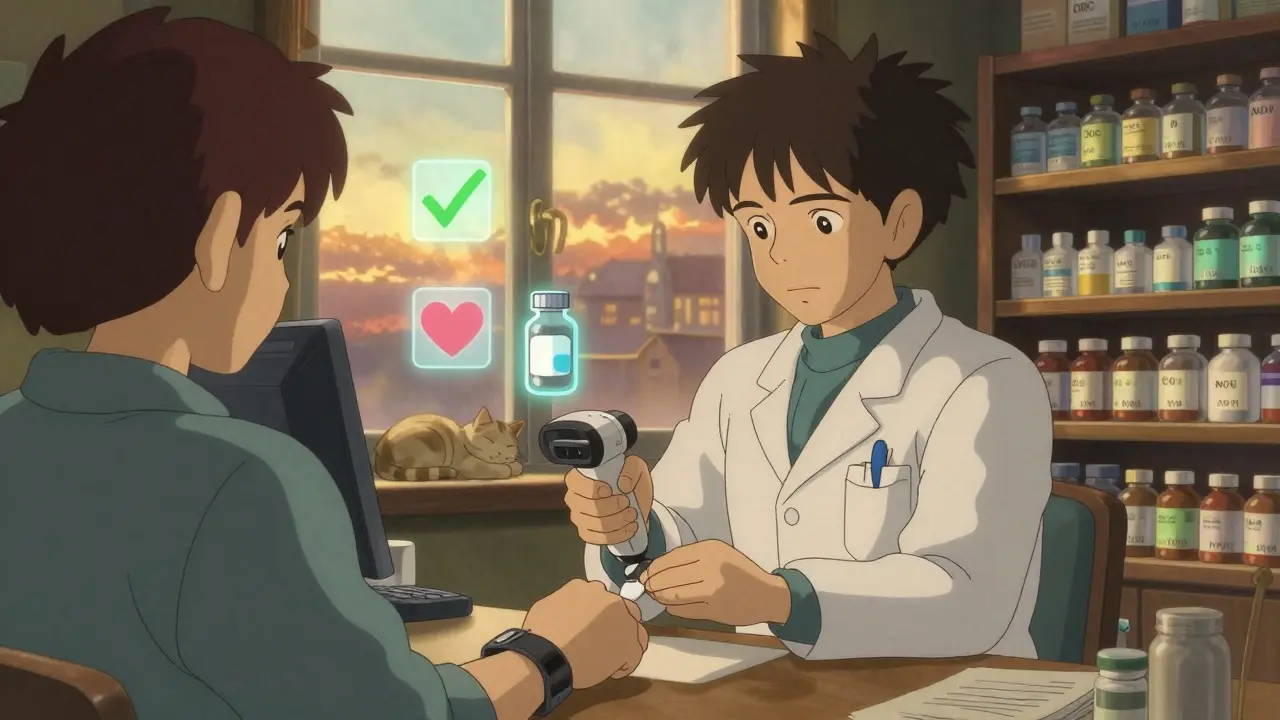
Barcode scanning in pharmacies isn’t just about speeding up inventory. It’s a safety net. When a pharmacist or technician scans a medication, the system checks three things at once: Is this the right drug? Is this the right dose? Is this for the right patient? It’s called the five rights-right patient, right medication, right dose, right route, right time. And when you scan both the patient’s wristband and the medication’s barcode, the system confirms all five before the drug leaves the counter.
Before barcode systems, pharmacists relied on double-checks-two people looking at the same label. But studies show that even this method catches only about 36% of errors. Barcode scanning catches over 93%. A 2021 study in BMJ Quality & Safety found that when systems work as designed, they prevent 93.4% of potential dispensing errors. That’s not a guess. That’s data from real hospitals where errors dropped by 65% to 86% after implementation.
The Science Behind the Barcode
The barcode on your medication isn’t just a random line pattern. It’s a National Drug Code (NDC)-a unique 11-digit number assigned by the FDA. Since 2006, every unit-dose package of prescription medication sold in the U.S. has been required to carry this barcode. The code links directly to the drug’s name, strength, manufacturer, and lot number in the pharmacy’s database.
Modern systems use two types of barcodes: 1D (the classic black-and-white lines) and 2D (square matrix codes). 1D barcodes hold basic NDC info. 2D barcodes can store more: expiration dates, lot numbers, even concentration details. By 2026, the American Society of Health-System Pharmacists predicts 65% of medications will use 2D barcodes-up from just 22% in 2023. That’s because 2D codes can carry more safety data right on the label.
These barcodes connect to the pharmacy’s information system (PIS) and the hospital’s electronic health record (EHR). When a patient’s prescription is filled, the system pulls up their profile. Scanning the patient’s wristband confirms identity. Scanning the medication confirms what’s being dispensed. If there’s a mismatch-say, a 10mg tablet instead of a 100mg-the system flags it immediately. No guesswork. No second-guessing.
Real Cases: When Scanning Saved Lives
One Pennsylvania hospital tracked errors before and after installing barcode scanning. Pre-scan, staff correctly identified medications 86.5% of the time. After implementation? 97%. That 10.5% jump meant fewer patients got the wrong drug, wrong dose, or someone else’s meds.
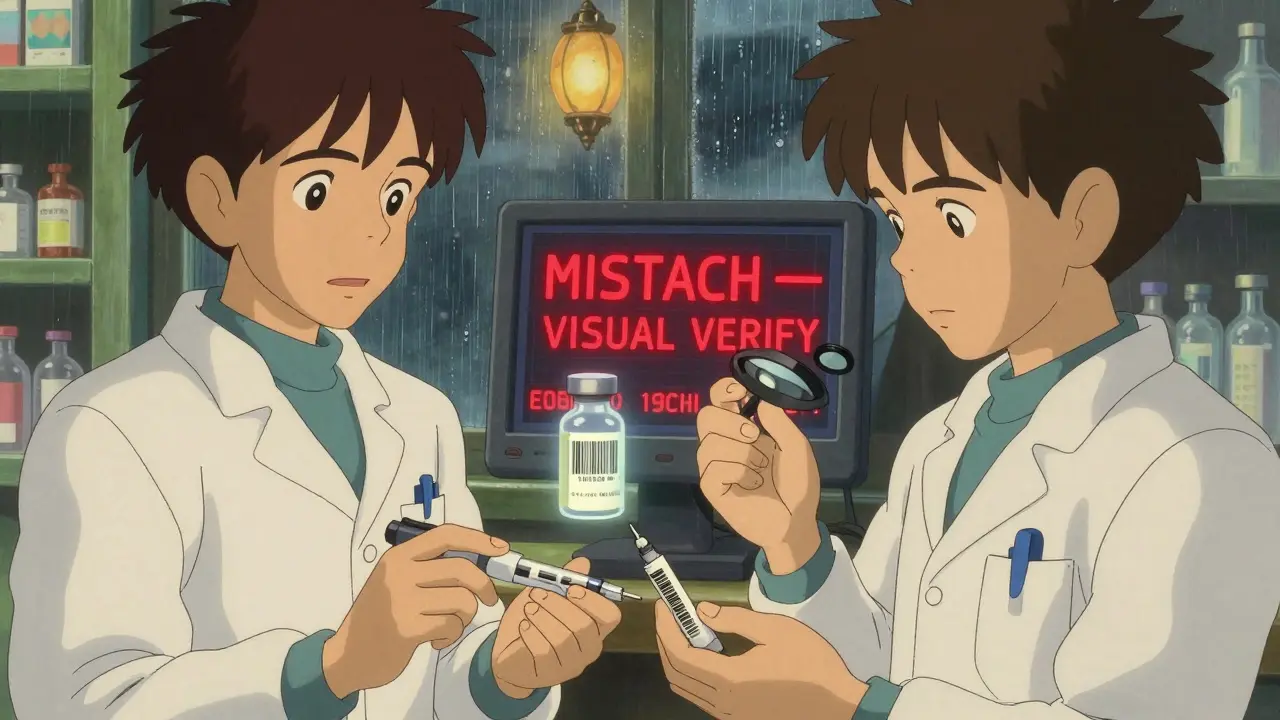
Another case: a pharmacist was about to hand over a vial of vancomycin-used for serious infections. The label said 500mg/10mL. But the pharmacy had just received a new shipment labeled 500mg/5mL. The concentration was doubled. The barcode on the vial was correct. The label was wrong. The pharmacist scanned it anyway. The system approved it. The patient almost died. Why? Because the barcode matched the label, even though the label was inaccurate. This is why experts warn: scanning is not a replacement for visual verification. If the barcode scans but the vial looks wrong, stop. Check the original order. Look at the medication. Don’t trust the machine blindly.
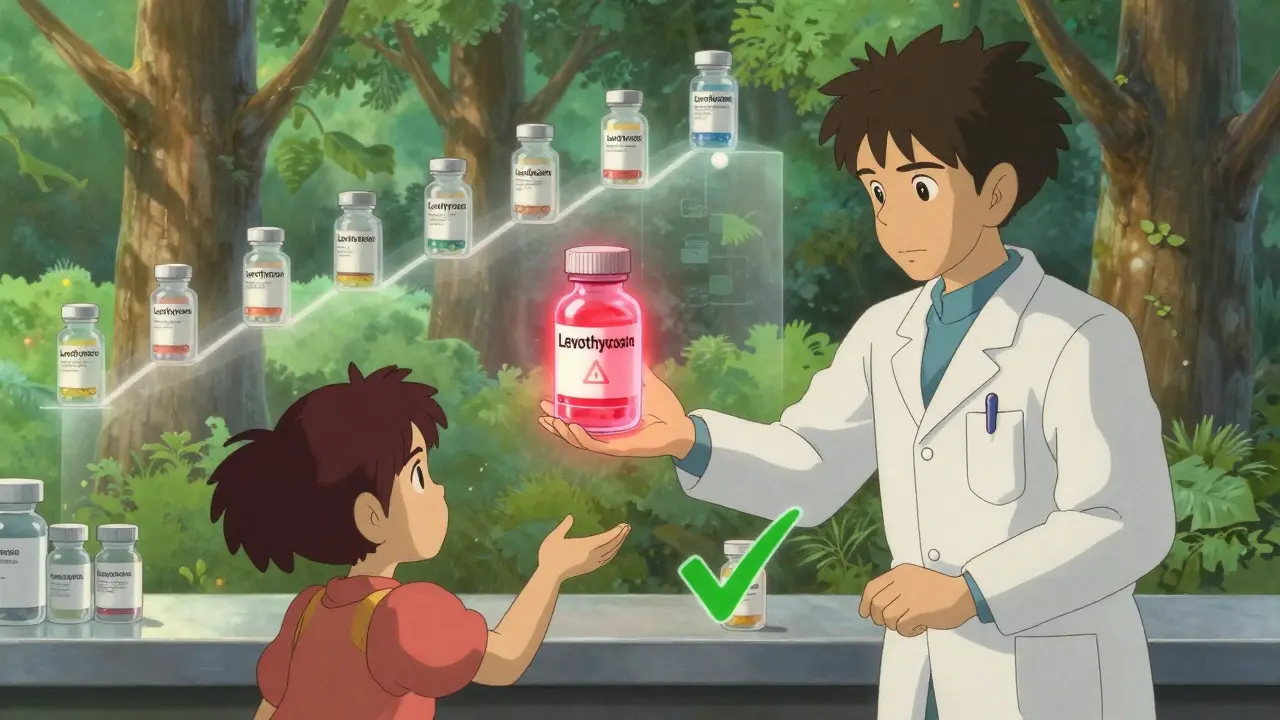
On the flip side, a Kaiser Permanente pharmacy technician shared on LinkedIn that scanning caught a 10x overdose of levothyroxine-thyroid medication. The patient was scheduled for 25mcg. The system flagged 250mcg. The pharmacist caught it before it left the counter. That’s the power of the system working right.
Where Barcode Scanning Falls Short
Barcode scanning isn’t magic. It fails in predictable ways.
- Damaged barcodes: 15% of scanning failures happen because labels are torn, smudged, or covered in condensation. Insulin pens, ampules, and small vials are especially prone to this.
- Non-standard packaging: Compounded medications, emergency kits, and some IV bags don’t have barcodes. Pharmacists must manually verify these.
- Workarounds: A 2023 Pharmacy Times survey found 41% of pharmacists occasionally skip scans during rush hours. Why? Because the system freezes, the scanner doesn’t read the code, or the workflow is too slow.
- Automation bias: Staff start trusting the scanner more than their eyes. If the system says “OK,” they don’t double-check the drug’s appearance. That’s dangerous.
One hospital found that 29% of medications weren’t scanned at all. Another found 20% of patient wristbands were skipped. That’s not a technical glitch-that’s a training and culture problem. If staff aren’t trained to treat scanning as non-negotiable, the system fails.
How Pharmacies Fix the Problems
Leading pharmacies don’t just install scanners and call it done. They redesign workflows.
- Specialized trays: Hospitals now use trays with built-in lighting and holders for small vials and ampules. These make scanning easier and reduce errors.
- Barcode validation teams: Some pharmacies assign staff to check high-risk drugs-like insulin, heparin, or opioids-before they’re dispensed. They verify the barcode matches the order and the physical product.
- Regular data reviews: Pharmacies track which drugs are most often scanned incorrectly or skipped. If insulin pens keep failing, they switch to a different brand or adjust the scanner angle.
- Training on escalation: Staff are taught: If it won’t scan, stop. Don’t force it. Don’t guess. Call for help. Escalation protocols are now part of certification.
According to Epic Systems’ 2023 research, properly implemented systems reduce dispensing time by 12%-not because they’re faster, but because they prevent costly delays from errors. One mistake can mean a patient’s hospital stay extends by days. Scanning saves time in the long run.
Why It’s Still the Gold Standard
There are other technologies: smart pumps for IVs, RFID tags, automated dispensing cabinets. But none match barcode scanning for breadth.
- Smart pumps only help with IV meds. Barcodes cover pills, injections, eye drops, and more.
- RFID tags cost 47% more per unit and don’t integrate as easily with existing pharmacy systems.
- Automated cabinets help with inventory but don’t verify the patient.
Barcodes are cheap, simple, and proven. The FDA, The Joint Commission, and the Agency for Healthcare Research and Quality all require or strongly recommend them. In U.S. hospitals, 78% now use barcode scanning. That’s up from 42% in 2015. Community pharmacies lag behind-only 35% use it-but that’s changing as costs drop and systems get easier to install.
What Comes Next
Barcode scanning isn’t going away. It’s evolving. In March 2024, Epic Systems released mobile-integrated scanners that improved scanning success by 22%. The FDA is testing 2D barcodes that include batch numbers and expiration dates right on the label. Cerner plans AI-powered barcode recognition by 2025-so if a label is slightly smudged, the system guesses the right code based on context.
But the core principle stays the same: technology doesn’t replace vigilance-it supports it. The best system in the world won’t help if staff skip scans, ignore alerts, or trust the machine over their eyes. The goal isn’t to eliminate human judgment. It’s to give pharmacists the tools to make better judgments.
When a barcode scan beeps green, it’s not saying, “You’re done.” It’s saying, “Double-check. Confirm. Then proceed.” That’s how errors get stopped. Not by magic. By process. By discipline. By technology working with people-not instead of them.
How effective is barcode scanning at preventing medication errors?
When properly implemented, barcode scanning prevents 65% to 86% of medication administration errors. Studies show it stops 93.4% of potential dispensing errors by verifying the five rights: right patient, medication, dose, route, and time. A Pennsylvania hospital saw accuracy jump from 86.5% to 97% after adoption.
Do all medications have barcodes?
Since 2006, the FDA has required all unit-dose prescription medications sold in the U.S. to carry a barcode with the National Drug Code (NDC). However, compounded medications, emergency drugs, and some IV solutions often lack barcodes. These require manual verification.
Can barcode scanning cause errors?
Yes-if used incorrectly. If a pharmacy applies a wrong label to a medication, the barcode will still scan as correct. This is called automation bias. Staff may trust the system and skip visual checks. ECRI Institute warns that scanning should never replace manual verification. Always confirm the drug looks right before giving it.
Why do some pharmacists avoid scanning?
Common reasons include scanner failures with small vials, damaged barcodes, system freezes, and time pressure. A 2023 survey found 41% of pharmacists occasionally skip scans during rush hours. This creates risk. Best practices require training staff to escalate scanning failures instead of bypassing them.
Is barcode scanning used in community pharmacies?
Yes, but adoption is lower than in hospitals. About 35% of community pharmacies use barcode scanning, compared to 78% of U.S. hospitals. Cost and workflow complexity are barriers. However, as systems become more affordable and user-friendly, adoption is slowly increasing.
Barcodes ain't magic but they're the closest thing we got to a pharmacist's sixth sense. I've seen a 10x levothyroxine error get caught because the system beeped red. No way a human would've caught that in a 3am rush. Still, I've seen techs slap a barcode on a vial that looked like antifreeze and just hit 'approve'. That's not tech failure. That's human laziness. We need to stop treating scanners like a get-out-of-jail-free card.
Also, why the hell are we still using 1D barcodes on insulin pens? They're the size of a pencil and get covered in condensation. 2D is the future and we're dragging our feet.
I work in a community pharmacy in Toronto and let me tell you - we went from 2% scanning compliance to 98% in 6 months. How? We stopped treating it like a chore. We gave every tech a $5 bonus for every day they hit 100% scan rate. We put up a leaderboard. We made it a game. Now people fight over who gets to scan first. The system didn't change. Our culture did. Stop blaming the tech. Start blaming the managers who think 'just scan it' is a training program. 😤
Oh look another tech solution that makes pharmacists feel important while doing nothing to fix the real problem: underpaid workers getting paid $22/hr to catch errors that should never happen. We don't need more scanners. We need more staff. More breaks. Less 12-hour shifts. But nope. Let's spend $50k on scanners so we can pat ourselves on the back while the system burns out another nurse. 💀
I've worked in 3 different hospitals and seen this play out every time. The barcode system works beautifully... until someone skips a scan because 'it's just insulin' or 'the patient's been here 3 times'. Then someone dies. And the hospital says 'oh we had the system' like that's an excuse. It's not about the tech. It's about the culture. If you don't train people to treat scanning like a seatbelt - mandatory, non-negotiable - then you're just decorating a death trap with LEDs.
There's something deeply human about this. We're trying to engineer perfection in a system built on exhaustion. The barcode doesn't care if the pharmacist hasn't slept in 36 hours. It doesn't care if the vial was mislabeled by a supplier. It just scans. And maybe that's the point - not to replace intuition, but to give it space. To let the human mind breathe long enough to notice that the liquid in the vial looks too thick. Or that the pill color is wrong. The machine doesn't see. The human must. And we've forgotten that.
This is why I love pharmacy. Not because of the tech, but because of the people who refuse to let the tech become a crutch. I've had interns stop me and say 'that label doesn't match the bottle' - and they were right. The barcode was correct. The label was wrong. We called the manufacturer. They recalled 12,000 vials. That's the power of a trained, empowered team. Not the scanner. The human.
The FDA's requirement for NDC barcodes on all unit-dose medications since 2006 was a watershed moment in medication safety. Subsequent implementation of barcode-assisted verification systems, when coupled with standardized workflow protocols and mandatory staff competency validation, has demonstrated statistically significant reductions in preventable adverse drug events. According to the Institute of Medicine, 40% of these events are attributable to dispensing errors - a figure that has declined by 73% in institutions with full system integration. This is not anecdotal. It is evidence-based practice.
I love this so much. 🥹 The fact that a simple barcode can prevent someone from getting 10x their thyroid dose? That’s the kind of quiet heroism we don’t talk about. Every time a system catches a mistake, a family doesn’t have to bury someone. Every time a tech says 'wait, something’s off' - that’s a life saved. We need more stories like this. Not just stats. Real people. Real moments. Thank you for writing this.
i read this and thought 'wow this guy gets it' then i saw he works at epic systems. oh. well. ofc the system works. they make the system. also why are we still talking about barcodes when we could be using rfid? i heard rfid can track the pill all the way to the patient's mouth. like a smart pill. we're stuck in 2010 here. 🤦♂️
The elegance of barcode scanning lies not in its technological sophistication, but in its humility. It does not claim to replace judgment. It does not assert infallibility. It merely asks: 'Are you certain?' And in that quiet inquiry, it restores the dignity of professional vigilance. We must not mistake compliance for competence. Nor automation for assurance. The machine serves. The practitioner must still see.