

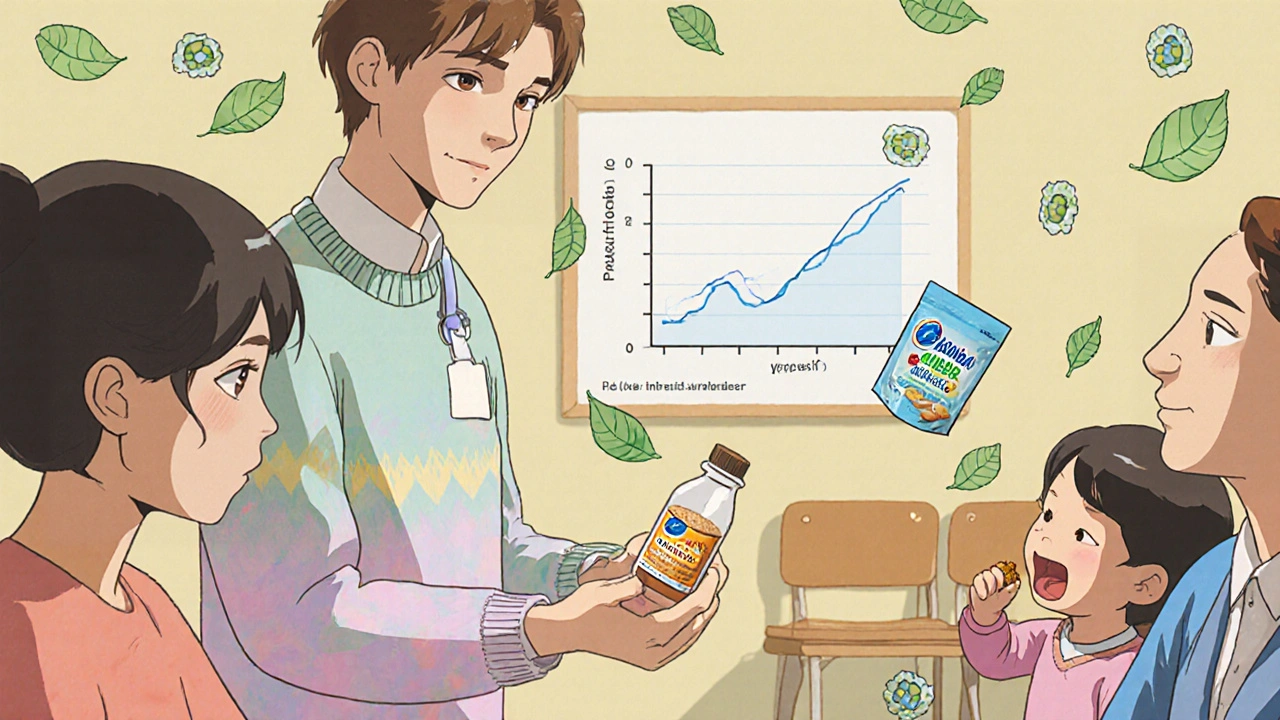
For years, parents were told to wait until their child was two or three before giving them peanut butter. That advice was meant to protect them. But it didn’t work. Instead, peanut allergies kept rising - from 0.4% of kids in 1997 to over 2% by 2010. Today, we know why: delaying peanut didn’t prevent allergies. It made them more likely.
Why Early Introduction Works
The turning point came in 2015 with the LEAP study - a major clinical trial led by researchers at King’s College London. They looked at over 600 babies at high risk for peanut allergy - those with severe eczema or egg allergy. Half were given peanut-containing foods regularly from 4 to 11 months old. The other half avoided peanut entirely until age 5. The results were shocking. By age 5, 17% of the kids who avoided peanut developed an allergy. Only 3% of the kids who ate peanut regularly did. That’s an 80% drop in allergy risk. This wasn’t luck. The science behind it is simple: your baby’s immune system learns what’s safe during the first year of life. If peanut is introduced early and often, the body sees it as food - not a threat. If it’s kept away, the immune system treats it like an invader. And once it’s labeled dangerous, it’s hard to undo.Who Needs to Introduce Peanut Early?
Not all babies need the same approach. The National Institute of Allergy and Infectious Diseases (NIAID) laid out clear risk groups in 2017, and they’re still the gold standard today.- High-risk infants: Those with severe eczema or egg allergy. These babies should be evaluated by a doctor between 4 and 6 months. If testing shows no peanut allergy, they can start eating peanut at home - or sometimes in the clinic for safety.
- Moderate-risk infants: Those with mild to moderate eczema. Start peanut around 6 months, no testing needed. Just introduce it at home like any other solid food.
- Low-risk infants: No eczema or food allergies. You can introduce peanut anytime after starting solids, usually around 6 months. No special steps needed.
How to Safely Introduce Peanut
You can’t just hand a toddler a spoonful of peanut butter. Whole peanuts? Choking hazard. Chunky peanut butter? Same risk. The goal is to give your baby 2 grams of peanut protein - three times a week - in a safe, smooth form. Here’s how real parents do it:- Take 2 teaspoons of smooth peanut butter.
- Mix it with 2-3 tablespoons of warm water, breast milk, or formula until it’s runny.
- Stir it into oatmeal, pureed sweet potato, or applesauce.
- Or use a spoonable peanut butter pouch designed for babies.
What About Oral Immunotherapy (OIT)?
Oral immunotherapy is not prevention. It’s treatment. And it’s for kids who already have a peanut allergy. OIT means giving tiny, increasing doses of peanut under medical supervision - day after day, month after month - to build tolerance. It doesn’t cure the allergy. It just raises the threshold so a small accidental exposure won’t trigger a reaction. Some kids can eat a full peanut after a year of OIT. Others still can’t. It’s not for every family. It’s time-consuming, expensive, and carries risks. Some kids develop stomach pain, hives, or even anaphylaxis during treatment. That’s why OIT is only done under strict medical care - not at home. And here’s the crucial part: OIT doesn’t replace early introduction. If your baby doesn’t have an allergy yet, early introduction is safer, cheaper, and more effective. OIT is for those who missed the window.Why So Few Parents Are Doing It
Despite strong guidelines and clear results, only about 39% of high-risk babies in the U.S. get peanut introduced early. Why? Parents are scared. They’ve been told for years that peanuts are dangerous. They worry about choking. They don’t know how to prepare it. They’ve been given conflicting advice by different doctors. A 2022 survey found that 62% of parents felt anxious about introducing peanut. And only 54% of pediatricians could correctly explain the current guidelines. There’s also a big gap in access. Black and Hispanic babies are 22% less likely to get peanut early than white babies. That’s not because of culture or choice. It’s because of unequal access to pediatric care, inconsistent advice from providers, and lack of culturally tailored resources.What’s Changed Since 2017?
The results are in. Since the 2017 guidelines, peanut allergy rates in U.S. children have dropped from 2.2% to 1.6%. That’s about 300,000 fewer kids with peanut allergies. The biggest drops? In high-risk groups. Babies with mild eczema saw an 85% reduction. Those with moderate eczema? 87%. Even severe eczema showed a 67% drop. The protection lasts. The original LEAP study followed kids for another year after they stopped eating peanut. The allergy protection didn’t fade. That means early introduction doesn’t just delay allergy - it changes how the immune system works long-term.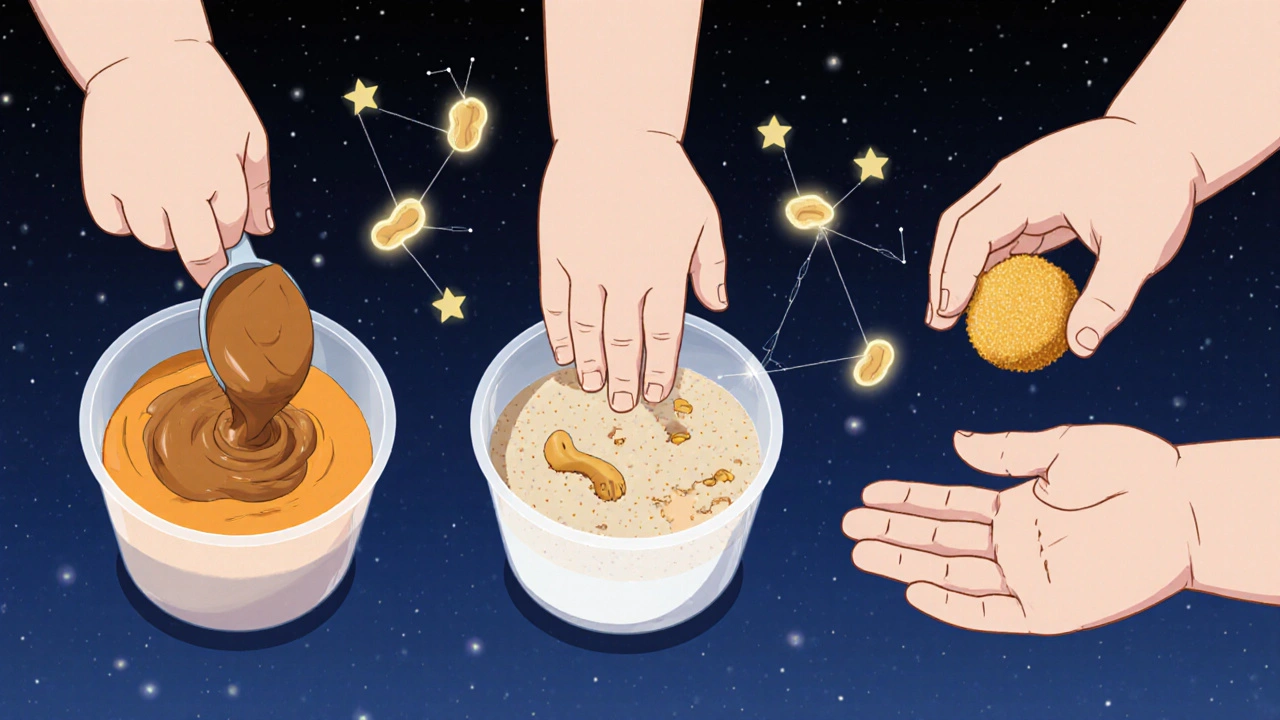
What’s Next?
Researchers are now testing whether introducing multiple allergens at once - peanut, egg, milk, tree nuts - gives even broader protection. Early results from the EAT study extension look promising. A new trial called PRESTO, funded by the U.S. government with $35 million, is trying to find the perfect dose and timing for high-risk babies. Results are expected in 2026. Meanwhile, companies are responding. Peanut pouches, peanut powders, and infant-safe peanut snacks have grown 27% a year since 2018. The market is adapting - but the real change is happening in homes.What Parents Should Do Now
If you’re pregnant or have a baby under 12 months:- Don’t wait. Don’t delay.
- If your baby has severe eczema or egg allergy, talk to your pediatrician by 3-4 months. Ask about allergy testing.
- If your baby has mild eczema, start peanut at 6 months - no test needed.
- If your baby has no eczema or allergies, just add peanut when you start solids.
- Use smooth peanut butter or peanut powder. Never whole peanuts or chunky butter.
- Give peanut 3 times a week, consistently.
What Doesn’t Work
Don’t waste time on unproven methods:- Don’t avoid peanuts during pregnancy or breastfeeding - no evidence it helps.
- Don’t rely on probiotics or vitamin D - Cochrane reviews show no benefit.
- Don’t wait for your child to show signs of allergy - by then, it’s too late for prevention.
Can I give my baby peanut butter straight from the jar?
No. Full-strength peanut butter is too thick and sticky for babies under 12 months. It’s a choking hazard. Always thin it with water, breast milk, or formula until it’s smooth and runny. You can also mix it into purees or cereals.
Is it safe to introduce peanut at home for high-risk babies?
It depends. If your baby has severe eczema or egg allergy, the NIAID guidelines recommend seeing a doctor or allergist first. They may suggest skin or blood tests. If those are negative, you can introduce peanut at home - but many parents choose to give the first dose in the clinic for safety. If your baby has mild eczema, you can start at home without testing.
How much peanut protein should I give my baby?
Aim for 2 grams of peanut protein, three times a week. That’s about 2 teaspoons of smooth peanut butter. If you’re using peanut powder, check the label - 1 gram of powder usually equals 1 gram of peanut protein. Don’t exceed this amount unless your doctor says so.
What if my baby has a reaction?
Stop feeding peanut immediately. If your baby has mild symptoms like a rash or vomiting, call your pediatrician. If they have trouble breathing, swelling of the lips or tongue, or become limp or unresponsive, call 999 or go to the nearest emergency room. Always have an epinephrine auto-injector ready if your baby has been diagnosed with a peanut allergy.
Can I stop giving peanut after I start?
No. Consistency matters. Studies show the protection fades if peanut is stopped for long periods. Keep giving it 2-3 times a week, even after the first few months. Once your child is eating peanut regularly, you can include it in meals - like peanut butter sandwiches or hummus with peanuts.
My niece tried peanut butter mixed into applesauce at 5 months. No drama. Just a happy baby with a sticky chin. We did it three times a week like clockwork. Now she’s 3 and eats PB&J like it’s candy. No allergies. No panic. Just real science working.
It is imperative to underscore that the LEAP study, published in the New England Journal of Medicine in 2015, constituted a paradigmatic shift in immunological pediatrics. The statistical significance of the 80% reduction in peanut allergy incidence among early-introduced cohorts (p < 0.001) is not merely noteworthy-it is transformative. Delayed introduction, once dogma, has been empirically refuted.
Let me tell you, I was terrified. My son had eczema worse than a winter rash on a cat. I read every study, talked to three allergists, cried in the pediatrician’s office. But when we started with that runny peanut butter mixed into oatmeal at 4 months? It felt like handing him a tiny shield. Now he’s 2.5, eats peanut butter straight from the jar (well, almost), and I swear I’ve never felt prouder. This isn’t just science-it’s peace of mind. And if you’re scared? Do it anyway. The worst that happens is your kid gets a little messy. The best? They never have to live with that fear.
It’s fascinating how we’ve spent decades treating allergy prevention like a moral choice-don’t expose them, protect them-when the real lesson is about trust. Trust the body’s ability to learn. Trust the data over fear. Trust that a little peanut butter isn’t a threat, but a teacher. We’ve done this with so many things: vaccines, sunlight, even vegetables. Why was peanut different? Maybe because it’s sticky. Maybe because it’s loud. But the science doesn’t care about texture. It just wants us to be consistent.
PEANUTS AREN’T THE ENEMY. THE ENEMY IS FEAR. THE ENEMY IS THE 2005 DOCTOR WHO TOLD ME TO WAIT UNTIL 3. THE ENEMY IS THE INTERNET POST THAT SAID ‘ONE BITE AND THEY’LL BE IN THE ICU.’ I DID IT. I THINNED THE BUTTER. I MIXED IT IN. I DIDN’T PANIC. MY DAUGHTER DIDN’T DIE. SHE ATE PEANUTS FOR BREAKFAST. AND NOW SHE’S HEALTHY. AND I’M STILL MAD AS HELL THAT I WASTED TWO YEARS WORRYING.
If you didn’t introduce peanut before 6 months, you failed your child. Plain and simple. You listened to outdated advice. You prioritized comfort over science. Now your kid has a lifelong condition. Don’t act surprised.
The NIAID guidelines, as outlined in the 2017 Addendum, remain the most rigorously validated framework for peanut introduction. The risk stratification-high, moderate, low-is not arbitrary but derived from population-based cohort analyses with longitudinal follow-up. It is critical that primary care providers not only be familiar with these guidelines but actively implement them, particularly in underserved communities where disparities persist.
My kid got peanut at 5 months. Got a tiny rash. Called the doc. They said ‘it’s fine, keep going.’ Two weeks later? No rash. Now he eats peanut butter like a snack. Meanwhile, my cousin’s kid got it at 18 months. Allergy. Now they’re doing OIT. $10K a year. And still scared to leave the house. Don’t be the cousin.
My brother-in-law is a pediatrician in rural Ohio. He told me half his patients’ parents still think peanut butter is poison. One mom asked if she could ‘just give it once a month’ to be safe. I told her: ‘It’s not a birthday present. It’s a vaccine.’ She cried. Then she went home and started. Two months later, her kid’s allergy test came back negative. She sent me a photo of him eating PB&J on toast. I cried too.
Yeah, but what if you’re just lazy? I mean, I get it. You’ve got two kids, a job, and no time to mix peanut butter into applesauce. So you wait. And then your kid gets diagnosed. And now you’re stuck doing OIT while your neighbor’s kid eats peanut butter straight out of the jar. You’re not a bad parent. You’re just… behind.
Interesting how the data ignores cultural context. In some households, peanut butter is a luxury. In others, it’s a staple. The guidelines assume universal access to smooth peanut butter, refrigeration, and pediatric care. Meanwhile, in food deserts, families are choosing between rice and peanut powder. This isn’t just medical advice-it’s a policy failure.
Our country is falling apart because parents refuse to follow science. You want your child to be healthy? Then stop listening to TikTok moms and YouTube gurus. Read the NIAID guidelines. Follow them. Or don’t complain when your kid ends up in the ER. This isn’t about freedom. It’s about responsibility.