
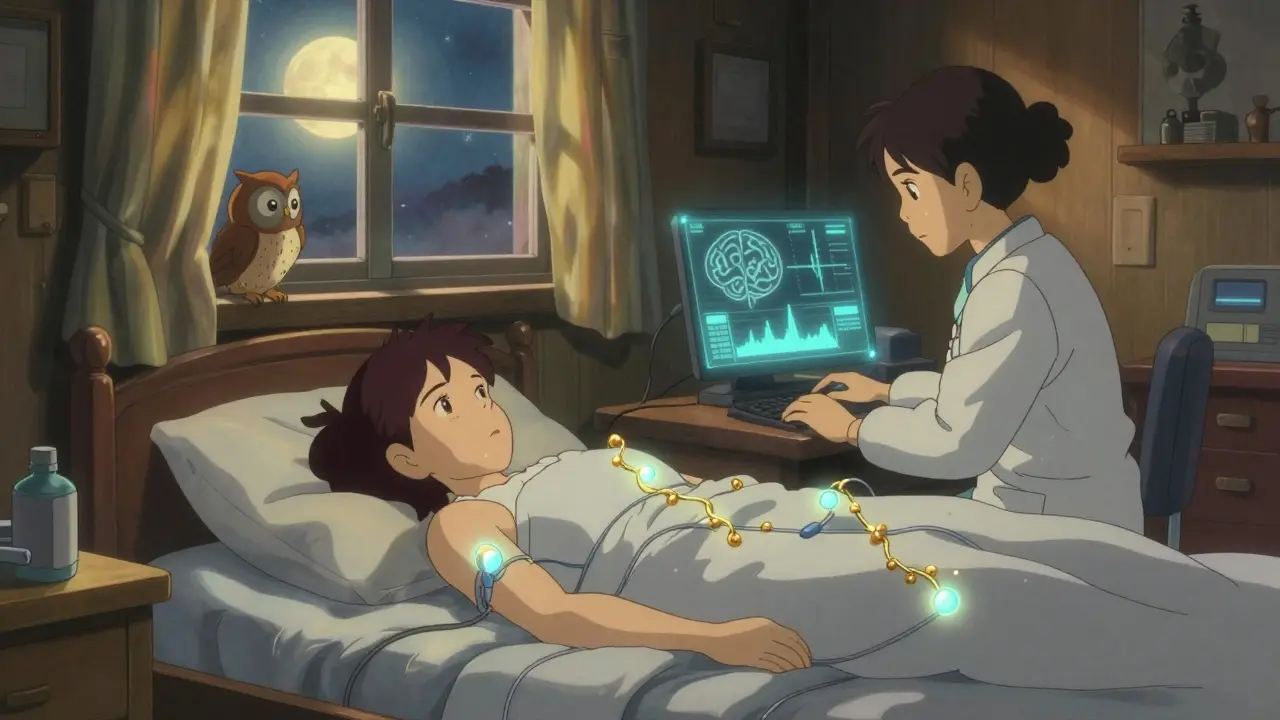
When you’re exhausted every day but can’t figure out why, it’s not just stress or bad habits. Something deeper might be going on - like a sleep disorder that your body can’t fix on its own. That’s where polysomnography comes in. It’s not a quick check-up. It’s a full-night, high-tech sleep analysis that reveals what’s really happening while you’re unconscious. And for many people, it’s the first step toward real relief.
What Exactly Is Polysomnography?
Polysomnography, often called a sleep study, is the most detailed way doctors can watch your body during sleep. It records at least seven different signals: brain waves, eye movements, muscle activity, heart rhythm, breathing patterns, blood oxygen levels, and body position. All of this is captured using sensors taped to your skin - no needles, no pain, just quiet monitoring. The name says it all: "poly" means many, "somno" means sleep, and "graphy" means recording. So it’s literally a multi-parameter sleep recording. This isn’t just about counting how many times you stop breathing. It’s about understanding how your brain cycles through sleep stages, whether your muscles twitch abnormally, if your heart stumbles, or if your oxygen drops too low. All of these clues help doctors tell the difference between sleep apnea, narcolepsy, restless legs, night terrors, or even seizures that happen only while you’re asleep. Unlike home sleep tests, which only track breathing and oxygen, polysomnography looks at the full picture. That’s why it’s still the gold standard. Home tests can miss narcolepsy, parasomnias, or central sleep apnea - conditions that need this level of detail to diagnose.What Happens During the Study?
You’ll arrive at a sleep center about an hour before your usual bedtime. The room looks like a hotel room - quiet, dark, with a comfortable bed. The only difference? There are wires everywhere. A sleep technologist will attach about 22 sensors to your scalp, face, chest, legs, and fingers. These include:- Electrodes on your scalp to track brain waves (EEG)
- Small sensors near your eyes to catch rapid eye movements (EOG)
- Chin and leg sensors to measure muscle activity (EMG)
- Bands around your chest and belly to detect breathing effort
- A small tube under your nose to measure airflow
- A clip on your finger to monitor blood oxygen (pulse oximeter)
- A tiny sensor on your finger or ear to track heart rate (ECG)
What Do the Results Show?
After the study, the raw data - often over 1,000 pages - goes to a board-certified sleep doctor. They don’t just glance at it. They spend 2-3 hours analyzing every second of your sleep. Here’s what they’re looking for:- Sleep stages: Did you go through the normal cycle of NREM and REM sleep? Or did you jump straight into REM - a sign of narcolepsy?
- Apneas and hypopneas: How many times did you stop breathing or breathe too shallowly? And were they caused by blocked airways (obstructive) or your brain not telling your body to breathe (central)?
- Oxygen drops: Did your blood oxygen fall below 90%? How often? Severe drops mean your body is struggling.
- Leg movements: Do your legs jerk every 20-40 seconds? That’s restless legs syndrome or periodic limb movement disorder.
- Abnormal behaviors: Were you talking, screaming, or getting out of bed? Video recording helps spot sleepwalking or REM sleep behavior disorder.
- Heart irregularities: Did your heart skip beats or race during sleep? This can point to heart issues worsened by poor sleep.
Split-Night Studies: Two Tests in One
If your sleep study shows severe sleep apnea early in the night - say, more than 30 breathing pauses per hour - the technologist might switch you to a split-night study. That means after the diagnostic part, they’ll wake you up, fit you with a CPAP mask, and slowly adjust the air pressure while you sleep. This saves you a second trip. About 35% of polysomnography studies now include CPAP titration. It’s efficient, and it gets you treatment faster. But it only works if the apnea is clear and severe enough in the first few hours.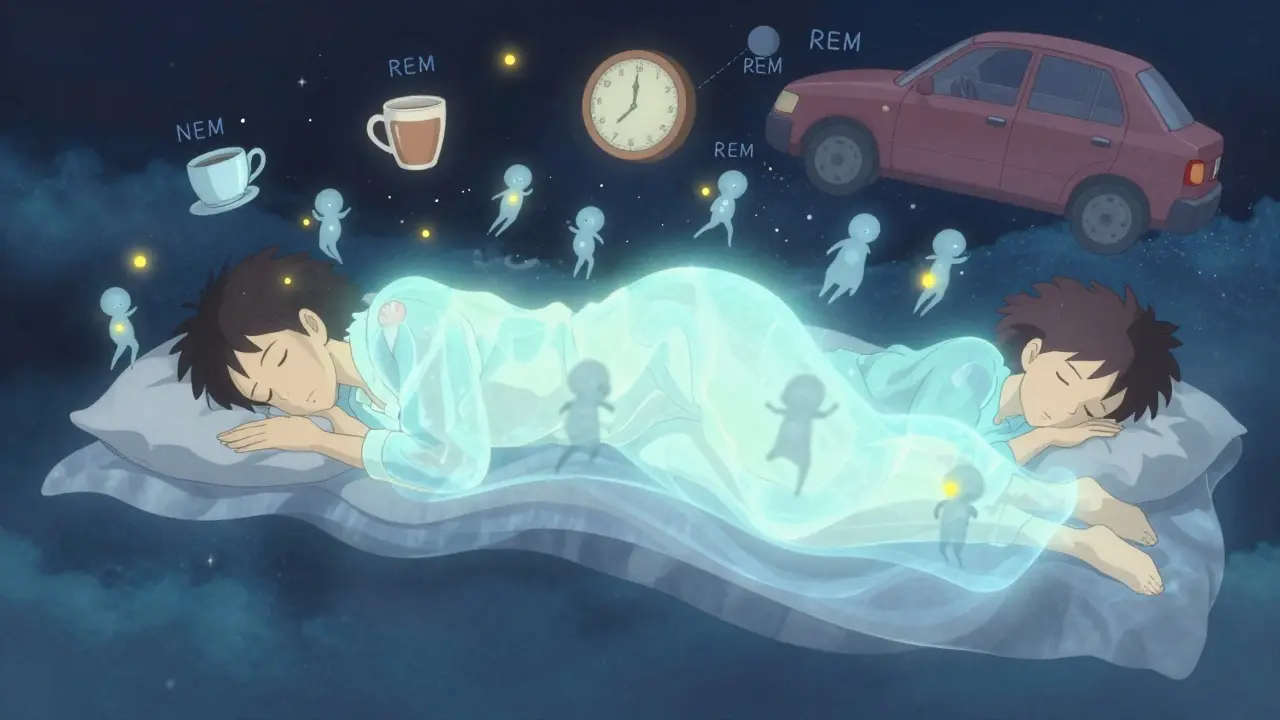
Polysomnography vs. Home Sleep Tests
Home sleep tests are cheaper and more convenient. But they’re not better. They usually measure only 3-4 things: airflow, breathing effort, oxygen levels, and heart rate. That’s fine if you’re a 55-year-old man with loud snoring and daytime fatigue. But if you’re a woman with insomnia and brain fog, or someone with leg jerks or nightmares, a home test won’t catch it. In-lab polysomnography has a failure rate of just 2-5%. Home tests fail 15-20% of the time - meaning you get no usable data, and you have to go in anyway. Plus, insurance often won’t cover a home test unless you meet strict criteria. If you have other health problems - like heart disease, COPD, or neurological conditions - Medicare and most insurers require an in-lab study.Preparing for Your Study
You don’t need to change your life. But a few simple steps help:- Avoid caffeine after noon the day before.
- Don’t nap in the afternoon.
- Don’t drink alcohol - it can mask sleep apnea.
- Wash your hair and face. Don’t use lotions, oils, or makeup - they interfere with sensors.
- Bring your own pillow, pajamas, and anything that helps you sleep.
What Happens After the Results?
Your doctor will schedule a follow-up to go over the report. If you have sleep apnea, they might recommend CPAP, oral appliances, or lifestyle changes. If it’s narcolepsy, you may need medication and scheduled naps. For restless legs, iron levels or nerve medications might help. Some people feel overwhelmed. But getting a diagnosis is the first step to feeling better. You’re not just tired - you have a treatable condition.
What’s New in Sleep Studies?
Technology is making polysomnography easier. New wireless sensors cut the number of wires from 20+ down to just 5-7. Some labs now use AI to flag abnormal patterns faster, helping doctors focus on the most critical data. There’s also more focus on comfort. Sleep centers are upgrading rooms to feel less clinical - better lighting, quieter HVAC systems, even sound machines. But the core hasn’t changed. Polysomnography still needs human eyes and trained sleep physicians to interpret the data. Machines can’t replace experience.Who Needs This Test?
You might be a candidate if you:- Snore loudly and wake up gasping
- Feel exhausted even after 8 hours of sleep
- Have witnessed pauses in your breathing
- Experience sudden muscle weakness during strong emotions (a sign of cataplexy)
- Act out dreams - yelling, punching, kicking
- Have unexplained daytime sleepiness with no obvious cause
- Have high blood pressure that won’t respond to medication
Cost and Insurance
A polysomnography study typically costs between $500 and $3,000, depending on your location and whether it’s a split-night study. Medicare covers 80% if your doctor documents symptoms like snoring, witnessed apneas, or excessive daytime sleepiness. Private insurers usually require prior authorization. Most centers will check your insurance before you come in. If you’re worried about cost, ask about payment plans. Many offer discounts for uninsured patients.Final Thoughts
Polysomnography isn’t glamorous. It’s not quick. But it’s one of the most powerful tools in sleep medicine. For people who’ve spent years blaming themselves for being tired, it’s a lifeline. It turns vague complaints into clear answers. It turns sleepless nights into restful ones. If you’ve been told it’s "just stress" - but you know something’s off - don’t give up. Ask your doctor about a sleep study. You might be surprised what’s happening while you sleep.Is polysomnography painful?
No, it’s not painful. Sensors are taped or clipped to your skin - no needles or injections. Some people feel mild irritation from the adhesive, but most get used to it quickly. The biggest challenge is adjusting to sleeping in a new environment, not the equipment.
Can I use the bathroom during the study?
Yes. If you need to use the bathroom, you can press a call button. A technologist will come in and disconnect the main cable from your belt, letting you walk to the bathroom. The sensors stay on, and you’re reconnected quickly. It’s routine - no embarrassment needed.
How long until I get my results?
It usually takes 1-2 weeks. The data needs to be reviewed by a board-certified sleep specialist, who spends 2-3 hours analyzing each study. Your doctor will schedule a follow-up appointment to explain the findings and next steps.
Can polysomnography diagnose narcolepsy?
Yes. While the overnight study shows abnormal sleep architecture - like entering REM too quickly - a second test called the Multiple Sleep Latency Test (MSLT) is usually needed to confirm narcolepsy. The MSLT measures how fast you fall asleep during daytime naps, which is a key diagnostic marker.
Are home sleep tests just as good?
No. Home tests only track breathing and oxygen. They can’t detect narcolepsy, restless legs, night terrors, or central sleep apnea. They also fail more often - about 1 in 5 don’t give usable data. For complex cases or when symptoms don’t fit typical sleep apnea, in-lab polysomnography is still the only reliable option.
What if I can’t sleep during the study?
Most people sleep enough for a diagnosis - even if it’s not perfect. Technologists know the lab isn’t your bed. They look for patterns, not perfect sleep. If you only get 3-4 hours, but the data shows clear apneas or abnormal movements, that’s still useful. Rarely, if no sleep is recorded, the study may need to be repeated.