

Why Do Drugs Get Pulled from the Market?
It’s easy to assume that if a drug is approved, it’s safe and effective for life. But that’s not true. Every year, medications are pulled from shelves-not because they’re faulty, but because new evidence shows they don’t work as promised, or worse, they cause harm. The FDA doesn’t approve drugs to fail. It approves them based on the best data available at the time. The problem comes later, when real-world use reveals what clinical trials couldn’t catch.
Take Makena, a drug approved in 2011 to prevent preterm birth in high-risk women. For over a decade, doctors prescribed it widely. Then, in 2020, a large follow-up study proved it didn’t work. The FDA didn’t pull it until 2022-more than four years after the evidence came in. During that time, an estimated 150,000 women received a treatment that offered no benefit. That delay isn’t an accident. It’s the result of a broken system that took too long to act.
The Two Types of Drug Withdrawals: Voluntary vs. Mandatory
Not all withdrawals are the same. There are two main paths: voluntary and mandatory.
Voluntary withdrawals happen when the drugmaker decides to stop selling the product. This could be because sales are low, manufacturing is too expensive, or they’ve found a better alternative. But if a company pulls a drug because it’s unsafe or ineffective, the FDA still has to officially classify it as withdrawn for safety or effectiveness reasons. That matters for generic drug approvals and medical records.
Mandatory withdrawals are forced by the FDA. This usually happens after a drug fails its post-approval studies, causes serious side effects, or the company lies about its benefits. Until 2023, the FDA had no clear timeline for these actions. Companies could drag out the process for years. Now, under the Consolidated Appropriations Act of 2023, the FDA has a structured path to act faster.
How the FDA Decides to Pull a Drug
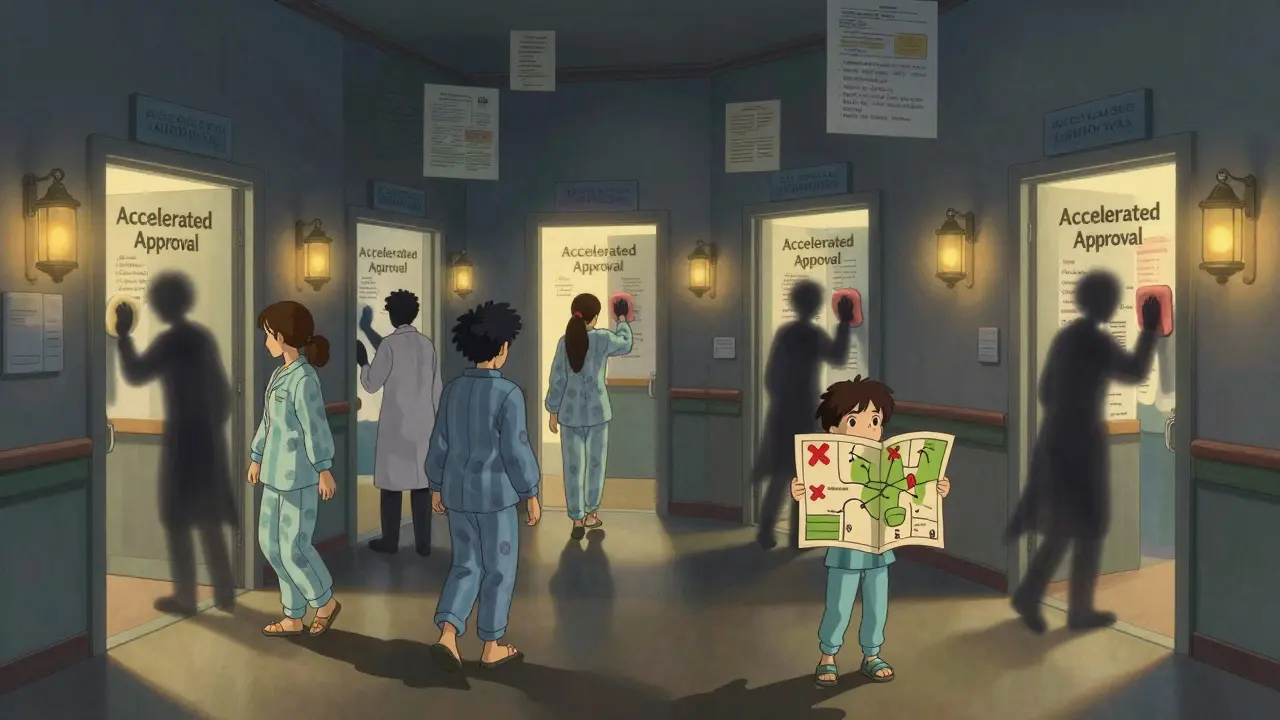
The FDA doesn’t act on rumors or single case reports. It needs hard evidence. For drugs approved under the traditional pathway, withdrawal follows standard procedures under 21 CFR 314.150. But for drugs approved through the accelerated approval route-which is common in cancer and rare disease treatments-the rules are different.
Accelerated approval lets drugs reach patients faster, based on early signs of benefit (like tumor shrinkage), not long-term outcomes (like survival). But the company must prove the drug actually helps patients live longer or feel better. If they don’t, the FDA can pull it.
The 2023 law gave the FDA four clear triggers to force a withdrawal:
- The company didn’t run the required follow-up study on time.
- The follow-up study proved the drug doesn’t work.
- Independent research shows the drug is unsafe or ineffective.
- The company misled doctors or patients with false marketing.
Once triggered, the FDA must notify the company, give them a chance to respond, and hold public meetings if needed. The whole process must be completed within 180 days-down from years in the past.
The Real Cost of Delayed Withdrawals
Every day a bad drug stays on the market, patients are exposed to risk without benefit.
A 2023 study from Penn LDI found that the FDA took an average of 46 months to withdraw drugs that failed post-approval studies. That’s almost four years. In oncology, where many drugs get accelerated approval, 26% of approvals were eventually withdrawn. In one type of lung cancer, 41% of eligible patients received drugs later proven useless.
Patients aren’t just statistics. One woman on a breast cancer forum wrote: “I was on [withdrawn drug] for 18 months. My oncologist said it was standard care. Now I know it didn’t help.”
Doctors are frustrated too. A 2022 survey in the American Journal of Managed Care found that 30% of patients on accelerated approval cancer drugs between 2015 and 2020 got treatments later pulled for lack of benefit. Pharmacists struggle to keep up-63% still can’t interpret the FDA’s Orange Book listings correctly.
How the 2023 Law Changed the Game
The Consolidated Appropriations Act of 2023 didn’t just tweak the rules-it rewrote them.
Before 2023, the FDA could only ask companies to study drugs after approval. They had no real power to force action if companies dragged their feet. Now, the agency has a clear, enforceable timeline. The FDA created a dedicated Accelerated Approval Withdrawal Team with 12 scientists and doctors. Their goal? Cut withdrawal time from 46 months to under 12.
The first drug pulled under this new system was an ALS treatment in August 2023. The FDA moved fast-because they finally could.
This change also affects how companies plan. A 2022 PhRMA survey found that 78% of major oncology drugmakers now include withdrawal scenarios in their risk plans. They’re preparing for the possibility their drug won’t make the cut.
What This Means for Patients and Doctors
For patients, this means less time on drugs that don’t work. But it also means more uncertainty. If a drug you’re taking gets pulled, your doctor has to find a new treatment-fast. Oncology practices report they have about 72 hours to switch patients after a withdrawal notice.
Doctors now need to ask: “Is this drug on accelerated approval? Has it passed its confirmatory study?” They can’t assume approval equals safety. The FDA’s website now publishes detailed “Determination of Safety or Effectiveness” notices, but a 2023 audit found only 42% of those notices included clear timelines for patient transitions.
Patients should check the FDA’s Drug Safety Communications and ask their pharmacist if their medication is listed in the Orange Book as withdrawn for safety or effectiveness. If it is, don’t panic-but do talk to your doctor about alternatives.

Global Differences: How the U.S. Compares
The U.S. isn’t alone in pulling drugs. The European Medicines Agency (EMA) and Health Canada have used conditional approval for years, with built-in withdrawal triggers. The FDA lagged behind.
Now, the U.S. is catching up. The 2023 law borrowed ideas from Europe, making the process more transparent and faster. But the U.S. still has more drugs on accelerated approval-40% of all such approvals go to cancer drugs. That means more drugs are at risk of later withdrawal.
One key difference: European regulators often require patients to be enrolled in long-term registries. The U.S. is just starting to use real-world data from sources like Flatiron Health to monitor drug performance after approval. That’s a big step forward.
The Future: Real-World Data and Faster Decisions
The next frontier? Using real-world evidence-not just clinical trial data-to make withdrawal decisions faster.
In January 2024, the FDA launched a pilot program using data from Flatiron Health, which tracks outcomes from over 1.2 million cancer patients. If a drug shows no survival benefit in real patients, the FDA could act before a formal study even finishes.
Industry analysts predict a 25% increase in drug withdrawals between 2023 and 2027. That could mean $8.2 billion in lost sales, but it also means fewer patients on ineffective treatments.
Still, there’s a risk. Drugmakers warn that too-fast withdrawals could scare off innovation. If companies think their breakthrough drug might get pulled before it even proves itself, they might stop trying.
But the bigger risk? Letting bad drugs stay on the market too long. As one patient advocacy group put it: “The true test will be how quickly the FDA acts when confronted with definitive evidence of ineffectiveness.”
What You Can Do
If you’re on a medication-especially for cancer, rare diseases, or chronic conditions-ask these questions:
- Was this drug approved under accelerated approval?
- Has the company completed the required follow-up study?
- Has the FDA issued any safety alerts about this drug?
- Is it listed as withdrawn in the FDA’s Orange Book?
Don’t stop taking your medicine without talking to your doctor. But do be informed. The system is improving, but it’s still imperfect. Your awareness can help protect you-and others.
This is such an important topic. I've seen too many people stuck on meds that just don't help, and no one tells them until it's too late. Glad the FDA's finally getting a backbone. We need more transparency, not less.
Patients deserve to know what they're really getting into - not just marketing hype wrapped in a prescription.
Oh wow. So the FDA finally decided to stop being a passive-aggressive bystander? Took them long enough. I mean, 46 months?! That’s not regulation - that’s corporate babysitting. And let’s be real: if this were a food product, the FDA would’ve shut it down in 46 days.
You’re all ignoring the real issue: accelerated approval was never meant to be permanent. It was a bridge. But now? Pharma treats it like a lifetime pass. And don’t pretend patients aren’t complicit - they beg for ‘hope drugs’ even when the data’s garbage. The system’s broken, but it’s not the FDA’s fault alone.
Honestly this gives me hope. I’ve got a cousin on an accelerated approval drug and she’s been scared to ask questions. Now at least there’s a timeline. Doctors need to stop treating FDA approval like a magic stamp. It’s just the first step.
This is all staged. The FDA works with Big Pharma. They’re not pulling drugs because they care - they’re pulling them because the lawsuits are piling up. Watch. The next one they pull will be something that actually works. They just need an excuse to scare people into buying the next expensive miracle.
Bro I grew up in India where we still get expired meds sold as new. So when I saw this FDA thing I was like wow finally someone’s trying to fix the system. But honestly the real problem is we don’t educate patients enough. People think if a doctor prescribes it it’s gospel. No. You gotta ask. You gotta dig. You gotta check the Orange Book. I’ve been telling my family to do this since last year. And now the FDA’s finally catching up. Good. But it’s still not enough. We need apps. We need alerts. We need WhatsApp groups for drug safety updates. Imagine getting a text: ‘Your med was pulled. Talk to your doc.’ That’s what real change looks like.
The notion that the FDA is somehow ‘improving’ is a myth constructed by media narratives and corporate PR. The 2023 law didn’t create accountability - it created a theater of accountability. The same agencies that approved these drugs in the first place are now the ones deciding their fate. There is no independence. There is no transparency. There is only bureaucratic theater designed to pacify public outrage while preserving the status quo. The real failure isn’t the delay - it’s the institutionalized delusion that this system can be trusted.
Real-world data is the future. Flatiron’s dataset is massive - 1.2M cancer patients. That’s not just stats. That’s lives. We’re finally moving from lab results to actual outcomes. Oncology’s been stuck in 1990s trial design for too long. If a drug doesn’t extend life or improve QoL in real patients, it shouldn’t be on the shelf. Period. The FDA’s pilot? It’s not just smart - it’s necessary.