
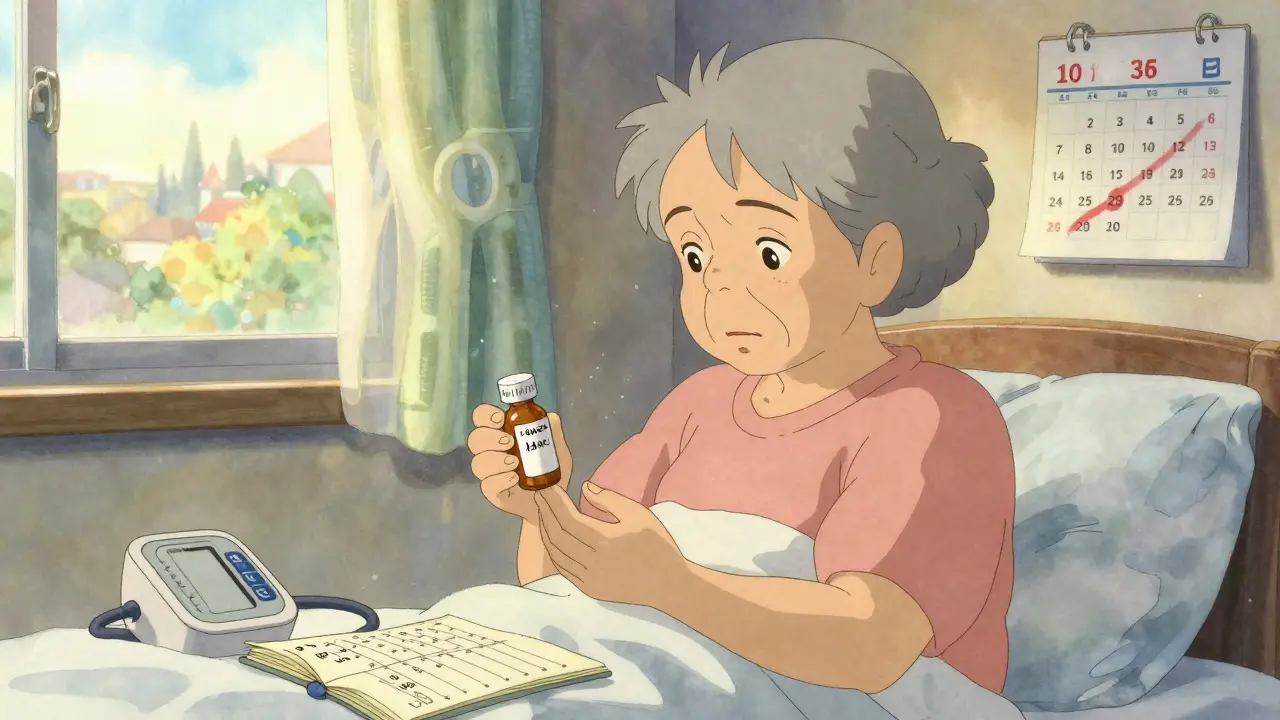
Some medications don’t just stop working after they expire-they can turn dangerous. This isn’t theoretical. For drugs with a narrow therapeutic index, even a tiny drop in potency or a small change in how your body absorbs the drug can mean the difference between life and death. If you’re taking warfarin, lithium, digoxin, or phenytoin, your expiration date isn’t a suggestion. It’s a hard stop.
What Exactly Is a Narrow Therapeutic Index?
A narrow therapeutic index (NTI) means there’s almost no room for error. The amount of drug needed to work is almost the same as the amount that can hurt you. For most medicines, a 20% change in dose might just mean the effect is a little weaker or stronger. For NTI drugs, that same change can trigger a seizure, a blood clot, heart failure, or kidney damage. The FDA defines NTI drugs as those where small differences in blood concentration can cause serious harm-like hospitalization, permanent disability, or death. The gap between the lowest dose that works and the lowest dose that causes toxicity is less than two times. That’s tighter than most people realize. Take digoxin. The safe, effective range is 0.5 to 0.9 nanograms per milliliter in your blood. Toxicity starts above 1.2. That’s only a 33% increase from the top of the safe zone to the danger zone. One pill that’s slightly degraded? That could push you over the edge.Why Expiration Dates Are Critical for NTI Drugs
Every pill has an expiration date. That’s not just marketing. It’s the last day the manufacturer guarantees the drug will work as intended, assuming it’s stored properly. For most drugs, losing 5-10% potency after expiration might not matter much. But for NTI drugs, even a 5% drop can be enough to drop you below the minimum effective level-or worse, create toxic breakdown products. Warfarin is a perfect example. Patients on warfarin need their INR (a blood clotting measure) kept between 2.0 and 3.0. A 10% loss in potency means the drug isn’t thinning the blood enough. For someone with a mechanical heart valve, that’s a recipe for stroke. On the flip side, if the drug degrades unevenly and becomes more potent in spots-say, due to moisture or heat-it could spike your INR into the 5.0+ range, causing uncontrolled bleeding. Lithium, used for bipolar disorder, has a therapeutic range of 0.6 to 1.0 mEq/L. Toxicity starts at 1.5. That’s only a 50% increase from safe to dangerous. If your lithium tablet loses even 7% potency over time, your blood level could swing unpredictably. And because lithium is absorbed inconsistently if the tablet’s coating breaks down, you could get a sudden spike after taking what you thought was a stable dose.What Drugs Fall Into This Category?
These aren’t obscure drugs. They’re commonly prescribed. Here are the most frequent NTI medications:- Warfarin (anticoagulant)
- Lithium (mood stabilizer)
- Digoxin (heart medication)
- Phenytoin (anti-seizure)
- Carbamazepine (anti-seizure, nerve pain)
- Levothyroxine (thyroid hormone)
- Ciclosporin (immunosuppressant)
- Aminoglycosides (antibiotics like gentamicin)
- Theophylline (asthma/COPD)

What Happens When These Drugs Expire?
You might have heard that most drugs remain safe and effective years after their expiration date. That’s true for things like ibuprofen or amoxicillin. But NTI drugs are different. The FDA’s 1985 study found that 90% of drugs retain potency for at least five years past expiration. That’s great for allergy meds or painkillers. But for NTI drugs, 10% degradation is a huge risk. Why? Because their therapeutic window is so small. For example, the FDA requires generic versions of NTI drugs to match the brand within 90-111% potency-compared to 80-125% for most drugs. That’s because even a 10% variation can cause harm. Now imagine that same 10% variation happens because the drug sat in a hot bathroom for two years after expiration. You’re no longer getting the dose you were prescribed. You’re getting a gamble. Some NTI drugs can also form toxic byproducts. Tetracycline is a known example-it breaks down into compounds that damage the kidneys. While tetracycline isn’t an NTI drug, the principle applies: degradation isn’t always harmless. For drugs like phenytoin, which has erratic absorption when degraded, the risk isn’t just lower potency-it’s unpredictable spikes.What Should You Do?
If you take an NTI medication, follow these rules:- Never use expired NTI drugs. Even if they look fine, don’t risk it.
- Store them properly. Keep them in a cool, dry place-not the bathroom or a sunlit windowsill. Moisture and heat speed up degradation.
- Ask your pharmacist. If you’re running low, don’t wait until the last pill. Get a refill before expiration.
- Don’t switch brands or generics without monitoring. Even FDA-approved generics can vary slightly in absorption. For NTI drugs, that’s a red flag.
- Check your blood levels regularly. If you’ve been prescribed therapeutic drug monitoring, keep those appointments. Your dose may need adjusting if your meds change.
Why Doesn’t the FDA Say This More Clearly?
It’s a gap in communication. The FDA has strict rules for NTI drug approval. They know the risks. But they haven’t issued clear public warnings about expiration for these specific drugs. Most patient leaflets just say “don’t use after expiration” without explaining why it’s especially dangerous for NTI drugs. Professional groups like the American Society of Health-System Pharmacists and the Institute for Safe Medication Practices have called for better labeling. Some manufacturers now do extended stability testing on NTI drugs-78% of major companies, according to Pharmaceutical Technology in 2022. But that data isn’t shared with patients. The bottom line: if you’re on one of these drugs, treat the expiration date like a deadline. Not a suggestion. Not a guideline. A cutoff.What If You Accidentally Took an Expired NTI Drug?
If you took one dose of an expired NTI medication and feel fine, don’t panic. But don’t ignore it either. Call your doctor or pharmacist. Tell them exactly what you took, when it expired, and whether you noticed any changes in how you feel. For warfarin users, that might mean getting an INR test sooner than scheduled. For lithium, watch for tremors, nausea, or confusion-signs of toxicity. If you’re on a long-term NTI drug and have been using expired pills for weeks or months, schedule a blood test immediately. Your levels may be off. Your dose may need to be adjusted. And your next prescription should come from a fresh, unexpired bottle.Final Thought: This Isn’t About Saving Money
It’s tempting to keep that bottle of warfarin or lithium because it’s expensive. Or because you think, “It still looks fine.” But with NTI drugs, you’re not saving money-you’re risking your life. A single hospitalization from a preventable drug reaction can cost tens of thousands of dollars. The cost of a new prescription? A fraction of that. And your health? Priceless. If you’re unsure whether your medication is an NTI drug, ask your pharmacist. Write it down. Put a reminder on your phone. Keep a list of your high-risk meds and their expiration dates. Don’t wait for a crisis to realize how thin the line really is.Are all expired medications dangerous?
No, not all expired medications are dangerous. Many common drugs like acetaminophen, ibuprofen, or antibiotics remain safe and effective for years after expiration. But medications with a narrow therapeutic index-like warfarin, lithium, digoxin, or phenytoin-are exceptions. Even small changes in potency can lead to serious harm. For these drugs, expiration dates are critical safety limits, not suggestions.
Can I tell if an NTI drug has degraded just by looking at it?
Usually not. Unlike some antibiotics that turn discolored or pills that crumble, NTI drugs often look perfectly normal even after they’ve lost potency or formed toxic byproducts. A warfarin tablet might still be white and intact, but if it’s lost 10% of its active ingredient, it could fail to prevent a stroke. Visual inspection is not reliable. Always rely on the expiration date and proper storage.
Is it safe to use an NTI drug that expired one month ago?
No. For NTI drugs, there’s no safe grace period. Even a few weeks past expiration can mean the drug has degraded enough to fall outside its narrow therapeutic window. The manufacturer’s expiration date is based on stability testing under controlled conditions. Once that date passes, you can’t assume safety or effectiveness. For drugs like lithium or digoxin, the risk isn’t worth it.
Why do some NTI drugs require blood tests?
Because their effectiveness and safety depend on extremely precise blood levels. For example, digoxin works between 0.5 and 0.9 ng/mL, and toxicity starts at 1.2. That’s a tiny window. Blood tests (therapeutic drug monitoring) help doctors adjust your dose to stay within that safe range. If you switch brands, change doses, or take expired pills, those levels can shift unpredictably-making the test essential for safety.
Can generic versions of NTI drugs be trusted?
Yes, but with caution. The FDA requires generic NTI drugs to meet stricter bioequivalence standards-90% to 111% potency compared to the brand-instead of the usual 80%-125%. This reduces risk. But even within that tight range, small differences in how your body absorbs the drug can occur. If you switch generics, your doctor should monitor your blood levels closely. Never switch without consulting your provider.
What should I do with expired NTI medications?
Don’t throw them in the trash or flush them. Take them to a pharmacy take-back program or a drug disposal site. Many pharmacies offer free disposal for expired or unwanted medications, especially high-risk ones. If no take-back option is available, mix them with coffee grounds or cat litter in a sealed container before discarding-this reduces the chance of accidental ingestion or misuse. But the safest action is to replace them before they expire.
Next steps: If you’re on an NTI medication, check your current prescription’s expiration date today. If it’s within 30 days, call your pharmacy for a refill. If it’s already expired, don’t wait-contact your doctor. Your next dose could depend on it.
man i just realized my warfarin bottle expired last month 😳 i thought it was fine since it still looked normal. thanks for the wake-up call. going to the pharmacy first thing tomorrow.
It is simply irresponsible for patients to assume that 'it still looks fine' is sufficient. The FDA's standards exist for a reason, and the fact that people treat expiration dates like suggestions reveals a dangerous cultural ignorance toward pharmaceutical science. This is why American healthcare is in crisis-because people don't respect evidence.
This is one of those posts that makes you pause. I never realized how thin the margin was for drugs like lithium or digoxin. I have a cousin on warfarin and she’s always been super careful-but I never understood why. Now I get it. Thanks for laying it out so clearly. I’m sharing this with my whole family.
expiration dates on ntis are not suggestions they are lifelines
if your pill looks fine but is 3 months past date it could still be killing you slowly
no guessing no hoping just replace it
your body cant tell the difference between 0.8 and 0.9 ng/ml
but your heart can
Ugh why do we even have generics if they’re this risky? America should just make all these drugs domestically. No more importing cheap junk that might crumble in a humid bathroom. We pay enough for meds-give us quality.
I appreciate this so much. My mom’s on digoxin and I’ve been nagging her to check her dates, but I didn’t have the science to back it up. Now I can show her this and actually make her listen. Thank you for being so clear and not fearmongering-just factual.
As someone from India where many people reuse old prescriptions due to cost, this is vital info. I’ve seen grandparents keep pills for years. Maybe we need community health workers to educate on this-not just doctors. This isn’t just a US problem.
STOP BEING LAZY. If you’re on an NTI drug and you let it expire, you’re not being frugal-you’re being a liability. Your insurance company, your family, your doctor-they all pay the price when you turn into a statin-induced stroke case. Get your refill. Now.
i know it’s hard to afford meds but please don’t risk your life for a few bucks
talk to your pharmacist-they can help you find cheaper options or patient programs
i’ve helped 3 people get free lithium through assistance programs
you’re not alone
your life is worth more than the bottle
OMG I just checked my lithium and it expired last week 😱 I’m literally running to the pharmacy right now. Thank you for this!! 🙏❤️