
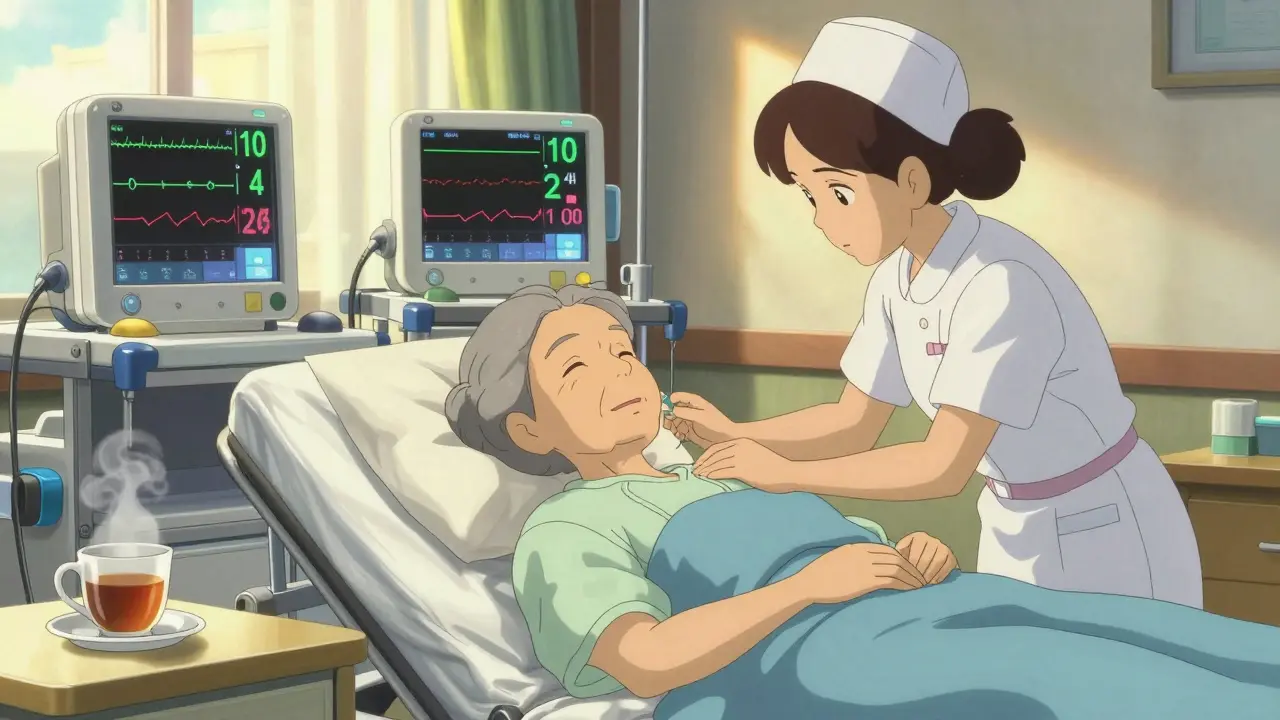
Seniors are at a much higher risk of over-sedation and opioid overdose than younger adults. Their bodies process medications differently-liver and kidney function slow down, brain sensitivity increases, and even small doses can lead to dangerous breathing problems. In fact, seniors account for 65% of all respiratory arrests during procedural sedation in U.S. hospitals. This isn’t just a medical concern; it’s a preventable crisis. The good news? With the right monitoring tools and clear signs to watch for, you can catch trouble before it becomes life-threatening.
Why Seniors Are More Vulnerable
As people age, their bodies change in ways that make sedatives and pain meds much more dangerous. The liver can’t break down drugs as quickly-by age 80, metabolism drops by 30% to 50% compared to when they were 20. Kidneys clear medications slower too, with clearance falling about 0.8 mL/min per year after age 40. That means drugs stick around longer, building up in the system. At the same time, the blood-brain barrier becomes more permeable, so even small amounts of opioids or benzodiazepines hit the brain harder.These changes mean a standard adult dose of midazolam or fentanyl might be too much for a 75-year-old. Yet, studies show that 42% of healthcare facilities still use the same dosing for seniors as they do for younger patients. That’s like giving a child a full adult dose of Tylenol-predictable, dangerous, and avoidable.
Key Signs of Over-Sedation and Overdose
You don’t need a machine to spot trouble. Some of the earliest warning signs are simple to see:- Slowed breathing-fewer than 8 breaths per minute is a red flag. Even if the person looks asleep, shallow or irregular breathing means their body isn’t getting enough oxygen.
- Unresponsiveness-if they don’t respond to a gentle shake or their name being called, that’s not normal sleep. Use the Richmond Agitation-Sedation Scale (RASS). A score of -3 or lower means deep sedation; -5 means unarousable. Both require immediate action.
- Blue lips or fingertips-this is late-stage hypoxia. Don’t wait for this. If you see it, call for help right away.
- Confusion or unusual drowsiness-if someone who was alert suddenly can’t follow simple commands, that’s a sign the brain is being suppressed.
- Low blood pressure-systolic pressure below 90 mmHg, especially when combined with slow breathing, signals cardiovascular collapse is near.
One of the most dangerous myths is that supplemental oxygen hides the problem. Many seniors get oxygen through a nasal cannula during procedures. But if they’re not breathing deeply enough, their oxygen levels can stay above 94% while carbon dioxide builds up to toxic levels. This is called silent hypoxia-and it kills.
What Monitoring Tools Actually Work
The best protection isn’t one tool-it’s a combination. Here’s what the evidence says works:- Capnography-this device measures carbon dioxide (EtCO2) in exhaled breath. Normal is 35-45 mmHg. If it drops below 30 or the waveform flattens, the patient is hypoventilating. Capnography catches breathing problems 12-14 minutes before pulse oximetry shows a drop in oxygen. In seniors, it’s 92% accurate at detecting apnea, compared to just 67% for pulse ox alone.
- Pulse oximetry-still necessary, but never rely on it alone. Set alarms at 90% SpO2. If the reading stays above 94% while breathing slows, that’s a warning sign, not safety.
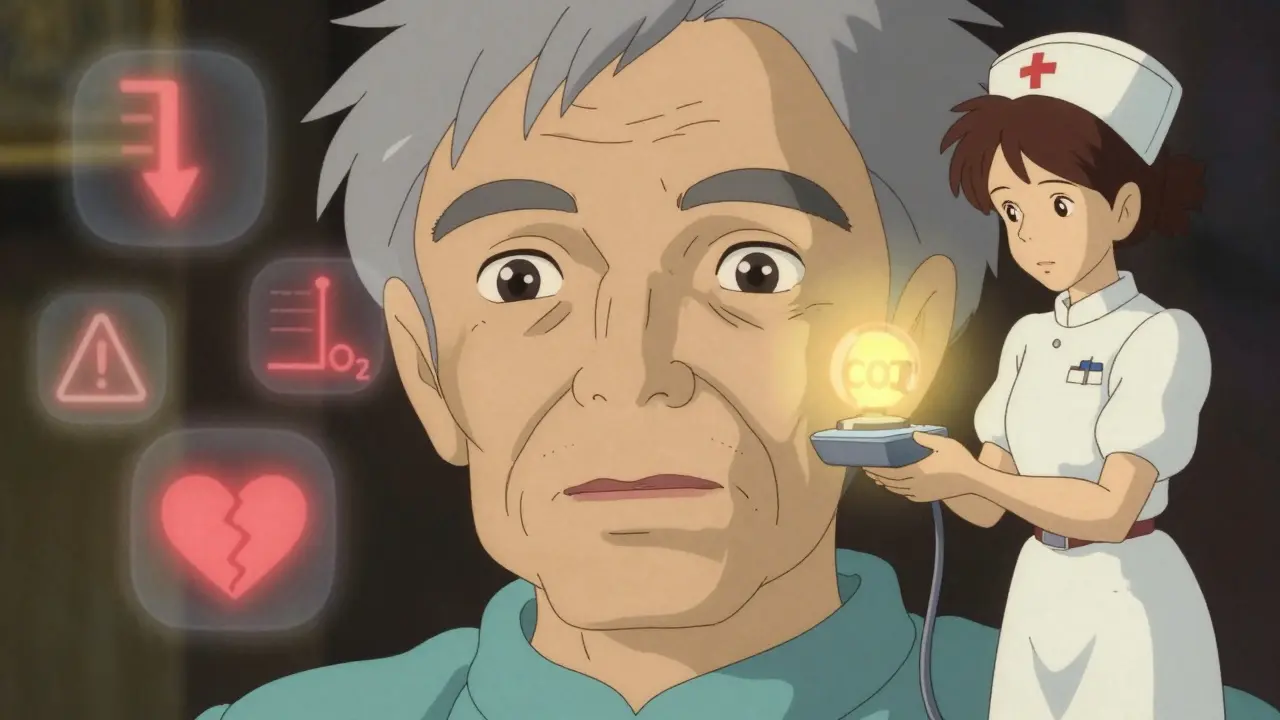
- Integrated Pulmonary Index (IPI)-this algorithm combines capnography, respiratory rate, SpO2, and heart rate into a single score from 1 to 10. A score below 7 means immediate intervention is needed. In a 2021 study of over 1,200 elderly patients, IPI predicted respiratory failure 12.7 minutes before oxygen levels dropped.
- Continuous vital sign monitoring-heart rate, blood pressure, and respiratory rate must be checked continuously, not every 5 or 10 minutes. A 2019 study found that intermittent checks miss 78% of dangerous events.
Some tools are more expensive or complex. BIS monitoring (Bispectral Index) reduces oversedation by 37% during endoscopy, but costs $1,200-$1,800 per unit. Narcotrend™ is even pricier and takes 15 minutes to set up. For most settings, capnography + pulse oximetry + RASS scoring is the sweet spot: effective, affordable, and proven.
What Hospitals and Clinics Should Be Doing
The American Society of Anesthesiologists (ASA) says capnography should be used during sedation whenever there’s a risk of respiratory depression-especially for patients over 65. The Association of Anaesthetists goes further: capnography is mandatory for patients over 70 or with a BMI over 35.But adoption is uneven. In hospitals, 81% use continuous capnography. In outpatient endoscopy centers? Only 28%. That’s a huge gap. Why? Cost, training, and outdated habits. But the cost of not doing it is higher: 127 documented cases of over-sedation in seniors in 2023, and 63% of those were due to inadequate monitoring frequency.
Successful programs like Mayo Clinic’s combine RASS scoring with continuous capnography. Result? A 41% drop in oversedation events among patients over 75. At Massachusetts General Hospital, a 90-year-old had a respiratory arrest during a PEG tube placement because staff relied only on pulse oximetry every 5 minutes. That’s the kind of failure that can be prevented.
How to Adjust Medication Doses for Seniors
There’s a simple formula used by anesthesiologists for patients over 60:Dose = standard adult dose × (1 - 0.005 × (age - 20))
Example: A 78-year-old getting midazolam. Standard dose is 5 mg. Calculate: 1 - 0.005 × (78 - 20) = 1 - 0.005 × 58 = 1 - 0.29 = 0.71. So, dose = 5 mg × 0.71 = 3.55 mg. Round to 3.5 mg.
Always start low. Give 25-50% of the standard dose, then wait 5-10 minutes before giving more. Never rush. Sedation isn’t a race-it’s a slow, careful process.
Common Mistakes and How to Avoid Them
- Mistake: Assuming oxygen masks or nasal cannulas make patients safe. Solution: Always check breathing rate and use capnography. Oxygen can mask rising CO2.
- Mistake: Ignoring irregular breathing patterns. Seniors often have uneven breaths due to COPD or heart failure. Solution: Train staff to recognize abnormal capnography waveforms. A “shark fin” shape means airway obstruction; a flat line means apnea.
- Mistake: Relying on alarms alone. Alarm fatigue is real-47% of capnography alarms in seniors are false. Solution: Combine tech with human checks. Every 5 minutes, assess consciousness with RASS, feel for chest rise, listen to breath sounds.
- Mistake: Using the same protocols for all seniors. A 68-year-old with no chronic illness is different from an 85-year-old with dementia and COPD. Solution: Customize monitoring based on medical history, medications, and baseline function.
What Families and Caregivers Can Do
You don’t need to be a nurse to help. If your loved one is scheduled for a procedure involving sedation:- Ask: “Will you be using capnography?” If the answer is no, ask why. Push for it.
- Ask: “What dose will be used? Is it adjusted for age?”
- Ask: “Will someone be checking breathing and responsiveness continuously?”
- If they’re at home on opioids, watch for: sleeping more than usual, slow breathing, unresponsiveness, or blue lips. Keep naloxone (Narcan) on hand if prescribed.
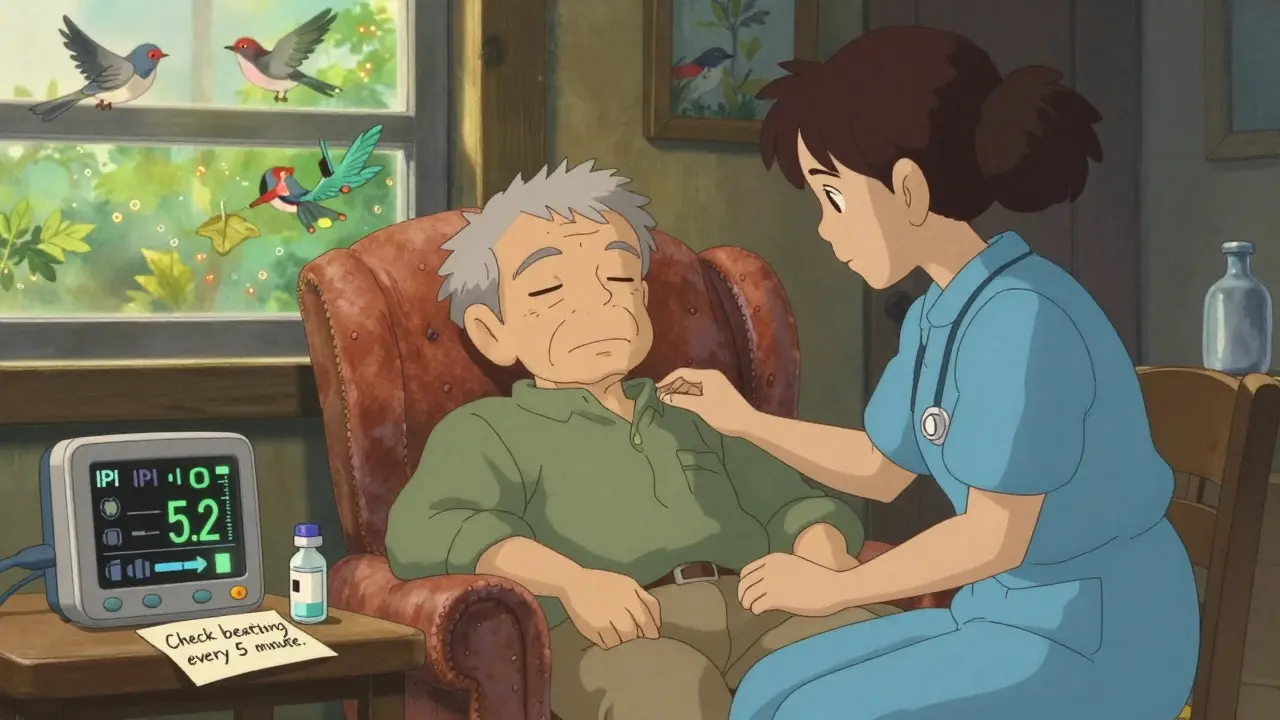
One nurse anesthetist on Reddit shared a case: an 82-year-old’s IPI score dropped to 5.2 during a colonoscopy. Because the team saw it early, they stopped the procedure, reversed the sedation, and avoided a cardiac arrest. That’s the power of watching the numbers-not just the face.
What’s Next in Monitoring
New technology is coming fast. The FDA cleared the Opioid Risk Monitoring System (ORMS) in May 2023. It links IV pain pumps to capnography and pulse oximetry-and automatically pauses opioid delivery if breathing drops below 8 breaths per minute. In trials, it cut respiratory depression in seniors by 58%.Future systems will use AI to predict trouble 20 minutes before it happens, based on trends in heart rate, breathing, and oxygen. But no algorithm replaces a trained person. The 2023 NCEPOD report warns: “Technology alone can’t fix understaffing.” One nurse per patient remains the gold standard.
The bottom line? Monitoring seniors isn’t optional. It’s the difference between a safe recovery and a preventable death. Use the tools. Adjust the doses. Watch closely. And never assume silence means safety.
What are the first signs of over-sedation in seniors?
The earliest signs are slowed breathing (fewer than 8 breaths per minute), unresponsiveness to voice or touch, unusual drowsiness, and confusion. A Richmond Agitation-Sedation Scale (RASS) score of -3 or lower means deep sedation and requires immediate intervention. Blue lips or fingertips are late signs and indicate a medical emergency.
Is pulse oximetry enough to monitor seniors during sedation?
No. Pulse oximetry alone misses up to 33% of breathing problems in seniors, especially if they’re on supplemental oxygen. Oxygen levels can stay normal while carbon dioxide builds up to dangerous levels-this is called silent hypoxia. Capnography, which measures exhaled CO2, is essential to catch these issues early.
How much should sedative doses be reduced for elderly patients?
Use this formula: standard adult dose × (1 - 0.005 × (age - 20)). For example, a 75-year-old would get about 62.5% of the standard dose. Always start with 25-50% of the usual dose and wait 5-10 minutes before giving more. Never assume a standard dose is safe.
Why is capnography recommended for seniors over 65?
Capnography detects breathing problems 12-14 minutes before pulse oximetry shows low oxygen. Seniors are more prone to respiratory depression due to slower metabolism and reduced lung function. Capnography catches apnea with 92% accuracy in this group, making it the most reliable early warning tool.
Can families request capnography for their loved one’s procedure?
Yes. Families have the right to ask what monitoring is being used. If capnography isn’t being offered, ask why. Cite guidelines from the American Society of Anesthesiologists, which recommend capnography for all patients over 65 undergoing sedation. Many facilities will accommodate the request if asked.
What should I do if I suspect an overdose at home?
Call 911 immediately. If naloxone (Narcan) is available, administer it as directed. Try to wake the person-shake gently and shout their name. If they’re not breathing, start rescue breathing. Do not leave them alone. Even if they wake up, they need medical evaluation-opioid effects can return after naloxone wears off.
Next Steps for Caregivers and Providers
If you’re a family member: Ask questions before any procedure. Don’t accept “we always do it this way” as an answer. Push for capnography, adjusted dosing, and continuous monitoring.If you’re a clinician: Audit your current protocols. Are you using RASS? Is capnography available? Are staff trained to interpret it? If not, start there. Training takes about 8 hours-less than one shift. The payoff? Fewer arrests, fewer lawsuits, and lives saved.
The data is clear. The tools are available. The risk is real. Monitoring seniors properly isn’t about following rules-it’s about honoring their vulnerability and doing what’s right.
My grandma had a colonoscopy last year and they didn’t use capnography. She was fine, but I still get nervous thinking about it. I didn’t know how much risk there really was until I read this.
Here in Nigeria, we don’t even have pulse oximeters in most clinics. Capnography? Ha. We pray and hope the dose is right. This post hit different.
OMG I had no idea about the 0.005 formula!! I’m telling my uncle’s doctor this tomorrow. He’s 79 and on pain meds - I’m not letting them give him the full dose anymore. This could save his life!!
Yeah but capnography is overkill. Most seniors just need less medicine. You’re turning a simple thing into a tech nightmare. I’ve seen people get scared to death by alarms.
Interesting how the U.S. focuses so much on tech solutions while other countries struggle with basics. I wonder if the real issue isn’t the equipment, but the training gap. In some places, even RASS isn’t taught in nursing school.
Okay I’m crying. My mom had a cardiac arrest during a GI endo last year because they ‘just checked her every 5 minutes.’ They said she was ‘stable.’ Stable?? She was barely breathing. I didn’t know about capnography. I didn’t know about RASS. I didn’t know to ask. This post? It’s like someone handed me a flashlight in the dark. I’m printing this out and giving it to every doctor I meet. My mom’s still here - thank God - but so many aren’t. Please, if you’re reading this, ASK. ASK. ASK. Don’t wait until it’s too late.
As someone who works in geriatric care, I’ve seen the damage from complacency. We used to rely on pulse ox alone - until three seniors had silent arrests within six months. Now we use capnography + RASS + continuous vitals. It’s not glamorous, but it’s the bare minimum. And yes, we adjust doses. No one gets the ‘adult’ dose unless they’re 30 and in perfect health. If your facility isn’t doing this, it’s not because they can’t - it’s because they haven’t been held accountable. This isn’t innovation. It’s basic human care.
Let’s be real - this is just another way for hospitals to charge more. Capnography machines cost thousands. They’re pushing this because they want to bill for it, not because it’s necessary. Seniors are fragile, sure, but we don’t need to turn every procedure into a ICU scenario. Most of these ‘signs’ are just normal aging. You’re scaring people into demanding unnecessary tech.