

Living with a chronic disease doesn’t mean giving up on daily life. It means learning how to manage it-day after day-without letting it take over. Millions of people in the U.S. are doing exactly that, using proven tools that help them walk farther, sleep better, talk to their doctors more clearly, and feel less alone. This isn’t about curing the condition. It’s about improving daily function so you can live well despite it.
What Self-Management Really Means
Self-management isn’t just taking your pills on time. It’s learning how to recognize when your body is signaling trouble, how to adjust your routine when symptoms flare, and how to ask for help before things get worse. The most effective programs-like the Chronic Disease Self-Management Program (CDSMP)-were built by researchers at Stanford University in the 1990s and have been tested in real life since then. They don’t focus on one disease. They focus on you.Whether you have arthritis, diabetes, heart disease, or COPD, the core skills are the same:
- Problem solving: What do you do when your knees hurt too much to walk?
- Decision making: Should you skip your walk today, or modify it?
- Using resources: Where can you find affordable meals, transportation, or support?
- Partnering with your doctor: How do you speak up when your treatment isn’t working?
- Making action plans: What’s one small change you can stick to this week?
- Adapting to your life: What works for someone else might not work for you-and that’s okay.
These aren’t abstract ideas. They’re practical habits. And they’re teachable.
The CDSMP Program: A Proven Blueprint
The CDSMP is the gold standard. It’s a six-week workshop, held once a week for 2.5 hours, led by trained peer leaders-people who also live with chronic conditions. No doctors. No nurses. Just real people who’ve been where you are.Each session uses a 230-page workbook, group discussions, and hands-on activities. You don’t need to be tech-savvy. You don’t need to leave your home. Many programs are held in community centers, libraries, or churches. Some even meet over Zoom.
Participants report real changes:
- 72% complete the full program, according to Stanford’s Self-Management Resource Center.
- 87% say they feel more confident managing their condition after finishing.
- One participant in Oregon increased daily steps from 1,200 to 5,800 in just eight weeks-tracked by a Fitbit.
And the benefits stick. Studies show improvements in exercise, communication with doctors, and emotional well-being last at least a year after the program ends.
Digital Tools: When In-Person Isn’t an Option
Not everyone can make it to a weekly meeting. Maybe you live in a rural town with no public transport. Maybe your pain flares on Tuesdays. Maybe you’re caring for a spouse and can’t leave the house.That’s where digital tools come in. Better Choices, Better Health® is the official online version of CDSMP. It’s structured like the in-person program but delivered through a website. You log in 2-3 times a week, watch short videos, join discussion boards, and write your own action plans. It takes about two hours a week.
But here’s the catch: online programs have a 58% completion rate-lower than the 72% for in-person groups. Why? Because human connection matters. Talking to someone who gets it reduces isolation. That’s why 78% of rural participants in North Dakota say reduced loneliness was their biggest win.
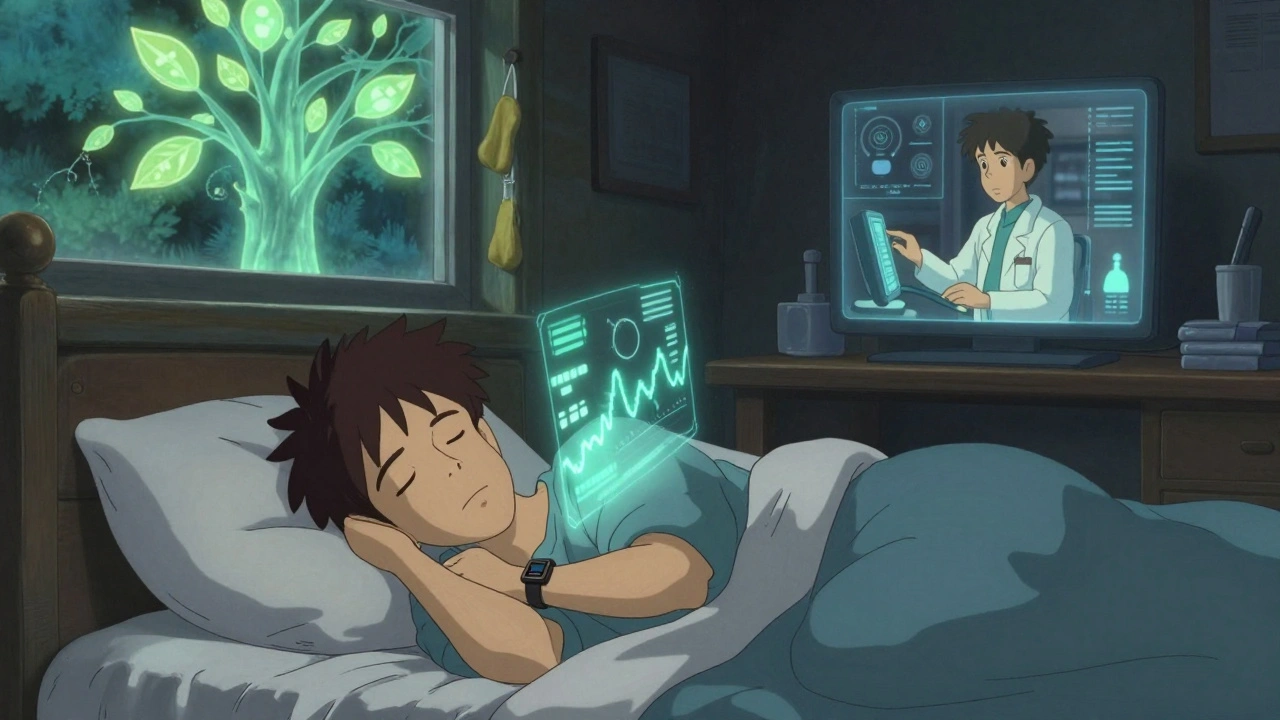
Newer apps like Mun Health and ProACT are trying to bridge that gap. Mun Health uses AI to offer emotional check-ins and culturally tailored advice-for Spanish, Black, and Asian American communities, where most programs still fall short. ProACT connects your smartwatch data to your doctor’s dashboard, so they can spot trends before you even notice them.
But tech isn’t magic. Forty-one percent of adults with chronic conditions struggle to understand basic health info, according to Dr. Sarah Vinson. If an app is cluttered, uses medical jargon, or doesn’t let you type in your own words, it won’t help.

What Works Best: Hybrid Is the Future
The best outcomes come from mixing human support with smart tech.Take Sarah Bush Lincoln Health Center in Illinois. They combined CDSMP with motivational interviewing-a counseling technique that helps people find their own reasons to change. Over 12 months, hospital visits for COPD patients dropped by 28%. In comparison, patients getting standard care only saw a 9% drop.
Why? Because they didn’t just give people tools-they gave them someone to check in with. Someone who remembered their name and their goals.
Medicare now covers Diabetes Self-Management Training (DSMT), and more insurers are following. That’s a big deal. It means these programs are no longer seen as optional extras. They’re part of care.
Getting Started: Three Simple Steps
You don’t need to fix everything at once. Start small.- Take a quick self-assessment. Ask yourself: What’s one thing that’s harder now than it was a year ago? Is it climbing stairs? Remembering meds? Feeling anxious? Pick one.
- Write one action plan. Not “I’ll exercise more.” But “This week, I’ll walk for 10 minutes after breakfast, three days, using my kitchen timer.”
- Find your support. Look for a CDSMP workshop near you. Search “Chronic Disease Self-Management Program [your state]” or visit the Self-Management Resource Center website. If you can’t go in person, try Better Choices, Better Health®.
Many programs are free. Some are even offered through your local Area Agency on Aging or public library.
Common Pitfalls-and How to Avoid Them
People who stick with self-management share one thing: they don’t try to do it all at once.Pitfall 1: Overwhelm. “I have to check my blood sugar, track my meds, do foot checks, and eat better?” That’s too much. Start with one thing. Master it. Then add another.
Pitfall 2: Skipping tracking. Forty-five percent of new users stop logging symptoms within the first month. Why? Because it feels like extra work. Try using a simple notebook or a free app like MyTherapy. Just jot down: “Today, my pain was a 6/10. I walked 15 minutes. Took my pill at 8 a.m.”
Pitfall 3: Trying to adjust meds alone. Never change your dose without talking to your doctor. But you can track patterns. If you notice your joint pain spikes after eating pasta, write it down. Bring it to your next visit. That’s how you become a better partner in your care.
What’s Next for Self-Management
The field is evolving fast. By 2030, 171 million Americans will have multiple chronic conditions. That means tools need to be smarter, more personal, and easier to use.AI companions are learning to recognize when someone sounds discouraged-not just from their words, but from their typing speed and time of day. Programs are being translated into 20+ languages. Some now include spiritual well-being, asking: “What gives you peace?”
The CDC wants primary care doctors to refer patients to self-management programs as routinely as they prescribe medication. That’s the goal. Not just surviving with your condition-but living fully with it.
You don’t need to be perfect. You just need to show up. One small step. One action plan. One conversation with someone who gets it.
Can I join a self-management program if I have more than one chronic condition?
Yes. Programs like CDSMP and ProACT are designed specifically for people managing multiple conditions. The tools focus on universal skills-problem solving, communication, action planning-that apply whether you have diabetes and arthritis, or heart disease and depression. You don’t need to separate your conditions. You learn how to manage them together.
Do I need to be tech-savvy to use digital self-management tools?
No. Programs like Better Choices, Better Health® are built for people who aren’t comfortable with technology. The interface is simple: clear buttons, large text, voice narration options. If you can send a text or check email, you can use them. Many libraries and senior centers offer free one-on-one help setting up these platforms.
Are these programs free?
Most in-person CDSMP workshops are free, funded by state health departments or nonprofits. Online versions like Better Choices, Better Health® are also free. Medicare covers Diabetes Self-Management Training (DSMT) and some other programs. Always ask if there’s a cost before signing up-many places offer scholarships or sliding-scale fees.
What if I can’t attend all six sessions?
It’s okay. Life with a chronic condition is unpredictable. Many programs let you miss one or two sessions and still complete the course. Some offer make-up calls or recorded sessions. The key is to show up for the first session-that’s when you start building your action plan. Even partial participation improves confidence and symptom control.
How long does it take to see results?
Most people notice small changes within the first two weeks-like feeling less anxious about symptoms or speaking up more at doctor visits. Physical changes, like increased walking or better sleep, often appear by week four. The biggest gains-like fewer hospital visits or stronger relationships with your care team-typically show up after three to six months. Progress isn’t always linear. Some days will be harder. That’s normal.
Can my family join the program with me?
Yes. Many programs welcome caregivers, spouses, or adult children. In fact, having someone else learn the tools helps you stick with them. They can remind you to take your meds, join you on walks, or simply listen when you’re frustrated. Family involvement is one of the strongest predictors of long-term success.
Next Steps: What to Do Today
If you’re reading this, you’re already on the path. Here’s what to do now:- Search for “Chronic Disease Self-Management Program” + your city or state.
- Check your local library, senior center, or health department website.
- If you prefer online, go to selfmanagementresourcecenter.org to find Better Choices, Better Health®.
- Write down one thing you want to improve this week. Then write one tiny step you can take toward it.
You don’t need to be brave. You just need to start. One step. One plan. One day at a time.
Been doing the CDSMP program for 6 months now. My knees still ache, but I walk 2 miles every morning without crying. No magic pills, just showing up. One tiny step at a time. Seriously, if you’re reading this and feel overwhelmed-start with the timer trick. Ten minutes. That’s it.
Yo. This post? Pure gold. 🙌 I’m a diabetic with neuropathy and COPD-yes, all three-and the CDSMP workshop saved my sanity. No doctors, just real people who didn’t flinch when I said I cried after missing my walk because my legs felt like lead. We laughed. We cried. We made action plans that didn’t suck. The AI apps? Meh. But the group? That’s the drug. Human connection > algorithms. Period. Also, if you’re in rural Nebraska, there’s a Zoom group every Tuesday at 6. DM me. I’ll send the link.
I just want to say… I’ve been doing this for 3 years. Some days I hate my body. Some days I hate the meds. Some days I hate that my husband thinks ‘just walk more’ is a solution. But I keep coming back to this: I’m not broken. I’m adapting. And that’s enough. Thanks for writing this. I needed to read it today.
CDSMP is just wellness theater. Real management is adherence to pharmacotherapy and biomarker monitoring. No group chat fixes HbA1c. Stop romanticizing peer support. Data matters.
While I appreciate the sentiment, this piece exhibits a concerning lack of empirical rigor. The cited statistics-87% confidence increase, 72% completion rates-are derived from self-reported surveys with minimal longitudinal follow-up. The Stanford model, though well-intentioned, suffers from selection bias. Moreover, the conflation of emotional well-being with functional improvement is methodologically unsound. One cannot equate reduced loneliness with reduced hospitalization. Until peer-led programs are subjected to randomized controlled trials with objective endpoints, they remain anecdotal interventions dressed as evidence-based practice.
omg yes!! i joined the online thing last year after my mom passed and i was so lonely. the videos are kinda cheesy but the people on the board? they get it. one lady sent me a meme about ‘my arthritis and i are in a toxic relationship’ and i cried laughing. also i spelled ‘meds’ wrong in my first post and no one cared. that’s the magic. you don’t have to be perfect. just show up. even if you type like a toddler with a keyboard.
It’s charming how this article assumes everyone has access to libraries, community centers, or stable Wi-Fi. Let’s not pretend this is for everyone. My cousin in rural Mississippi has no internet, no car, and her local pharmacy charges $400 for insulin. Meanwhile, we’re all over here vibing about ‘action plans’ and ‘Fitbit steps.’ This isn’t empowerment-it’s performative optimism for the privileged. The real crisis isn’t lack of workshops-it’s lack of healthcare equity. Fix the system before asking people to ‘just show up.’
Oh wow. Another feel-good article about ‘tiny steps’ and ‘one day at a time.’ How quaint. I’ve got three chronic conditions, a full-time job, and two kids. I don’t have time to ‘write an action plan.’ I have to choose between groceries and my co-pay. Your ‘free’ workshop? It’s at 10 AM on Wednesdays. I’m at work. Your ‘online program’? Requires a laptop and 2 hours a week. I’m on my phone in the ER waiting room. This isn’t empowerment. It’s gaslighting wrapped in a rainbow.
Program works. I joined. My BP down. My wife came too. We walk now. Simple.