
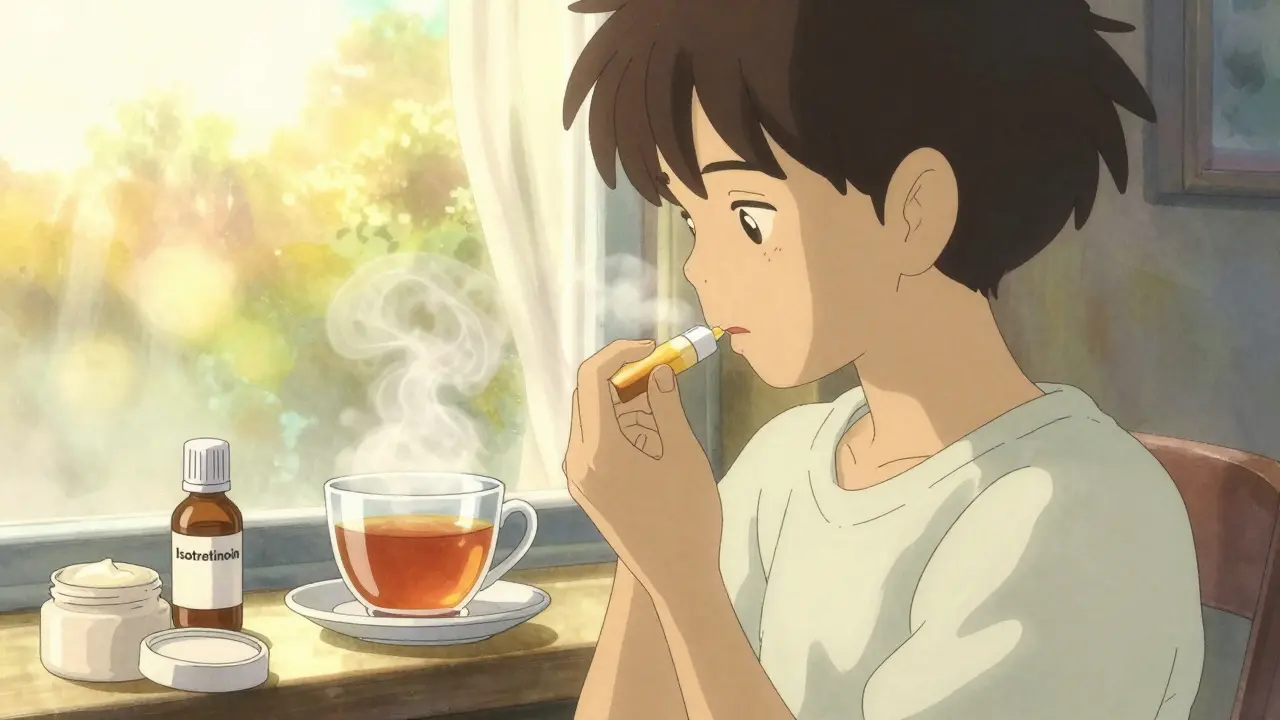
Severe acne doesn’t just hurt your skin-it hurts your confidence, your sleep, your social life. If you’ve tried creams, antibiotics, and hormonal treatments without real results, you might be wondering if isotretinoin is worth the risk. The truth? For many people with cystic or nodular acne that won’t quit, isotretinoin is the only thing that actually works. It doesn’t just clear your skin-it often clears it for good.
How Isotretinoin Actually Works
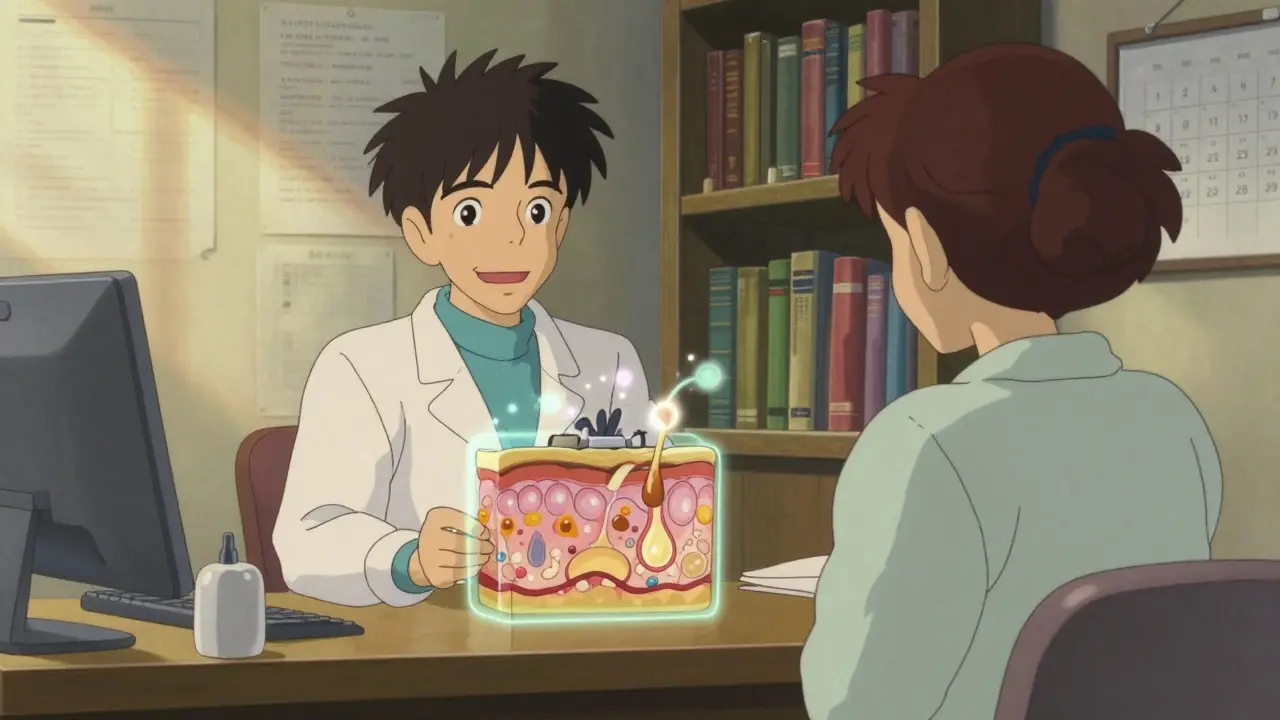
Isotretinoin isn’t just another acne pill. It’s a synthetic form of vitamin A that attacks acne at its source. Most treatments try to kill bacteria or reduce oil. Isotretinoin does all that-and more. It shrinks your oil glands by up to 90%. That means less sebum, fewer clogged pores, and less food for the bacteria that cause inflammation. It also stops skin cells from clumping together inside pores and reduces redness and swelling dramatically.
It’s not magic. It’s science. And it’s backed by decades of data. A 2023 study in JAMA Dermatology found that about 80% of people who finish a full course of isotretinoin never need to go back on it. For many, their skin stays clear for years-or even for life.
Who Gets Prescribed Isotretinoin?
This isn’t for mild breakouts or occasional zits. Dermatologists only prescribe it for severe, treatment-resistant acne: deep, painful cysts, nodules that leave scars, or acne that hasn’t budged after six months of other treatments. If you’ve been on oral antibiotics for over a year and still have angry red lumps, isotretinoin might be your next step.
It’s also used when acne is causing serious emotional distress. People who avoid mirrors, skip social events, or feel trapped by their skin often see the biggest life changes after starting isotretinoin. One 2023 study in the Journal of Cosmetic Dermatology found that 85-90% of patients who completed treatment reported feeling more confident and less anxious about their appearance.
Lab Tests: What You Need Before and During Treatment
Isotretinoin affects your liver, cholesterol, and blood. That’s why lab tests aren’t optional-they’re essential. Before you start, your doctor will order:
- A complete blood count (CBC) to check for anemia or low white blood cells
- Liver enzymes (ALT, AST) to monitor for liver stress
- A lipid panel: total cholesterol, triglycerides, HDL, and LDL
You’ll need repeat tests every 4 to 8 weeks during treatment. Why? Because isotretinoin can raise triglycerides and liver enzymes in some people. If levels climb too high, your dose may be lowered or paused. In rare cases, triglycerides can spike enough to increase pancreatitis risk-so monitoring is non-negotiable.
Some people worry about depression or suicidal thoughts linked to isotretinoin. While studies show no direct causal link, doctors still screen for mood changes. If you’ve had depression in the past, tell your dermatologist. They’ll watch you more closely.
Dosing: High vs. Low-What Works Best?
For years, the standard was 0.5 to 1.0 mg per kilogram of body weight per day. That’s about 40-80 mg daily for most adults. But newer research is changing that.
A 2023 review of 32 studies found that a low-dose regimen-just 20 mg per day for three months-worked for 90% of people with moderate to severe acne. Relapse rates were only 4% six months later. Another study showed that taking 0.5 mg/kg/day in cycles (one week on, three weeks off) for six months gave an 88% success rate.
So why not always go low? Because severe acne often needs higher doses. A cumulative dose of 120-150 mg/kg over the full course is linked to the lowest chance of acne coming back. If you’re on 20 mg/day, that’s about 6-8 months. On 40 mg/day, it’s 3-4 months.
There’s no one-size-fits-all. Your doctor will adjust based on your weight, acne severity, and how your body responds.
The Side Effects: What You’ll Actually Experience
Yes, isotretinoin has side effects. But most are manageable-and temporary. Here’s what most people really deal with:
- Dry lips: Almost everyone (90%) gets this. Use petroleum jelly (Vaseline) or a thick, fragrance-free balm. Apply every hour or two. Don’t lick your lips-it makes it worse.
- Dry skin and eyes: You’ll need a gentle cleanser and a moisturizer without alcohol or fragrance. Artificial tears help with dry eyes.
- Nosebleeds: About 1 in 5 people get them. Keep your nasal passages moist with saline spray.
- Initial acne flare: In the first 1-2 months, your acne might get worse before it gets better. This is normal. Don’t panic. Your doctor might prescribe a short course of antibiotics or a topical steroid to help.
- Muscle and joint pain: Rare, but real. If you feel persistent aches, tell your doctor. Some people have to stop.
More serious side effects are rare but serious. Watch for:
- Severe headaches with vomiting (could be pseudotumor cerebri)
- Yellowing skin or dark urine (signs of liver trouble)
- Severe stomach pain or diarrhea (possible inflammatory bowel disease)
If you notice any of these, stop the medication and call your doctor immediately.
The iPLEDGE Program: What It Really Means
In the U.S., you can’t get isotretinoin without enrolling in iPLEDGE. It’s a federal program designed to prevent birth defects. If you’re female and can get pregnant, you must:
- Have two negative pregnancy tests before starting
- Use two forms of birth control during treatment and for one month after
- Take a monthly pregnancy test
- Get a new prescription every month-no refills
It’s frustrating. It’s bureaucratic. But it works. Since iPLEDGE started in 2006, the number of isotretinoin-related birth defects has dropped by over 95%.
Men and women who can’t get pregnant still need to register, but they don’t need the pregnancy tests. The system isn’t perfect, but it’s the best safety net we have.
What Happens After You Finish?
Most people see their clearest skin 1-3 months after stopping isotretinoin. Some notice continued improvement even after treatment ends. About 80% never need another course. A small number (10-20%) might get a few breakouts later-usually mild, and often manageable with a topical retinoid or occasional antibiotics.
Some side effects linger. Dry skin and lips can stick around for months. Your skin might be more sensitive to the sun. You’ll need to keep using sunscreen and moisturizer long after you stop.
And yes-some people report ongoing dryness or changes in skin texture. But compared to the years of cystic acne, most say it’s a fair trade.
Why Isotretinoin Still Beats Everything Else
Topical retinoids? They help, but only 30-40% of people see good results. Oral antibiotics? They work for a while, but acne often comes back once you stop. Hormonal treatments like birth control pills? Great for some women, but useless for men and not always effective for severe cases.
Isotretinoin is the only treatment that targets the root causes-and delivers long-term results. No other drug comes close. That’s why dermatologists still call it the gold standard, even 40 years after it was first approved.
It’s not the easiest path. But for people with severe, scarring acne, it’s often the only path to real freedom.
Real Stories, Real Results
One Reddit user, u/SkinClearJourney, wrote: “5 months at 40mg a day. My skin is 90% clear. Dry lips? Yes. Worth it.” Another, u/AcneStruggles89, shared: “I had to stop at week 10 because of joint pain. But I was 70% clearer-still better than I’d been in 8 years.”
These aren’t outliers. They’re the norm. In clinical trials, over 90% of patients who finish treatment say they’d do it again-even with the side effects.
Isotretinoin doesn’t promise perfection. But it gives you back control. Over time, your skin becomes something you don’t have to hide.
This post hit me right in the soul. I was that kid who hid behind hoodies in 100-degree heat just to avoid eye contact. Isotretinoin didn’t just clear my skin-it gave me back my laugh. The dry lips? Yeah, I went through three tubes of Vaseline a week. The nosebleeds? Annoying as hell. But waking up and not seeing a fresh cyst staring back at me in the mirror? Worth every second of discomfort.
And honestly? The iPLEDGE program feels like a pain in the ass until you realize it saved thousands of babies from terrible, avoidable tragedies. Yeah, it’s bureaucratic. But so is requiring seatbelts. We tolerate it because it works.
Low-dose isotretinoin is statistically inferior for severe nodulocystic acne. Cumulative dose <120 mg/kg correlates with higher relapse rates per JAMA Derm 2023 meta-analysis. Don’t gamble with subtherapeutic dosing. Monitor LFTs and lipids q4-8w. No exceptions.
I was skeptical too-until I saw my little sister go from hiding in her room to dancing at prom after 6 months on 30mg/day. She cried when her skin cleared. Not from pain-from relief. If you’re on the fence, talk to someone who’s been there. It’s not perfect, but it’s the closest thing to a miracle we’ve got.
Ugh I hate this so much 😭 I was on it for 8 months and my skin got worse before it got better and now I have these weird white patches?? 😩 Why does it have to be so cruel?? 💔 I just want to be normal again 😭
To the person above-I feel you. The white patches? That’s post-inflammatory hypopigmentation. It’s not permanent, but it takes time. Keep moisturizing, wear sunscreen religiously, and give it 6-12 months. You’re not broken. Your skin is just healing in its own time. You’ve already survived the worst part. The rest is just patience.
Been on isotretinoin for 5 months now. Dry skin? Check. Nosebleeds? Yep. But I haven't had a breakout since month 2. I'm not gonna lie-it's been rough. But I'm finally wearing shorts again. And that's worth it. Thanks for the info, OP. Really helpful.
For those considering low-dose: the 2023 review in Dermatologic Therapy showed 20mg/day for 3 months had comparable efficacy in moderate acne, but for true cystic disease, higher cumulative dosing remains the standard. Individual response varies-monitor closely, don’t assume one size fits all.
Why do people even take this? It’s so dangerous. I know someone who got depression from it and now they’re on meds for life. You’re trading one problem for a million. Just wash your face and stop eating pizza.
That’s exactly what I’m talking about. People act like it’s some miracle cure, but they never talk about the mental toll. You’re not just treating acne-you’re messing with your brain chemistry. And then you get blamed if you’re not happy after. It’s disgusting.
There’s a quiet dignity in enduring something that reshapes your life. Isotretinoin doesn’t care if you’re brave or scared-it just works. And when it does, you realize you didn’t need to be fixed. You just needed to be seen. The dry lips, the labs, the bureaucracy-they’re the price of being allowed to exist without shame.
It’s not about perfection. It’s about peace.
As someone who grew up in a household where skincare was treated like a religious ritual, I must say that the cultural weight of acne is not to be underestimated. In my Indian-American family, clear skin was synonymous with discipline, purity, and social acceptability. To have acne was to be seen as lazy, unclean, or even morally flawed. Isotretinoin, then, was not merely a medical intervention-it was a social liberation, a quiet revolution against generations of stigma wrapped in unsaid expectations. The iPLEDGE program? It’s not just regulation-it’s society’s way of saying, "We take this seriously." And maybe, just maybe, that’s the only reason it works.
Just finished my 6th month on 20mg. Skin is 95% clear! Dry lips still suck but I got a lip balm that helps. I was scared to tell my parents but they were so proud. I’m gonna keep using retinoid after this. Thanks for the info!
Let’s be real-no one talks about how isotretinoin makes you feel like a ghost. You’re not yourself. Your skin is changing, your body’s reacting, and you’re stuck in this limbo where you’re not sick, but you’re not well either. The labs, the tests, the monthly visits-it’s exhausting. But here’s the thing: when you finally look in the mirror and don’t flinch, it hits you. This wasn’t just about acne. It was about reclaiming your right to exist without apology.
I’m not saying it’s easy. But I’m saying it’s worth it. And if you’re thinking about it? Do it. Not because you have to. But because you deserve to breathe again.