
It starts as a tiny itch between your toes or a persistent white patch in the mouth. Most of us have dealt with a fungal infection at some point, but there's a common mistake people make: assuming it'll just "go away" on its own. The truth is, fungi are incredibly stubborn. Whether it's a yeast overgrowth or a stubborn case of itchy feet, these organisms are designed to survive in the exact environments our bodies provide-warm, moist, and dark.
Understanding what you're actually fighting is the first step to getting rid of it. Not all fungal infections are the same. Some feed on the protein in your skin, while others are opportunistic yeasts that live inside you. If you treat a yeast infection with a cream meant for skin fungus, you might find it doesn't work at all. The goal isn't just to stop the itching today, but to clear the infection entirely so it doesn't bounce back the moment you stop your cream.
The Basics of Fungal Overgrowth
A fungal infection happens when the balance of microorganisms on or in your body shifts. Your immune system usually keeps these fungi in check, but when things change-like a round of antibiotics, a spike in blood sugar, or spending too much time in damp gym shoes-the fungi take over.
One of the most common culprits is Candida albicans is a yeast-like fungus that naturally exists in the human gut and mouth but can cause infections when it overgrows. Unlike some fungi that stay on the surface, Candida can switch between a yeast form and a hyphal form, which essentially lets it "drill" into tissues and spread more effectively. This is why it's so common in people with weakened immune systems; for instance, about 90% of people with AIDS develop oral thrush because their bodies can't fight off this specific overgrowth.
On the other hand, we have the dermatophytes. These are the fungi responsible for Athlete's Foot (technically known as tinea pedis, a fungal infection that specifically targets the keratin in the skin, hair, and nails). While Candida loves mucous membranes, dermatophytes are obsessed with keratin. They treat your skin like a buffet, which is why the infection causes the skin to peel, crack, and scale.
Understanding Athlete's Foot and Its Forms
If you've noticed your feet peeling, you might have one of three different versions of tinea pedis. Knowing which one you have can help you understand how aggressive your treatment needs to be.
- Interdigital: This is the most frequent type, appearing in about 70% of cases. You'll see peeling and small cracks (fissures), usually between the fourth and fifth toes.
- Moccasin Type: This one is sneakier. Instead of peeling between toes, the soles and sides of your feet become dry and scaly, looking like you're wearing a dry moccasin.
- Vesicular/Bullous: This is less common (about 10% of cases) but more alarming, as it involves fluid-filled blisters.
Many people think athlete's foot is wildly contagious, but it's actually mildly contagious. You aren't likely to catch it just by glancing at someone, but walking barefoot in a locker room or sharing a towel with an infected person is a fast track to an infection. The fungi thrive in temperatures between 24-30°C with humidity over 60%-basically, the inside of a sweaty sneaker is a five-star hotel for them.
Choosing the Right Antifungal Treatments
When it comes to clearing these infections, the market is split between over-the-counter (OTC) options and prescription-strength medication. The biggest hurdle isn't usually the medicine's strength, but the user's consistency. Many people stop applying cream the second the itching stops, which is exactly when the fungus is just starting to retreat. This leads to a high recurrence rate-up to 40% of people see the infection return within a year if they don't finish the course.
For mild cases, topical agents are the first line of defense. Azoles (like clotrimazole and miconazole) are widely available and work well for general infections. However, if you need something faster, Allylamines like terbinafine, a potent antifungal that often clears infections faster than azoles are often the go-to. Some patients report that terbinafine clears in 10 days what clotrimazole couldn't touch in three weeks.
For those with very moist, peeling skin, Whitfield's Ointment is a specialized tool. It uses salicylic acid and benzoic acid to act as a keratolytic, meaning it strips away the dead, soggy skin so the antifungal medicine can actually reach the fungus underneath.
| Treatment Type | Common Examples | Best Used For | Typical Success Rate |
|---|---|---|---|
| Topical Azoles | Clotrimazole, Miconazole | Mild skin infections | 70-80% |
| Topical Allylamines | Terbinafine (Lamisil) | Fast relief, stubborn cases | High (often < 2 weeks) |
| Oral Antifungals | Fluconazole, Itraconazole | Systemic or resistant infections | 70-90% |
| Keratolytic Agents | Whitfield's Ointment | Peeling, macerated skin | 65% at 4 weeks |

When Topicals Aren't Enough
About 15-20% of athlete's foot cases are "recalcitrant," meaning they just won't budge regardless of how much cream you use. In these scenarios, or when the infection spreads to the nails (onychomycosis), oral medications are necessary. These are stronger and work from the inside out.
Common prescriptions include terbinafine (250 mg daily) or fluconazole. While more effective at preventing recurrence (only 15-20% return rate compared to 40% for topicals), they require a doctor's oversight because they can affect liver enzymes. If you have diabetes or peripheral vascular disease, you can't afford to ignore a fungal infection. What looks like a simple itch can lead to cellulitis or even osteomyelitis (bone infection) if the fungus creates an opening for bacteria to enter your bloodstream.
The Prevention Playbook
Stopping a fungal infection is easy; keeping it from coming back is the hard part. Since fungi love moisture, your primary goal is to create a desert-like environment for your feet.
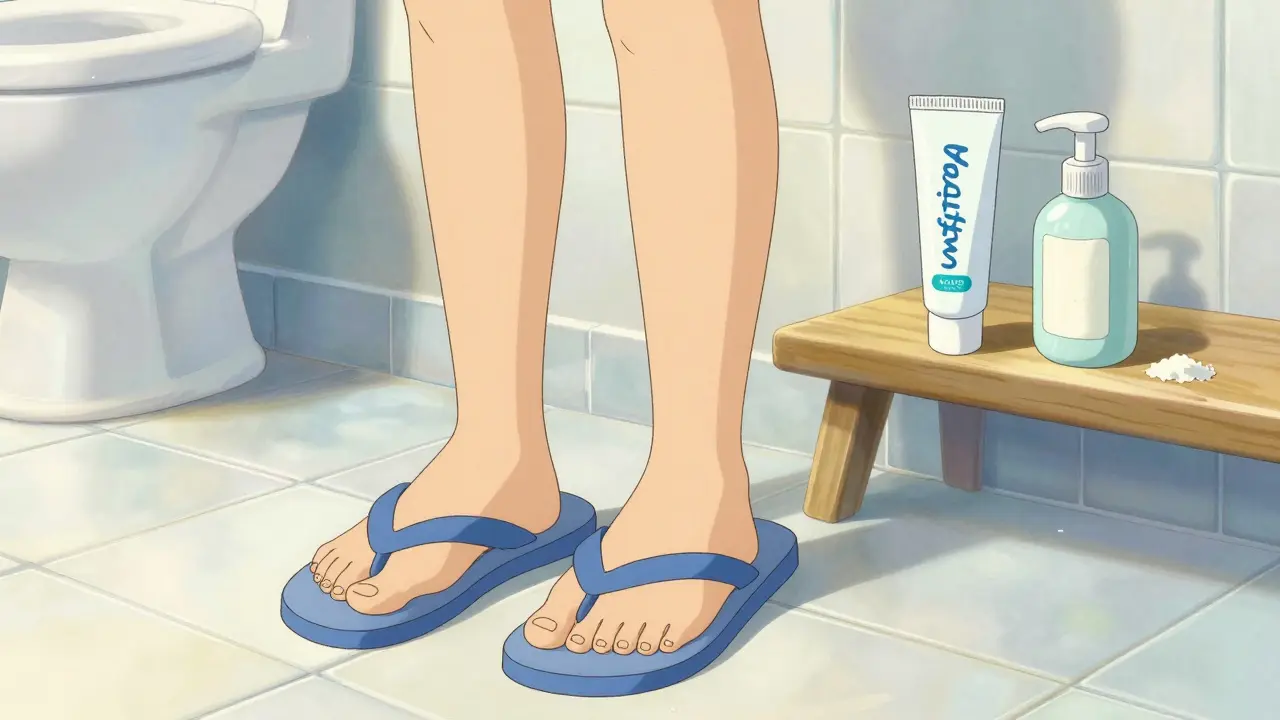
First, stop walking barefoot in public showers and pool decks. Use flip-flops every single time. Second, change your socks daily-and if your feet sweat a lot, change them twice. Use antifungal powders containing miconazole to keep the spaces between your toes dry throughout the day. Finally, when applying cream, don't just put it on the red part. Apply the medication about one inch beyond the visible edge of the infection to catch the microscopic spores that are trying to expand the colony.
A key warning: stop scratching. It's tempting, but scratching doesn't just irritate the skin; it carries the fungal spores under your fingernails, which can then seed a new infection on your hands or in your groin (jock itch).
New Frontiers in Antifungal Care
The medical world is currently racing against "super-fungi." A strain called Trichophyton indotineae was first found in India and has since spread to nearly 30 countries. It's resistant to many standard treatments, making the old "one-size-fits-all" cream approach less effective. This has pushed the FDA to approve new classes of drugs, like Ibrexafungerp for vaginal yeast infections, which provides an alternative for people who can't tolerate traditional azoles.
We are also seeing a shift toward integrated care. Programs that combine medication with strict hygiene protocols in diabetes clinics have seen a 35% drop in recurrent infections. It proves that the drug is only half the battle; the environment you provide for your skin is the other half.
How do I know if my infection is Candida or Athlete's Foot?
Generally, athlete's foot (tinea pedis) affects the keratinized layers of the skin, causing scaling, peeling, and itching on the feet. Candida is a yeast that typically affects mucous membranes (like the mouth or vagina) or skin folds where moisture is trapped. If it's between your toes and peeling, it's likely a dermatophyte; if it's a white, creamy discharge or affecting the mouth, it's likely Candida.
Why does my athlete's foot keep coming back?
The most common reason is stopping treatment too early. Fungal spores can linger even after the itching and redness disappear. You should continue applying your antifungal treatment for 1-2 weeks after the skin looks completely normal to ensure the colony is totally wiped out.
Can I use an over-the-counter cream for everything?
Not necessarily. While some creams are broad-spectrum, others are specifically designed for dermatophytes. Using the wrong agent can lead to treatment failure. If a standard OTC cream doesn't show improvement within two weeks, you should see a professional to confirm the type of fungus you're dealing with.
Is it possible to treat a fungal infection without medicine?
While keeping your feet dry and using powders can prevent an infection, athlete's foot typically doesn't go away on its own. Because these fungi feed on your skin's keratin, they have a constant food source. Active antifungal treatment is almost always required to fully clear the infection.
When should I be worried about a fungal infection?
You should seek immediate medical attention if you notice signs of a secondary bacterial infection, such as increased redness, warmth, swelling, pus, or if you develop a fever. This is especially critical for people with diabetes or compromised immune systems, as it can lead to severe complications like cellulitis.
Next Steps for Recovery
If you're starting treatment today, keep a simple log. Note when you apply your cream and whether the itching decreases. If you're using a topical, remember to dry your feet completely-especially between the toes-before applying the medication, as trapping moisture under the cream can sometimes make the environment more inviting for the fungus.
For those with chronic recurrences, consider switching your footwear. Rotate your shoes every other day to allow them to dry out completely. If you work in a damp environment, look into moisture-wicking socks made of synthetic blends or merino wool rather than 100% cotton, which tends to hold onto sweat and keep your skin soggy.