

Delayed Medication Side Effects Risk Checker
This tool helps you assess your risk of experiencing delayed medication side effects. Based on the latest medical research, certain medications can cause serious reactions months or years after starting treatment. This is not a medical diagnosis—always consult your healthcare provider for proper evaluation.
Most people assume that if a medication hasn’t caused problems in the first few days or weeks, it’s safe. But that’s not always true. Some of the most dangerous side effects don’t show up until months-or even years-after you start taking a drug. These are called delayed medication side effects, and they’re harder to spot because they don’t follow the usual pattern. You take the pill, feel fine for months, then suddenly develop swelling, rashes, joint pain, or even organ damage. And when you go to the doctor, they might not even connect it to the medicine you’ve been on for years.
Why Delayed Reactions Are So Dangerous
The body doesn’t always react to drugs the same way twice. Sometimes, it takes time for the immune system to recognize a medication as a threat. This is especially true with immune-mediated reactions, like those classified as Type IV hypersensitivity. These can take 48 hours to 8 weeks to show up. That’s why a rash that appears six weeks after starting an antibiotic might be dismissed as a virus, not a drug reaction. The World Health Organization estimates that 5% of hospital admissions are due to adverse drug reactions. A big chunk of those are delayed. The U.S. FDA’s Adverse Event Reporting System logged over 2.3 million reports in 2022, and 35% of them involved reactions that happened more than 72 hours after taking the drug. That’s not a small number-it’s millions of cases where people were exposed to harm because the link wasn’t made. Doctors often don’t think to ask, “Have you noticed anything new since you started this medicine?” unless the symptoms are immediate. But if you’ve been on lisinopril for seven years and suddenly your tongue swells shut, you might not think of the blood pressure pill. That’s exactly what happened to John D. from Illinois. He almost needed intubation before he remembered reading about delayed ACE inhibitor reactions.Common Medications That Cause Delayed Reactions
Not all drugs are created equal when it comes to delayed effects. Some are far more likely to cause late-onset problems. Here are the top offenders:- ACE inhibitors (like lisinopril, enalapril, captopril): These are among the most common causes of delayed angioedema. It can happen after years of safe use. The swelling affects the face, tongue, throat, and can block your airway. Emergency rooms see this often-but many doctors still don’t link it to the medication.
- Fluoroquinolone antibiotics (ciprofloxacin, levofloxacin, moxifloxacin): The FDA strengthened its warning in 2018 after over 1,800 reports of tendon rupture, some occurring up to six months after treatment ended. People think they’re done with the drug once the course is finished. But the damage can linger.
- Proton pump inhibitors (omeprazole, esomeprazole, pantoprazole): Taken for heartburn or acid reflux, these are often used long-term. But after two years of daily use, your risk of vitamin B12 deficiency jumps by 65%. After four years, it’s up 112%. That can lead to nerve damage, fatigue, memory issues, and even anemia. Some patients report slurred speech from low magnesium caused by prolonged PPI use.
- Corticosteroids (prednisone, dexamethasone): Used for asthma, arthritis, or autoimmune conditions, these can quietly cause osteoporosis, cataracts, and diabetes over time. Patients on long-term steroids rarely realize their brittle bones or blurry vision are drug-related.
- Metformin: Commonly prescribed for type 2 diabetes, this drug can lead to vitamin B12 deficiency after four or more years of use. Many patients are never told to get their levels checked.
- Antiepileptics (phenytoin, carbamazepine, lamotrigine): These can trigger severe skin reactions like DRESS or Stevens-Johnson Syndrome weeks after starting them. People with the HLA-B*15:02 gene variant have up to an 80% risk of developing SJS/TEN with carbamazepine.
Recognizing the Warning Signs
Delayed reactions don’t always look like a rash. They can mimic other diseases, which makes them easy to miss. Here’s what to watch for:- Unexplained skin changes: A red, itchy rash that spreads over weeks, especially if it includes blisters or peeling skin. DRESS syndrome often starts with a widespread rash, fever, and swollen lymph nodes.
- Joint or muscle pain: Especially if it shows up after taking fluoroquinolones. Tendon pain or rupture can happen during activity, even months after finishing the course.
- Swelling in the face, lips, or throat: This is a red flag for ACE inhibitor-induced angioedema. It can come on suddenly, even at night.
- Chronic fatigue, numbness, or memory fog: These could point to B12 deficiency from metformin or PPIs.
- Fever, swollen glands, and liver issues: DRESS syndrome affects multiple organs. Liver enzymes may rise, and you might feel flu-like without any infection.
- Changes in mood or movement: Akathisia-a feeling of inner restlessness and inability to sit still-can develop after starting antipsychotics or antidepressants. It’s often mistaken for anxiety.

Who’s at Highest Risk?
Some people are more vulnerable than others. If you fit any of these categories, you should be extra vigilant:- People over 65: They make up 25% of emergency visits for drug reactions, even though they’re only 16% of the population. Kidney and liver function slow down with age, so drugs stick around longer.
- Women: Studies show women experience delayed hypersensitivity reactions 1.5 to 2 times more often than men. Hormonal differences may play a role.
- Those with autoimmune diseases: If you have Crohn’s, lupus, or rheumatoid arthritis, your immune system is already on high alert. Taking drugs like thiopurines or biologics can trigger DRESS in up to 12 times the normal risk.
- People with certain genetic markers: The HLA-B*57:01 gene makes you extremely likely to have a severe reaction to abacavir (an HIV drug). HLA-B*15:02 increases SJS risk with carbamazepine. Genetic testing before prescribing is becoming more common-and necessary.
What to Do If You Suspect a Delayed Reaction
If you notice new symptoms after being on a medication for months or years:- Don’t stop the drug immediately unless it’s an emergency (like swelling that blocks breathing). Stopping suddenly can be dangerous.
- Write down everything: When did the symptom start? What else changed? Did you start a new supplement? Change your diet? This helps your doctor see patterns.
- Bring your full medication list: Include over-the-counter drugs, vitamins, and herbal supplements. Many delayed reactions come from combinations, not single drugs.
- Ask specifically about drug reactions: Say: “Could this be related to one of my medications? I’ve been on this for X months/years.”
- Request testing: Skin patch testing (done 4-6 weeks after the reaction) can confirm delayed allergies with 70-80% accuracy. Blood tests for eosinophils, liver enzymes, and vitamin levels can also help.
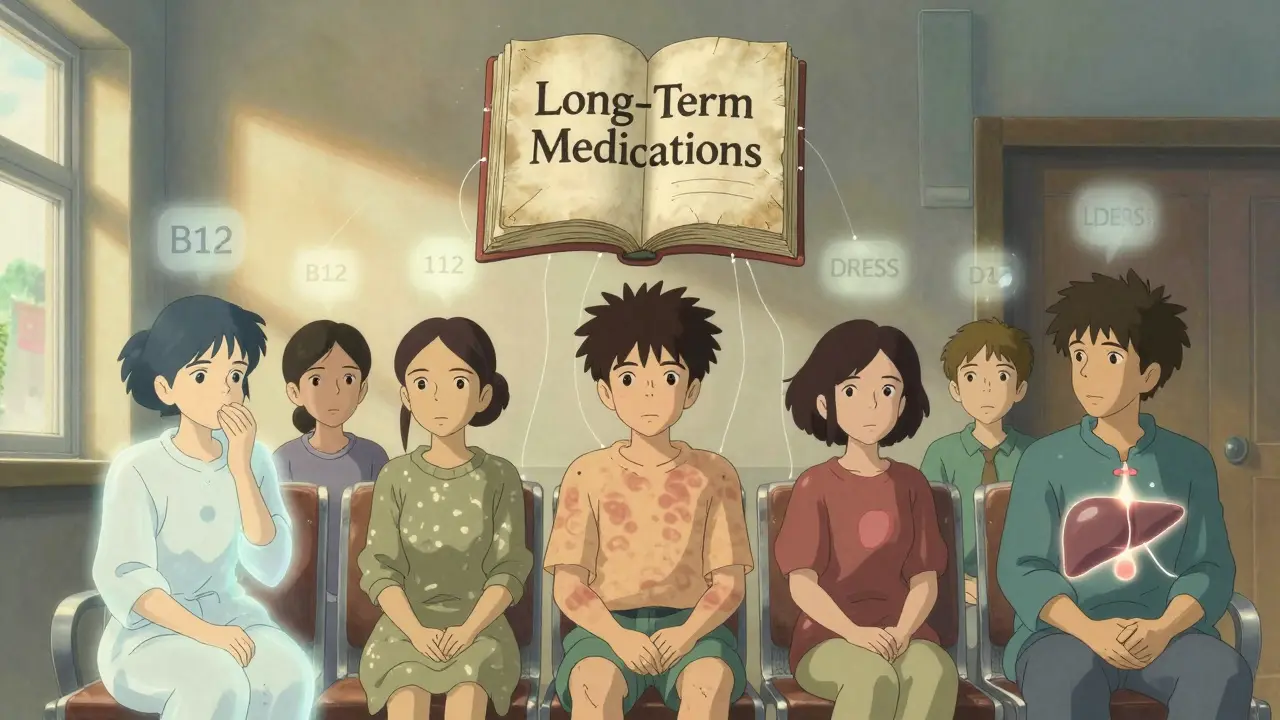
What’s Changing in Medicine
The medical world is waking up to this problem. The FDA’s Sentinel Initiative is now analyzing data from over 200 million patient records to predict who’s at risk before they even get a prescription. By 2025, genetic screening for high-risk drugs like carbamazepine and abacavir will likely be standard practice. The European Medicines Agency has already updated labeling for 12 drug classes to include stronger warnings about delayed reactions. Fluoroquinolones now carry boxed warnings about tendon damage lasting up to six months. PPIs now list B12 deficiency and kidney injury as long-term risks. Researchers are also developing algorithms that flag patients who are likely to develop DRESS or other severe reactions based on their age, gender, genetics, and medical history. Within five years, we could prevent tens of thousands of hospitalizations every year.Final Thoughts
Medication isn’t always the answer. Sometimes, it’s the hidden problem. Delayed side effects are silent, sneaky, and often ignored. But they’re real-and they’re more common than you think. If you’ve been on a drug for years and suddenly feel off, don’t brush it off. Ask your doctor: Could this be the medicine? Your life might depend on it.Can delayed medication side effects happen after years of taking a drug safely?
Yes. Many drugs, including ACE inhibitors, proton pump inhibitors, and fluoroquinolones, can cause serious side effects after months or even years of safe use. The body’s reaction can change over time due to aging, genetic factors, or interactions with other medications. For example, someone on lisinopril for seven years might suddenly develop life-threatening angioedema with no prior warning.
What are the most common delayed drug reactions?
The most common include DRESS syndrome (rash, fever, organ inflammation), fluoroquinolone tendon damage, ACE inhibitor-induced angioedema, vitamin B12 deficiency from metformin or PPIs, and corticosteroid-induced osteoporosis or cataracts. Skin rashes, joint pain, swelling, and neurological symptoms like fatigue or slurred speech are frequent signs.
How long after starting a drug can a delayed reaction occur?
It varies. Type IV hypersensitivity reactions like DRESS typically appear 2-8 weeks after starting the drug. Tendon damage from fluoroquinolones can show up up to six months after stopping. Nutrient deficiencies from PPIs or metformin may take two to four years to become noticeable. Some effects, like steroid-induced cataracts, can take years.
Are some people more likely to have delayed reactions?
Yes. People over 65, women, those with autoimmune conditions, and individuals with certain genetic markers (like HLA-B*15:02 or HLA-B*57:01) are at significantly higher risk. Genetic testing is now recommended before prescribing certain drugs to high-risk groups.
What should I do if I think a medication is causing a delayed reaction?
Don’t stop the drug without medical advice. Keep a symptom journal, list all medications (including supplements), and bring this to your doctor. Ask specifically if the symptoms could be drug-related. Request tests like skin patch testing, blood work for eosinophils or vitamin levels, and genetic screening if appropriate. Early recognition can prevent serious harm.
I’ve been on lisinopril for 5 years. Last month my lip swelled up outta nowhere. ER thought it was an allergic reaction to shellfish. Turns out? It was the med. Never even crossed my mind. 🤦♀️
This is such an important post. So many doctors don’t connect the dots. I’m a nurse and I’ve seen patients dismissed for months because ‘it’s not a side effect if it’s been years.’ We need better awareness.
pharmas are lying to us again 😠 they dont want you to know how dangerous these pills are. just keep takin em n theyll make u a zombie. #BigPharma
so let me get this straight. you’re telling me i have to think about every pill i’ve ever taken for the last decade? cool. thanks for adding another stressor to my life.
I work in primary care and this is exactly why I now ask patients: 'Any new symptoms since you started this med?' even if it was 3 years ago. It’s changed how I practice.
this is just fearmongering. if you’re scared of meds dont take em. dont blame the science because you dont wanna take responsibility for your health
I’m so glad someone finally put this out there. My mom had tendon rupture from cipro 8 months after finishing it. They thought she fell. She didn’t. 🙏 Thank you for sharing this.
this is all part of the WHO’s globalist agenda to control populations. they want you dependent on drugs so they can monitor your biomarkers through your smart fridge. they already know your B12 levels. they’ve been watching.
they put toxins in the water too. i stopped drinking tap water after i got the rash. now i only drink filtered rainwater. 🌧️💧
this is gold. I’m sharing this with my elderly parents. They’re on 7 meds and I’ve been worried. I’ll get them tested for B12 and get their lists reviewed. Thank you for the clarity 🙏
i started taking prilosec for heartburn 5 years ago. last year i got super tired and dizzy. dr said ‘you’re just aging.’ turns out b12 was at 150. now i take a supplement. why didn’t anyone tell me?
this is so basic. anyone with half a brain knows drugs have delayed effects. but you americans are so obsessed with quick fixes you forget your body isn’t a vending machine. you get the pill. you get the consequence. later. always later.
lol i got my first DRESS reaction from lamotrigine after 11 months. doc said ‘it’s just a virus.’ i said ‘i’ve never had a virus that made my liver enzymes spike and my skin peel.’ he looked at me like i was crazy. turns out i was right. 🤷♂️
i never knew this was a thing. my grandpa was on prednisone for years and never knew his cataracts were from it. he just thought he was getting old. this makes me want to talk to my own dr about all my meds. thanks for the nudge.
As a nurse from Nigeria, I’ve seen this over and over. Elderly patients on multiple meds for years, then come in with unexplained fatigue, confusion, or rashes. We rarely connect it to the drugs because in our system, we don’t have the time or tools to trace long-term effects. But it’s real. In Lagos, I had a patient on metformin for 6 years who developed severe neuropathy-no one checked B12. She could barely walk. We started supplements and within 3 months, she was walking again. This isn’t just an American problem. It’s a global blind spot. We need training, not just pamphlets. We need systems that flag long-term users for routine labs. It’s not about fear. It’s about dignity. Every patient deserves to know what their body is enduring, not just what the pill promises.