
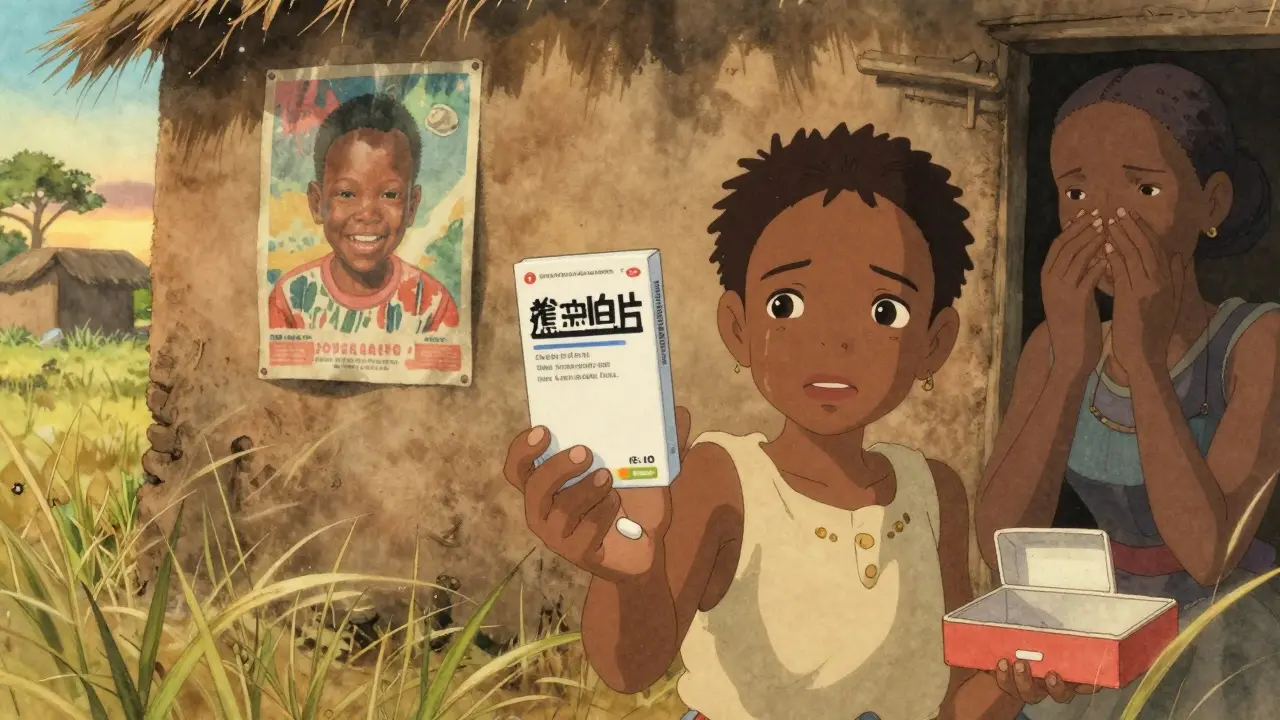
Every year, counterfeit drugs kill more children than malaria in some parts of Africa. Not because the disease is out of control, but because the pills meant to save them are empty, poisoned, or filled with the wrong chemicals. This isn’t science fiction. It’s happening right now in villages, markets, and even public hospitals across low-income countries.
What Exactly Are Counterfeit Drugs?
Counterfeit drugs aren’t just fake brands like knockoff sneakers. They’re medical products that look real but don’t work - or worse, they make you sicker. The World Health Organization (WHO) breaks them into two types: substandard and falsified.
Substandard medicines are made by legitimate manufacturers but fail quality checks. Maybe they expired. Maybe they were stored in the heat. Maybe the active ingredient was mixed wrong. Falsified drugs are worse. They’re made on purpose to trick people. No real ingredients. Sometimes toxic chemicals like rat poison or paint thinner. These are criminal products, designed to look identical to the real thing.
Some fake pills have zero active ingredient. Others have too little - like 10% of the needed dose. And 25% contain dangerous substances. In 2024, the Pharmaceutical Security Institute recorded over 6,400 incidents of counterfeit drugs across 136 countries. That’s not a typo. Six thousand four hundred cases in just one year.
Why Is This Worse in Developing Nations?
It’s not that people in wealthy countries don’t get fake drugs - they do. But in the U.S. or the U.K., the rate is about 1%. In some African and Southeast Asian countries, it’s 30% or higher. Why?
First, regulation is weak. Many countries lack the staff, labs, or funding to test every shipment. In rural clinics, there’s no way to check if a medicine is real. Second, people are desperate. A real malaria drug might cost $5. A fake one? $0.50. For families living on $2 a day, the price difference is life or death.
And the criminals know it. Interpol says counterfeit drugs can have a 9,000% profit margin. That’s more than drugs like cocaine. But the punishment? Often nothing. In many places, getting caught selling fake medicine is less risky than stealing a phone.
The Deadly Consequences
These aren’t abstract numbers. Real people die.
In 2012, over 200 people in Lahore, Pakistan died after taking heart medication contaminated with a toxic chemical. The pills came from a hospital pharmacy. No one tested them.
In sub-Saharan Africa, falsified anti-malarial drugs caused more than 116,000 deaths in a single year. That’s the population of a small city - wiped out by fake pills.
And it’s not just malaria. Antibiotics are the most common target. A 2022 Lancet study found 87% of counterfeit antibiotics had too little active ingredient. That doesn’t just mean the patient doesn’t get better. It means the infection survives - and grows stronger. This is how drug-resistant superbugs spread. Doctors call it antimicrobial resistance. The WHO says it’s one of the top 10 global health threats.
Children are hit hardest. The OECD estimates that counterfeit drugs contribute to between 72,000 and 169,000 child deaths from pneumonia each year. That’s because pneumonia is common, cheap to treat - and often treated with fake antibiotics.
How Are These Fakes Made and Sold?
Counterfeiters don’t just slap on a label. They’ve become experts in replication.
Using 3D printers, they copy blister packs with 99% accuracy. They match colors, fonts, even the smell of the packaging. One Nigerian pharmacist told a WHO interviewer he couldn’t tell the difference - until he tested the pill in a lab.
The supply chain is long. A fake drug might pass through five or seven middlemen before it reaches a rural shop. Each stop is a chance to swap the real product for a fake one. Sometimes, the fake is introduced at the port. Other times, it’s added by a local distributor.
China produces 78% of the most convincing counterfeits. Bangladesh, Lebanon, Syria, and Turkey are major regional distributors. Online pharmacies, social media ads, and WhatsApp groups now sell fake medicines directly to consumers. A 2024 Trustpilot review found 68% of negative reviews in Southeast Asia mentioned suspected counterfeit drugs.
What’s Being Done to Stop It?
There are solutions - but they’re not reaching everyone.
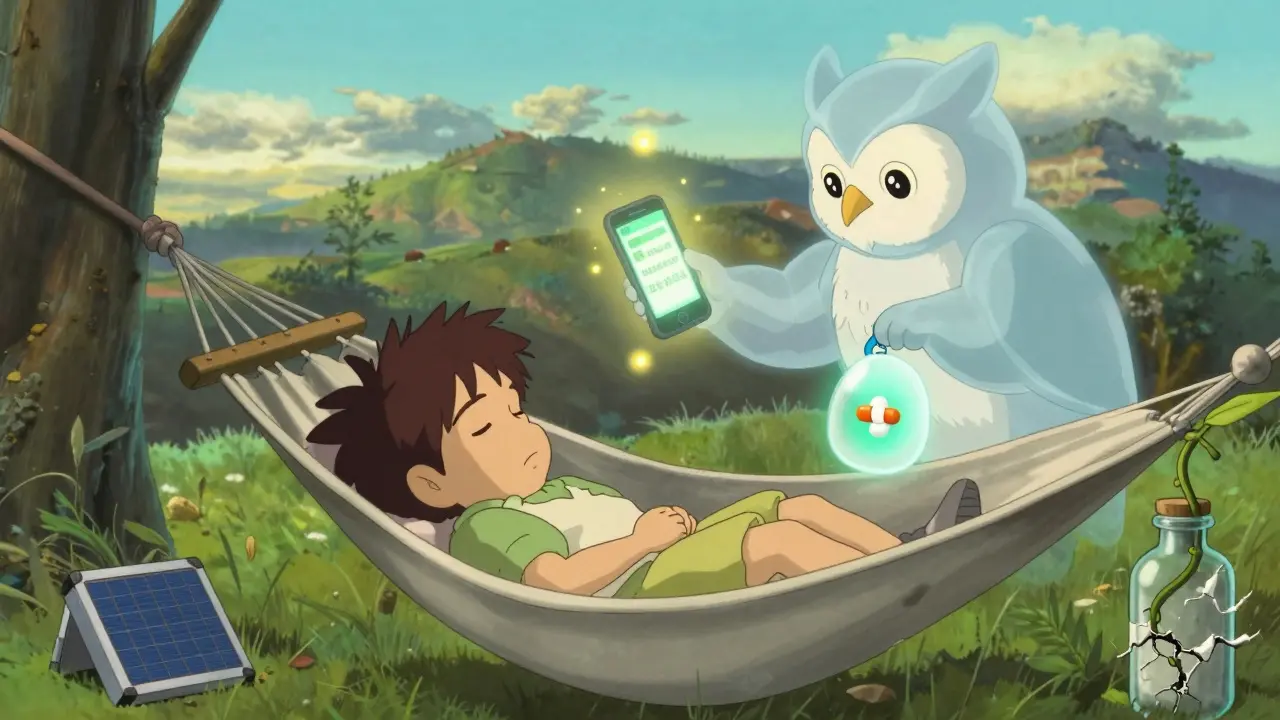
Some countries are using blockchain. The WHO launched the Global Digital Health Verification Platform in March 2025. It lets patients scan a code on the medicine box and instantly see if it’s real. So far, 27 countries use it. But in places without internet or smartphones, it’s useless.
Simple tools work better in remote areas. In Ghana, the mPedigree system lets people text a code from the pill pack to a free number. If it’s fake, they get a warning. Over 15,000 people have used it. One mother in Accra said it saved her child’s life.
But here’s the problem: only 28% of people in low-literacy areas can use these systems without help. And only 22% of pharmacies in low-income countries use any verification tool. In high-income countries? It’s 98%.
Solar-powered testing kits now exist. They cost under $10 and give results in minutes. But 60% of clinics in sub-Saharan Africa don’t have steady electricity. So the machines sit unused.
Why Don’t Governments Act Faster?
There are laws. The Medicrime Convention, signed by 76 countries, makes counterfeit drugs a criminal offense. But only 45 have turned it into actual law. Enforcement is weak. Police don’t prioritize it. Courts don’t punish it.
And money is a barrier. The WHO says countries spend $30.5 billion every year on fake medicines. That’s money that could build clinics, train nurses, or buy real drugs. But because the system is broken, people keep buying fakes - and governments keep paying for them.
Meanwhile, the counterfeit market is growing. It’s worth $83 billion in 2024 - and rising at 12.3% per year. The legitimate pharmaceutical market? Only 5.7%. The criminals are winning.
What Can Be Done?
There’s no single fix. But progress is possible.
First, governments need to invest in basic testing. Not fancy labs - just simple chemical strips that cost pennies. Train community health workers to use them. That’s what worked in Uganda and Kenya.
Second, make verification easy. SMS-based systems like mPedigree work. They don’t need apps, internet, or literacy. Just a phone and a number.
Third, international pressure matters. The EU’s 2026 Anti-Counterfeiting Pharmaceutical Initiative will send $250 million to strengthen supply chains in 30 developing nations. That’s a start.
Finally, patients need to know. In Nigeria, a Reddit user wrote: “My brother died of malaria after taking counterfeit Coartem. The pharmacy had no way to verify.” That story needs to be told - everywhere.
What You Can Do
If you’re in a developed country: support organizations that help build medicine safety systems abroad. Donate to groups like Doctors Without Borders or the Global Fund. Pressure your government to fund international drug safety programs.
If you’re in a developing country: ask for verification. If a medicine looks strange, smells odd, or doesn’t work - don’t take it. Use SMS codes if available. Report fake sellers to local health authorities.
And if you’re a traveler: never buy medicine on the street. Even if it’s cheap. Even if the seller looks trustworthy. The fake drugs you find in Bangkok or Lagos are the same ones killing children in rural clinics.
The fight against counterfeit drugs isn’t about patents or profits. It’s about survival. Every pill matters. Every life counts. And right now, millions are being poisoned by something that should have saved them.
How common are counterfeit drugs in developing nations?
In low- and middle-income countries, at least 1 in 10 medicines is substandard or falsified, according to the WHO. In some regions, like parts of Africa and Southeast Asia, the rate can be as high as 30% to 50%. For example, 35.7% of antimalarial drugs tested in the Greater Mekong Subregion failed quality checks in 2023.
What are the most common types of counterfeit drugs?
Anti-infectives - like antibiotics and antimalarials - make up 35% of counterfeit cases. Cardiovascular drugs (20%) and central nervous system medications (15%) are also common targets. Cancer drugs, insulin, and HIV treatments are increasingly being counterfeited because they’re expensive and in high demand.
Can you tell fake medicine from real medicine by looking at it?
It’s extremely difficult. Counterfeiters now replicate packaging with up to 99% accuracy using 3D printing and digital printing. Even trained pharmacists can’t tell the difference without lab testing. Some fakes have the right color, shape, and even taste. The only reliable way is through verification tools like SMS codes, blockchain scans, or chemical testing kits.
Why don’t people just avoid buying fake drugs?
Because real medicines are often unaffordable. A genuine malaria treatment might cost $5 - while a fake one costs 90% less. For families living on less than $2 a day, the price difference is impossible to ignore. Many also don’t know they’re buying fake drugs. They trust the pharmacy, the seller, or the packaging.
Are there any success stories in fighting counterfeit drugs?
Yes. Ghana’s mPedigree system, which lets users verify medicines via SMS, has reduced counterfeit use in pilot areas by 37%. The WHO’s Global Digital Health Verification Platform, launched in 2025, is now active in 27 countries. In 2024, Pfizer’s anti-counterfeiting program blocked over 302 million counterfeit doses from reaching patients worldwide. These tools work - but they need funding and scale.
Just read this and sat there for a minute. I mean, we worry about expired yogurt but people are dying because their medicine is just sugar and rat poison. It’s insane.
I’ve been thinking about this a lot lately. It’s not just about bad actors - it’s about systems that fail the most vulnerable. We build apps to track our coffee orders, but a child in a rural village can’t verify if the pill that’s supposed to save them is real. That’s not a tech problem. That’s a moral one.
And the worst part? The people who profit from this aren’t some shadowy syndicates - they’re often local shopkeepers just trying to make rent. The real criminals are the ones who let the system rot for decades.
It’s not about blame. It’s about building bridges. Simple tools like SMS verification work. But they need funding, not just pity. We talk about digital equity all the time - this is digital equity with a life-or-death stakes.
And yeah, maybe it’s messy. Maybe it’s hard. But if we can send rockets to Mars, we can send a text message that tells a mother her child’s medicine isn’t poison.
So the solution is to make everyone in Africa own a smartphone? Cute.
Oh wow, so the answer is… texting? 😍 Like, we’re saving lives with a 1998 tech because we couldn’t be bothered to fix the supply chain? Classic. 🙃
This is one of the most important things I’ve read all year-and I’m not even from a developing country! We need to stop treating this like a charity issue and start treating it like the global health emergency it is! People are dying because we’re too lazy to fund simple, proven tools! And yes, SMS verification works-it’s not fancy, but it’s accessible, it’s cheap, and it saves lives! Why aren’t we scaling this everywhere?!?!
And to those who say ‘they should just buy real medicine’-have you ever tried buying groceries on $2 a day? This isn’t about choice. It’s about survival! We need to stop being passive and start pushing for real policy change!
Let’s be real: the entire pharmaceutical industry is a scam. Rich countries overpay for drugs, poor countries get poisoned, and everyone’s just profit-hunting. This isn’t a ‘humanitarian crisis’-it’s capitalism with a side of moral bankruptcy.
And don’t even get me started on ‘global initiatives.’ They’re just PR stunts. The WHO? They’re bureaucratic. The EU’s $250 million? That’s pocket change for a single Big Pharma executive’s bonus.
Real solution? Ban patent monopolies. Let generic manufacturers make real drugs without fear of lawsuits. Then the price drops, the fakes vanish, and everyone wins. Except the shareholders. And that’s the only win we need.
China produces 78% of the counterfeits. And you’re telling me we should just ‘trust’ them with global health? This isn’t about poverty-it’s about foreign exploitation. We need tariffs. We need sanctions. We need to stop enabling this.
Why are we funding SMS systems in Ghana when we could be shutting down the factories in Guangdong? This isn’t charity. This is national security.
Thank you for this comprehensive breakdown. The data is staggering, and the human cost is unfathomable. The fact that 87% of counterfeit antibiotics contain sub-therapeutic doses directly fuels antimicrobial resistance-a crisis that threatens modern medicine itself. It’s not just about saving lives today; it’s about preserving the ability to treat infections tomorrow.
The mPedigree model is a brilliant example of low-tech, high-impact innovation. Yet, as you noted, adoption remains abysmal in the regions that need it most. The disconnect between available solutions and implementation is not due to lack of knowledge-it’s due to lack of political will and funding prioritization.
Investing in decentralized, solar-powered testing kits and training community health workers is not merely cost-effective-it’s morally imperative. We must move beyond donor-driven pilot programs and institutionalize these systems as core public health infrastructure.
Travelers, consumers, and citizens in high-income nations have a responsibility: demand transparency. Support legislation that ties foreign aid to drug safety standards. Pressure pharmaceutical companies to adopt blockchain traceability-not as a marketing tool, but as a non-negotiable standard.
This is not a problem of the ‘developing world.’ It is a failure of the global community. And we are all complicit until we act.