
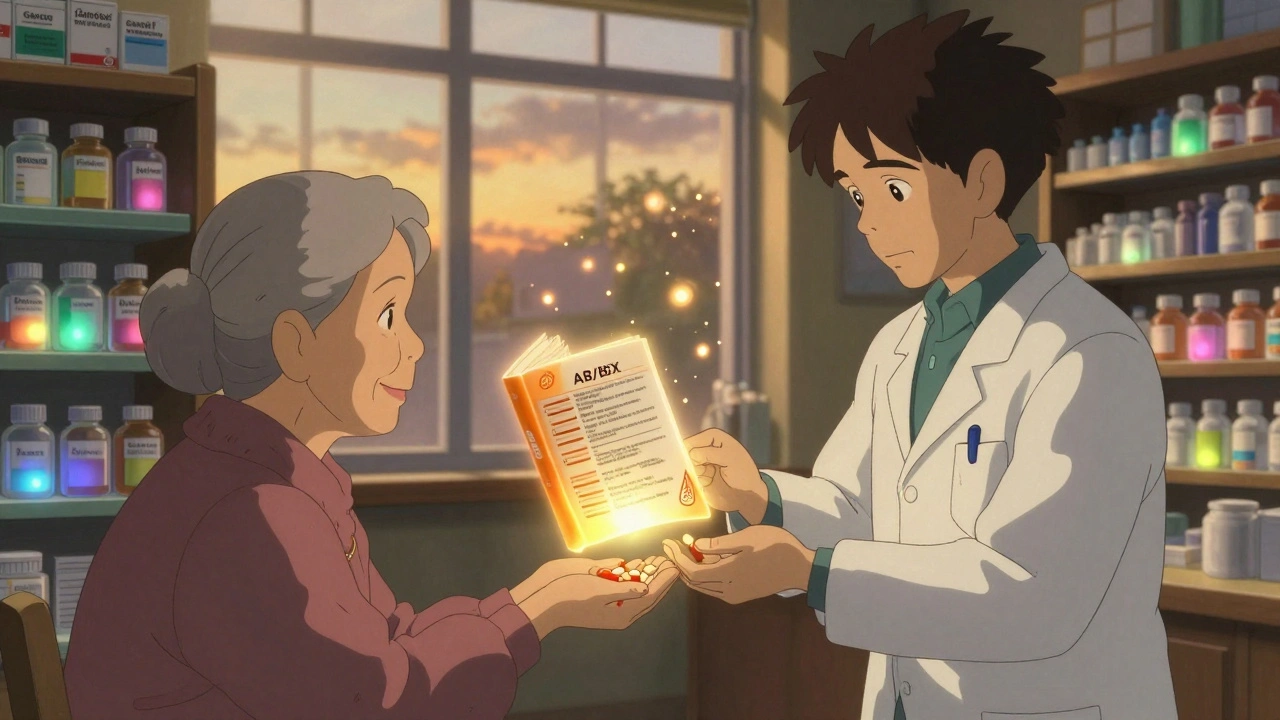
Pharmacists don’t just fill prescriptions-they make critical decisions every day that affect patient safety, especially when it comes to generics. With 90% of prescriptions filled with generic drugs in the U.S., the ability to correctly substitute, interpret therapeutic equivalence, and navigate complex regulations isn’t optional. It’s essential. And it’s changing faster than ever.
Why Generics Knowledge Can’t Wait
Generic drugs are not just cheaper versions of brand-name drugs. They’re legally required to be identical in active ingredient, strength, dosage form, and route of administration. But here’s the catch: they don’t have to be identical in inactive ingredients, manufacturing process, or even how quickly they’re absorbed. That’s where bioequivalence comes in.
The FDA requires generics to fall within an 80-125% range of the brand-name drug’s pharmacokinetic profile. For most drugs, that’s fine. But for drugs with a narrow therapeutic index-like levothyroxine, warfarin, or digoxin-tiny differences in absorption can lead to serious harm. A pharmacist who doesn’t know that two generics of levothyroxine aren’t always interchangeable could accidentally switch a patient from one brand to another, triggering thyroid instability.
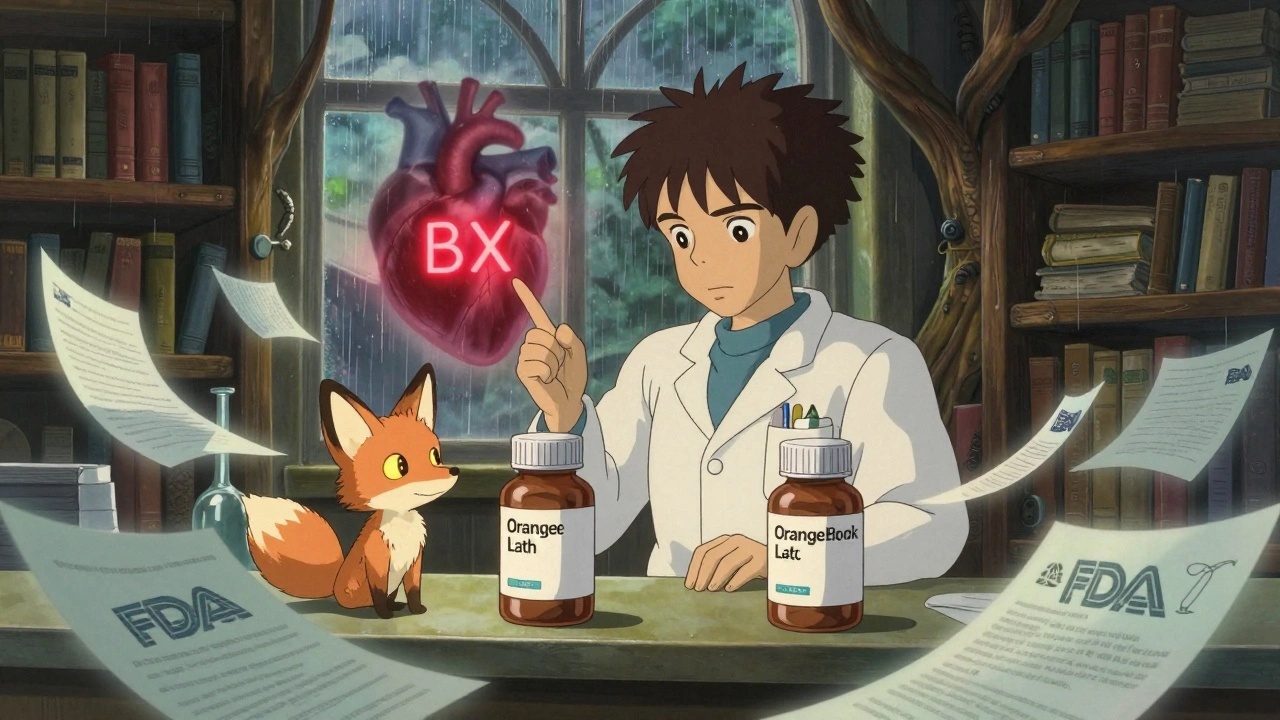
That’s why the FDA’s Orange Book matters. It lists every approved generic and assigns it a therapeutic equivalence code: AB means interchangeable, BX means not interchangeable. And it’s updated monthly. Pharmacists can’t rely on memory or outdated handbooks. They need real-time access and training.
What’s Required by Law
All 50 U.S. states require pharmacists to complete continuing education (CE) to renew their license. Most require between 15 and 30 hours every two years. But here’s where it gets messy: each state sets its own rules.
In Illinois, you need 30 hours every two years-including 1 hour on sexual harassment prevention, 1 hour on implicit bias, and starting January 2025, 1 hour on cultural competency. In California, you must keep CE records for two years. In New York, you submit certificates with your renewal. Texas has specific rules for narrow therapeutic index drugs that don’t exist in most other states.
And if you’re licensed in multiple states? You’re playing a game of regulatory whack-a-mole. One state might require 5 hours on biosimilars. Another might not even mention them. The Accreditation Council for Pharmacy Education (ACPE) sets national standards, but state boards enforce them differently.
What Counts as Quality CE
Not all CE is created equal. ACPE classifies courses into three types: knowledge-based, application-based, and certificate programs. Knowledge-based courses are lectures or readings-fine for background, but they don’t stick. Application-based courses use real cases. You’re presented with a patient scenario: “A 68-year-old on warfarin is switched from Brand A to Generic B. INR jumps to 6.2. What went wrong?”
That’s the kind of training that saves lives. Pharmacists who complete at least 5 hours of generics-focused CE each year make 37% fewer substitution errors, according to the American Pharmacists Association. And the data backs it up: 42.7% of pharmacy malpractice claims between 2016 and 2020 involved generic substitution mistakes.
Look for ACPE-accredited providers like Pharmacist’s Letter or Wolters Kluwer. They offer modules on the ANDA process, REMS programs, and the CREATES Act-which prevents brand manufacturers from blocking generic companies from getting samples to test against. These aren’t just legal trivia. They’re practical tools for understanding why a generic might not be available even when it’s approved.
The Rise of Biosimilars and Specialty Generics
Biosimilars aren’t traditional generics. They’re complex biological drugs-like insulin or monoclonal antibodies-that mimic a brand-name biologic. Unlike small-molecule generics, biosimilars can’t be exact copies. Their manufacturing is sensitive to tiny changes in temperature, equipment, or cell culture. That means interchangeability isn’t automatic.
The FDA has only approved a handful of interchangeable biosimilars so far. But by 2025, that number will grow. And pharmacists need to know the difference between “biosimilar” and “interchangeable.” One can be substituted without prescriber approval. The other can’t.
ASHP’s 2023 survey found that 78% of hospital pharmacists felt underprepared for biosimilar decisions. That’s not because they’re unskilled-it’s because most CE still treats biosimilars as an afterthought. But starting January 1, 2025, ACPE will require all generics-related CE to include specific content on biosimilar interchangeability and REMS programs. If your CE provider hasn’t updated their curriculum by then, you’re not compliant.
How to Make CE Actually Work
Most pharmacists spend about 27.5 hours a year on CE. Only 5.2 of those are focused on generics and therapeutics. That’s not enough. Here’s how to fix it:
- Track your state’s exact requirements. Don’t assume your CE provider knows them. Check your board’s website directly.
- Choose application-based courses. Look for ones with case studies, quizzes, and real patient scenarios. Courses rated 4.7/5 on CE21 are the ones that actually change practice.
- Build a personal generics library. Bookmark the FDA Orange Book, keep a cheat sheet of your state’s substitution laws, and update it quarterly.
- Join a peer group. Pharmacists on Reddit’s r/pharmacy share real substitution errors and how they avoided them. Learning from others’ mistakes beats reading a textbook.
- Use AI-powered tools. Platforms like PocketPrep now use algorithms to identify your knowledge gaps. If you keep missing questions on therapeutic equivalence codes, it pushes you targeted modules.
Some hospitals are going further. CVS Health piloted a system that delivers micro-learning modules right at the pharmacy counter. If a pharmacist is about to dispense a new generic, a pop-up on their screen gives them a 90-second refresher on its equivalence rating. That pilot cut generics-related errors by 28%.
The Bottom Line
Generics aren’t going away. They’re growing. And the rules around them are getting more complex, not less. The pharmacist who treats continuing education as a checkbox is at risk. The one who sees it as a tool to protect patients? That’s the one who stays sharp, stays legal, and stays trusted.
You don’t need to memorize every generic on the market. But you do need to know how to find the right information-fast. And you need to know when to pause, double-check, and ask the prescriber. That’s the real skill. And that’s what CE should build.
Do I need to take CE specifically on generics every year?
It depends on your state. While no state mandates a specific number of generics-only hours, the majority of malpractice claims and licensing errors stem from generic substitution mistakes. Most experts recommend at least 5 hours per year focused on therapeutic equivalence, biosimilars, and state substitution laws. If your CE provider offers a generics-focused track, prioritize it.
Can I use free CE courses to meet my requirements?
Yes, as long as they’re ACPE-accredited. Pharmacist’s Letter, the American Pharmacists Association, and some university programs offer free, high-quality CE on generics. Always verify the ACPE provider number and course type (knowledge or application-based) before completing it. Free doesn’t mean low quality-many are designed by practicing pharmacists.
What’s the difference between therapeutic equivalence and interchangeability?
Therapeutic equivalence means two drugs have the same active ingredient, strength, and bioavailability, and are expected to produce the same clinical effect. Interchangeability is a legal term. It means a pharmacist can substitute the generic without the prescriber’s permission. Not all therapeutically equivalent drugs are interchangeable-especially biosimilars. Always check the Orange Book’s code: AB = interchangeable, BX = not.
How often is the FDA Orange Book updated?
The FDA updates the Orange Book monthly. New generics are added, therapeutic equivalence codes are changed, and patents are updated. If you’re not checking it regularly, you’re working with outdated information. Set a calendar reminder to review it every four weeks.
What happens if I don’t complete my CE requirements?
Your license will expire. Most states give you a short grace period-usually 30 to 90 days-to make up the hours. After that, you may face fines, mandatory remedial education, or even suspension. In some cases, you’ll have to reapply for licensure entirely. Don’t wait until the last minute. Track your hours throughout the year.
Are there any new CE requirements coming in 2025?
Yes. Starting January 1, 2025, ACPE will require all generics-related CE to include content on biosimilar interchangeability and FDA Risk Evaluation and Mitigation Strategies (REMS). If your provider hasn’t updated their courses by then, they won’t count toward your license renewal. Check with your CE provider now to see if their curriculum is compliant.
Wow. So now pharmacists need to be pharmacologists, lawyers, and data scientists just to dispense pills? Next they'll be requiring us to pass a bar exam before refilling Adderall.
I love this. I’ve been doing this for 18 years and I still check the Orange Book before I swap anything. People think it’s just a formality-but one wrong swap and you’re on the news. Not the good kind.
Thank you for writing this. So many of us are drowning in state-by-state rules and no one talks about how much of this is just bureaucratic chaos. I spent 3 weeks last year trying to figure out if I could substitute a generic for a biosimilar in Texas while holding a California license. I cried. Then I called my state board. They hung up on me.
Let’s be real-this is all just Big Pharma’s way to keep us hooked on $200 pills. The FDA? Totally in their pocket. The Orange Book? A magic trick. I’ve seen generics that look nothing like the brand-same pill, different color, different shape, different filler. And you’re telling me it’s ‘bioequivalent’? Yeah right. They’re just changing the label to avoid lawsuits.
And don’t get me started on ‘interchangeable’ biosimilars. That’s code for ‘we don’t know what’s in it but we’re making you take it anyway.’
My cousin got hospitalized after a switch. The pharmacy said it was ‘equivalent.’ The hospital said it was a ‘rare adverse reaction.’ I say it was corporate greed. And now they want us to pay for CE to learn how to be complicit?
So wait… you’re telling me I have to spend 5 hours a year learning about pills I’ve been giving out for 15 years? I’m just gonna keep doing what I’ve always done. If it ain’t broke don’t fix it. Also, why do I need to know about REMS? I just give the damn pill.
THIS IS A SCAM. The FDA doesn’t test generics. They just approve them based on paperwork. I’ve seen the same generic made in three different countries with different fillers-and they’re all labeled AB. That’s not science. That’s a lottery.
And now you want me to pay $150 for a CE course that says the same thing the Orange Book says? I’m not paying for common sense.
Dear fellow professionals: I have reviewed the FDA’s latest Orange Book update (April 2025) and noted 14 new BX-coded generics for levothyroxine, including one from a manufacturer in India with a 12% deviation in Cmax. I have cross-referenced this with the Texas Board’s 2024 bulletin and confirmed that substitution is prohibited under §47.12(b)(3). I have also contacted ACPE to verify that the new biosimilar module (ACPE #0739-0025) meets the 2025 compliance standard. Please ensure your CE provider is using the correct provider number. I have attached screenshots.
It’s fascinating how we’ve turned healthcare into a compliance maze. We’re so focused on rules and codes that we forget the human at the other end of the prescription. Maybe the real CE should be about listening-to patients who say, ‘This new pill makes me feel weird,’ and trusting that more than a letter from the FDA.
What if we built systems that encouraged pause… instead of just checking boxes?
I’ve been in this game 22 years. I used to think CE was a chore. Then I had a patient on warfarin who had a stroke after a generic switch-turned out the pharmacy didn’t know the code was BX. That kid was 34. I’ve never stopped checking since. This isn’t about rules. It’s about not being the reason someone doesn’t come home.
Keep doing the work. Even if no one sees it. Even if it’s just 15 minutes a week. It matters.
Just did my 5 hours this week on PocketPrep. It flagged me on 3 therapeutic equivalence codes I’d forgotten. I corrected them before my next shift. Small things, big impact. Thanks for the reminder to stay sharp.